A Complete Guide To Choosing Glass Shower Door Hinges For Frameless Shower Enclosures

A frameless shower door stands or falls on its glass shower door hinges. The hinge carries the full weight of the panel, absorbs the stress of thousands of open-close cycles, and works in one of the most humid environments in the home. Choosing the right shower door hinge is therefore an engineering decision as much as a design decision.
The short version: match the hinge to the glass thickness and the door weight first, then choose the mounting style and finish for the room. Get those two numbers right, and most doors stay stable and quiet for years.
The Three Numbers That Decide Everything
Every hinge specification sheet comes down to three numbers, and they answer ninety percent of the questions buyers ask:
- Glass thickness range — usually 10–12 mm for shower enclosures, and the hinge clamps to that exact size
- Working load rating — the weight the hinge is certified to carry through the panel
- Opening angle — 0°, 90°, 135°, 180°, or 360°, depending on how the door must swing
Write those three numbers down before comparing brands. When two hinges look identical, the difference between them is always in these figures, not in the photos.
What Shower Door Hinge Types Fit Different Layouts?
Most frameless enclosures use one of a few established configurations, and each suits a different layout:
- Wall-mounted hinges fix the glass to the wall and are the most common choice for single doors
- Glass-to-glass shower door hinges join two panels directly, used for corner entries and fixed-panel connections
- Pivot hinges let the door swing from top and bottom pivot points, ideal for narrow bathrooms
The position of the fixed panel, the opening direction, and the available wall space all influence which type works. A door that must swing both inward and outward, for example, usually needs a shower door pivot hinge rather than a standard side-mounted hinge.
Wall-Mounted? Glass-to-Glass?
All of these are frameless shower door hinges, which means the hardware clamps the panel edge without a surrounding frame. Wall-mounted hardware is the default for most bathrooms because it transfers load directly into the wall. Glass-to-glass shower door hinges become necessary when there is no wall beside the door, such as at a corner entry where two panels meet. Both types follow the same logic: the glass hinge must be rated for the panel it carries. For most homeowners, the choice comes down to how the glass shower door hinges will be mounted and how much weight they must carry.
Glass hinges are manufactured for a specific glass thickness range. The 10–12 mm tempered glass used in most shower enclosures needs a glass hinge whose clamping depth and rubber gaskets are designed for that size. Installing a glass hinge rated for thinner glass will not hold the panel securely and creates a real safety risk. Measure the glass at the edge before ordering. A small difference in thickness changes how the hinge grips the panel, how evenly the load spreads, and how long the gaskets last. The specification sheet of every serious hinge states its supported range, and that range is the first filter you should apply. Load rating is the number that separates a glass hinge that lasts from one that needs attention every season. The weight of a panel depends on its width, height, and thickness, and an 8 mm tempered panel of typical shower size already weighs tens of kilograms. Wider and taller doors multiply the leverage on every fixing point, which is why a tall door needs a stronger hinge even when the glass looks identical.
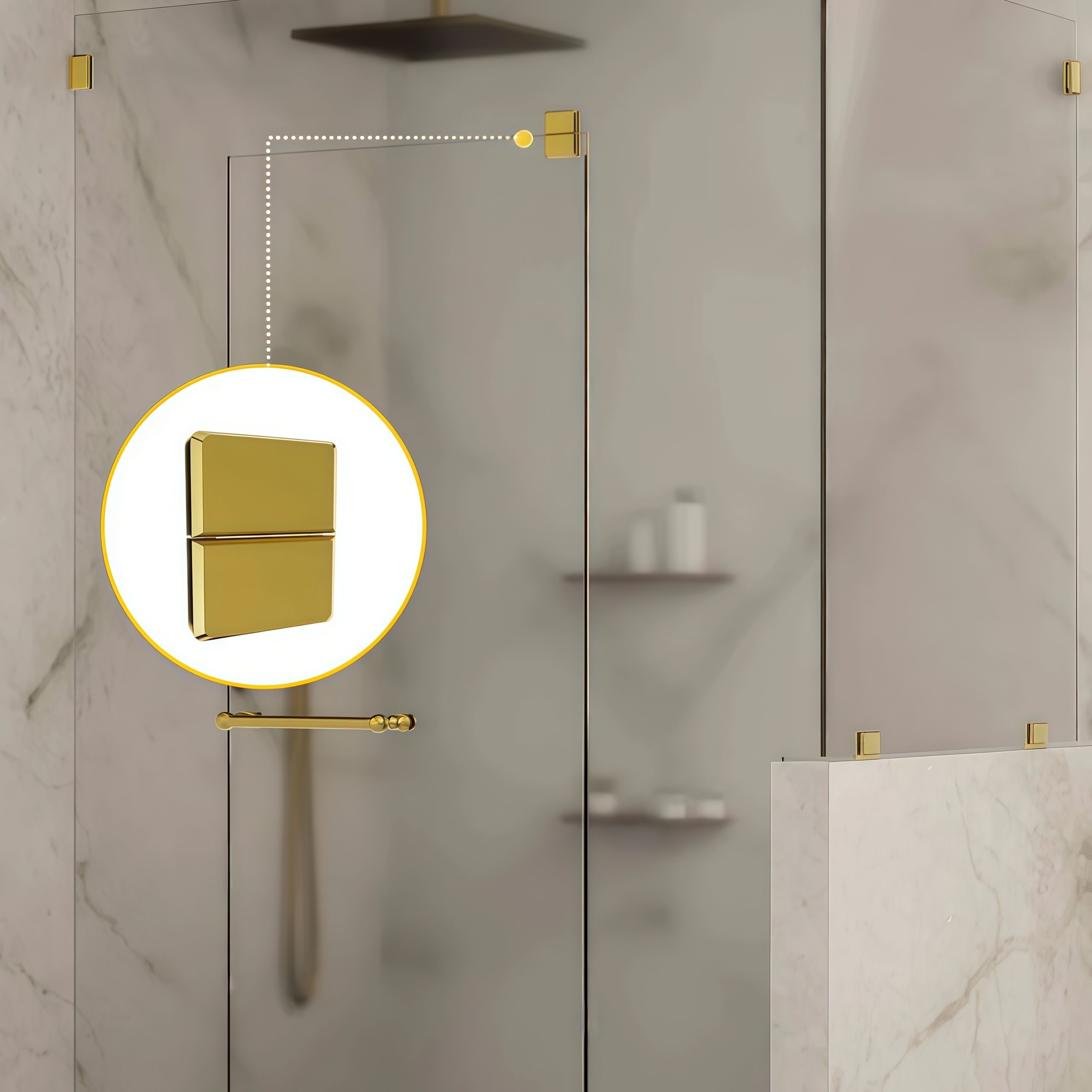
Load rating is the single most important number on a hinge specification sheet. A hinge rated just above the panel weight leaves little margin for the force a user applies at the door edge, so a higher rating is always the safer choice.
Reputable manufacturers state the working load for their glass shower door hinges directly in the specification sheet. If the number is missing, treat the product with caution, because load rating is not something you can guess from the hinge's appearance. When in doubt, choose a higher rating than the calculation suggests. The extra margin costs little and protects the door for decades.
Which Materials and Finishes Survive Humidity?
Shower areas expose hardware to water, steam, and cleaning chemicals, so material and finish matter as much as geometry. 304 stainless steel handles normal bathroom humidity well, while coastal regions and aggressive cleaning agents call for upgraded corrosion protection. Surface treatments such as brushed, mirror, or PVD colors sit on top of a corrosion-resistant base, and rubber gaskets must stay intact so metal never touches glass directly.
The finish is the visible part, but the base material decides how the glass door hinge ages. A hinge that looks perfect after a year but rusts at the gasket line was the wrong choice for the environment. For projects near the sea, specify 316 stainless steel from the start rather than relying on a coating.
Installation in Four Steps
Installation is straightforward when the preparation is right:
- Use the hinge template to mark the glass drilling positions precisely
- Remember that holes must be drilled before the glass is tempered
- Tighten the clamping screws evenly, alternating from screw to screw
- Re-check the screws after the first week of use, when the gaskets have settled
A door that is plumb and level at installation stays that way. A door installed out of square transfers stress to the glass hinges for glass doors and the glass every time it closes.
Maybe people have a doubt about whether glass shower door hinges can be adjusted after installation? Most quality hinges for glass shower door designs allow small adjustments after installation. A hinge with adjustment screws can be aligned to the panel and the wall even when the opening is slightly out of square. This is worth checking before purchase, because a hinge that cannot be adjusted forces the installer to shim the panel instead. Adjustments should be made in small steps, and the clamping screws should be re-tightened afterward so the panel holds its position.
A door that sags over time is almost always an under-rated hinge, while grinding or creaking during opening usually points to a dry or worn shaft. Loose clamping screws after the gaskets settle are a normal first-month condition, and corrosion at the gasket line tells you the finish or the gasket was never right for the environment. Each of these problems has a simple cause and a clear remedy, but catching them early keeps the repair small. A sagging door is rarely a broken hinge; it is a hinge that was never rated for the panel in the first place. Commercial bathrooms, hotels, and spas put glass hinges through hundreds of cycles a day, which changes the specification. Higher load ratings, thicker shafts, and anti-corrosion finishes become requirements rather than upgrades. When specifying hardware for a project, ask about the expected daily use and choose products rated for that frequency. A residential hinge in a commercial shower will wear out in months, while the right commercial hinge lasts for years with the same maintenance routine.
Commercial projects also benefit from a maintenance plan: quarterly torque checks, gasket inspection, and an agreed spare-parts list keep the enclosure performing between service visits.
Frequently Asked Questions

1 How Do You Replace a Shower Door Hinge?
Remove the old hinge, check the existing hole spacing and glass thickness, then order a shower door hinge replacement with the same bolt pattern. Most shower door hinges replacement jobs are simple when the new hinge matches the existing holes. If the pattern differs, the glass must be re-drilled before tempering, which means a new panel.
2 Can You Adjust a Glass Shower Door Hinge After Installation?
Yes, most quality hinges allow glass shower door hinge adjustment through small alignment screws. Adjust in small steps, re-tighten the clamping screws, and check the door swing. This is the standard way to fix a slightly out-of-square opening without shims.
3 Are Glass-to-Glass Door Hinges as Strong as Wall-Mounted Ones?
Glass to glass door hinges are strong when both panels are drilled and clamped correctly, because the load is shared between two panels. Wall-mounted hinges transfer load into the wall instead. Both are reliable; the right choice depends on the layout, not on strength alone.
4 What Should You Check Before Buying a Shower Door Hinge?
Check three things: the glass thickness range, the working load rating, and the material. These three numbers decide whether a hinge shower door installs cleanly and lasts. Also confirm the opening angle and the finish match the room, and ask the supplier for the specification sheet if the numbers are not published.
5 Which Hinge Is Quietest for a Busy Bathroom?
Quiet operation comes from a polished shaft and correct alignment, not from any single material. A shower glass door hinges set with even clamping and a lubricated pivot stays silent. If you hear noise after a few months, check the adjustment screws before replacing anything.
Key Takeaways
- Match the glass shower door hinge to the glass thickness range and the working load before comparing anything else
- Choose the mounting style that fits the layout: wall-mounted, glass-to-glass, or pivot
- Specify a corrosion-resistant material that suits the room, and keep gaskets intact
- Re-check screws and adjustments after the first weeks, then once a season
Busrom's glass hinge series covers 0°, 90°, 135°, 180°, and 360° opening styles in stainless steel, brass, and copper, with multi-course anti-corrosion processing designed for high-frequency use in humid environments. If you are planning an enclosure, read how glass hinges and glass clamps work together in frameless bathroom systems, or send Busrom your project details for a specification recommendation.