Glass Hinges Are More Than A Connector, What Really Makes A Glass Door Work?
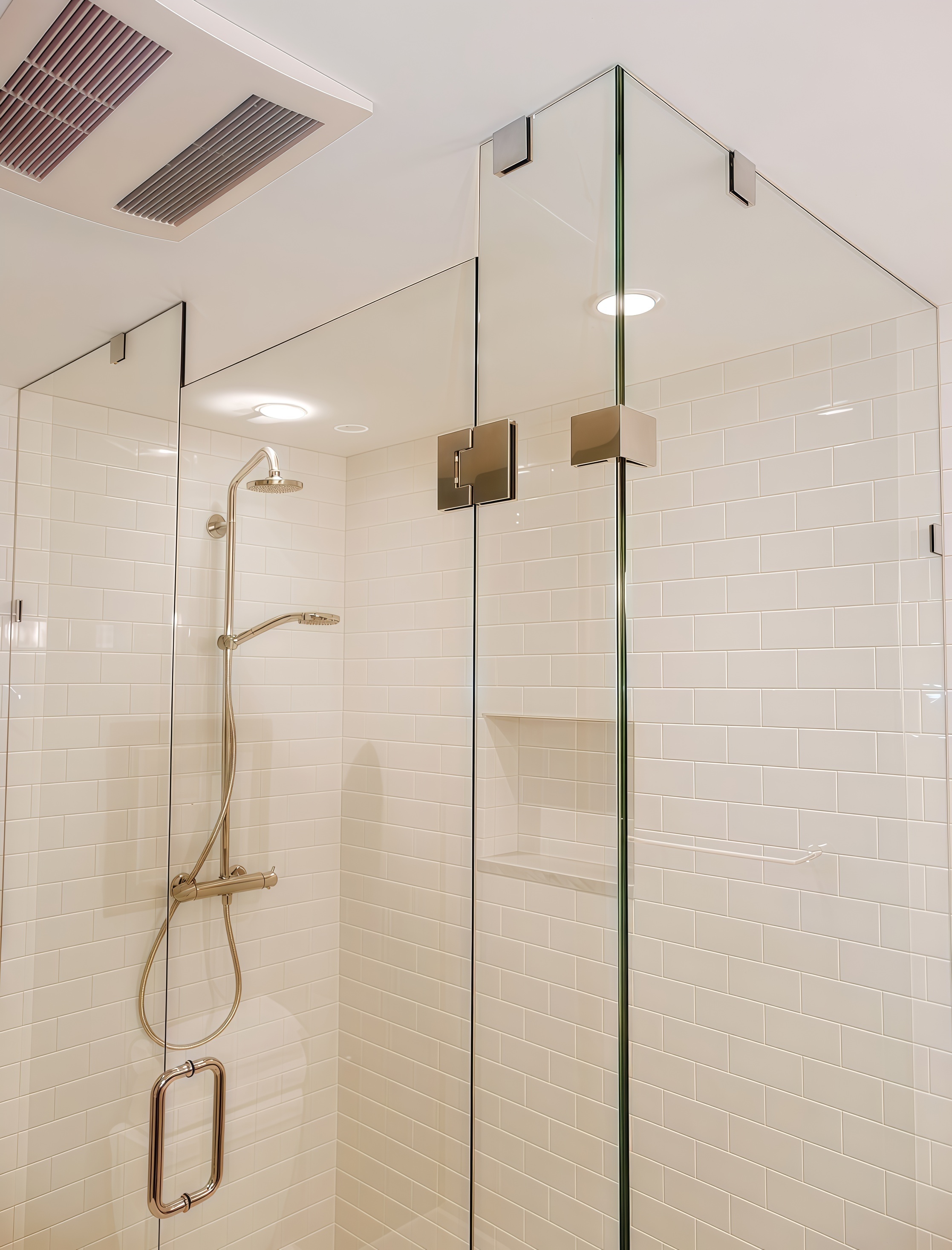
I. Why Are Glass Hinges More Than Just Connectors? How Do They Affect The Safety And Design Performance Of Glass Doors?
Once a frameless glass door is installed, what you see is transparent glass, clean spatial lines, and hardware that’s almost completely hidden. But for engineers and buyers, the real concerns aren’t whether “the hinges look nice,” but rather “Can this set of glass hinges support the weight of the glass door over the long term? Can it maintain a stable door gap? Can it withstand daily, repetitive opening and closing?”
This is because problems with glass doors often stem not from the glass itself, but from incorrect hinge selection and system mismatches.
- The door functions normally initially but sags after a few months
- The top and bottom edges are not flush when the door closes
- Pressure marks appear on the glass at the hinge locations
- Opening and closing the door becomes increasingly difficult
- The hardware surfaces begin to corrode
However, all of these issues essentially stem from an improper match between the weight of the glass, the door dimensions, the load-bearing capacity of the hinges, and the installation structure.
1. Thicker glass does not necessarily mean you need larger glass hinges
When choosing hinges, many people assume that since 12mm glass is thicker than 10mm glass, they need to select larger hinges. However, this is not how it’s actually determined,
Because glass hinges actually bear
The Vertical Load Generated By The Weight Of The Glass + The Dynamic Torque Generated By Opening And Closing The Door
The weight of tempered glass is approximately
Glass Weight (kg)≈Width (m)× Height (m) × Thickness (mm)×2.5
Therefore, when selecting glass hinges, you need to confirm both of the following:
2. Glass doors often sag after installation. In many cases, this is not due to installation issues but rather to incorrect hinge matching
The door panel gradually shifts downward. Common causes include:
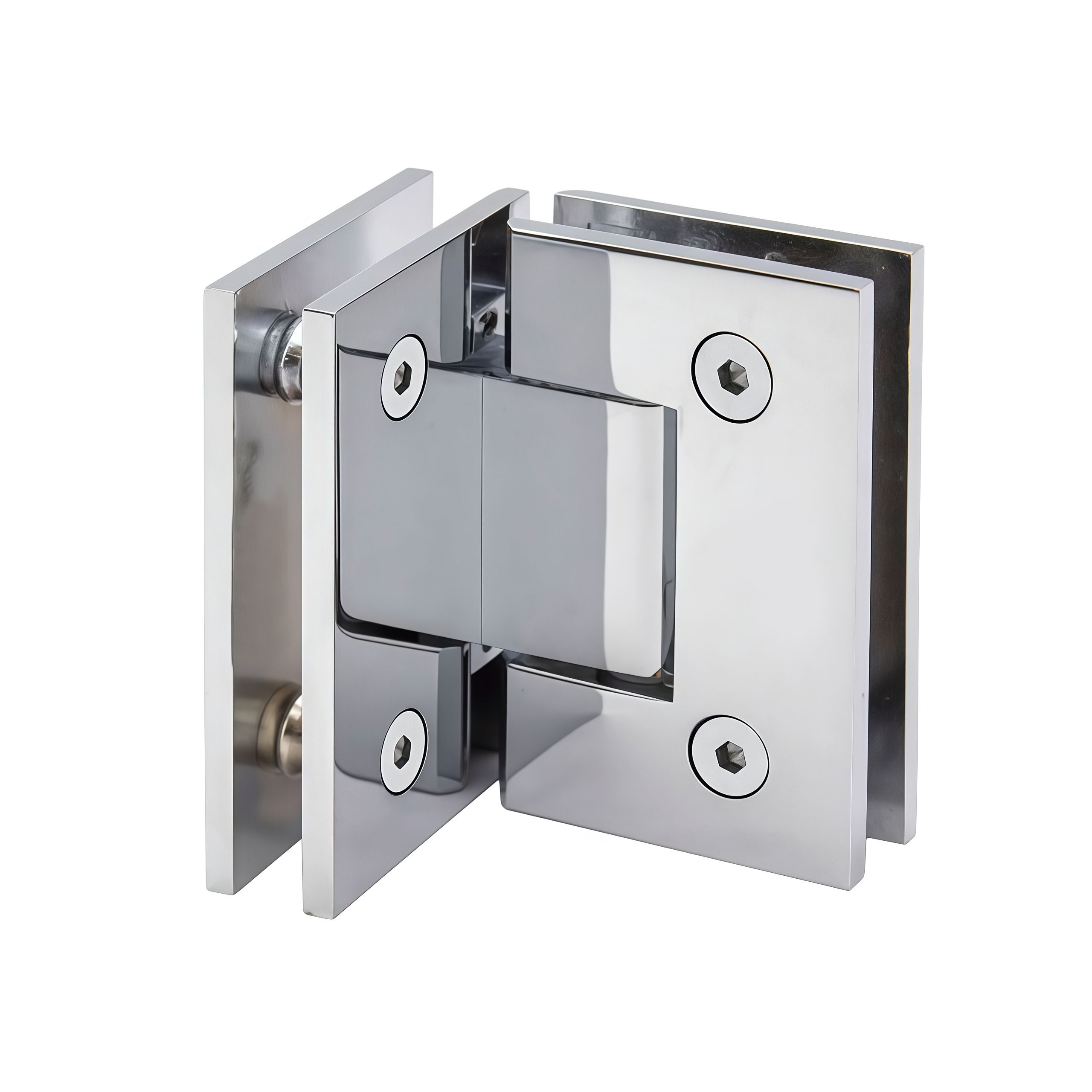
① Insufficient hinge load-bearing capacity
This issue is rarely noticed during installation, but prolonged use can lead to impact when opening the door, as well as slight shifts in the hinge’s internal structure and mounting position.
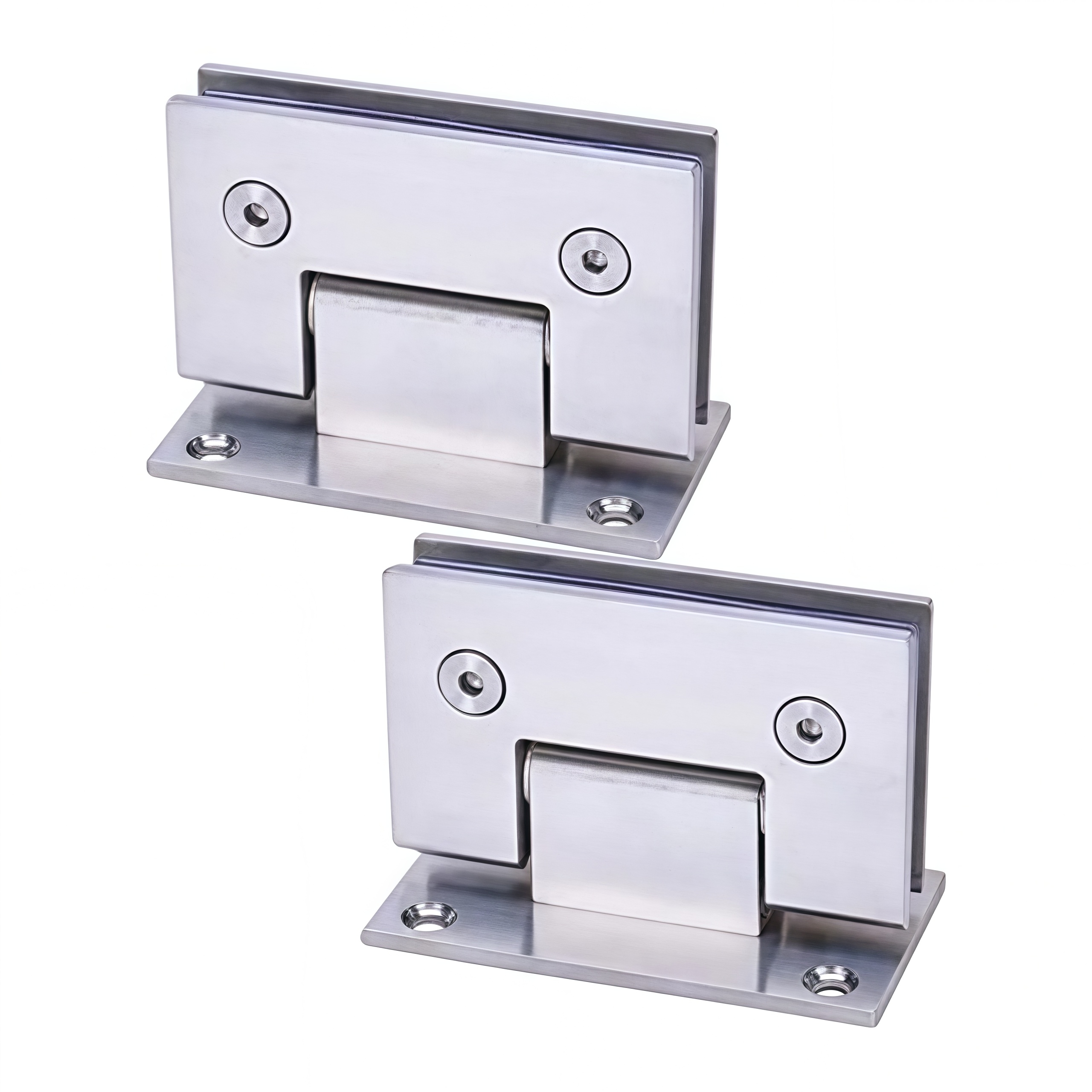
② Improper hinge placement
For glass doors of the same weight, the greater the distance between the two hinges, the more stable the load distribution. If the two hinges are installed too close together, greater tilting forces are generated at the top and bottom. Therefore, determining hinge placement in construction projects typically requires consideration of the door’s height, weight, number of hinges, and frequency of use.
The reality is this: glass hinges can improve both the safety performance and design aesthetics of a glass door system, but not because “thicker hinges are safer” or “a more attractive surface is higher-end”. Rather, it depends on achieving the correct systemic compatibility between the hinges, the glass, the load, the support structure, the mode of movement, and the operating environment.
II. Why Glass Hinges Do More Than Just “Open Doors”
When viewed at rest, hinges appear to simply connect the glass to the wall. But once the door begins to move, the tasks the hinges perform become more complex.
When the door is closed, the hinges seem to merely hold the glass in place. But as the door is opened, paused, and closed day after day, the hinge actually handles the transfer of the glass’s weight, dynamic loads during opening and closing, control of the door panel’s movement, and the stability of the connection between the glass and metal.
Therefore, a suitable hinge not only determines whether the door can open but also affects these four key factors:
- Whether the door remains level over the long term
- Whether the door gap remains stable
- Whether opening and closing are smooth
- Whether the hardware can function reliably over the long term
| Why do wider doors place greater demands on the hinges when opened?
This is because the weight of a glass door is typically not centered on the pivot axis. The farther the weight is from the pivot point, the greater the torque generated. In other words, for a piece of glass of the same weight:
Installed close to the hinge→Less pressure
Installed far from the hinge→Exerts greater tensile force on the hinge
τ= rF sin(θ)
Therefore, when selecting glass hinges, you shouldn’t just focus on whether they can support the weight.
You also need to consider how much dynamic load that weight will generate on a door of this size.
| Why are being suitable for 10–12 mm glass and being capable of supporting a door of a certain weight not the same concept?
This is a point of confusion that often arises during the procurement process. For example,
if a product is labeled as suitable for 10–12 mm glass, this does not directly mean that the hinge can support all glass doors within that thickness range. It only indicates that the hinge’s clamping structure, shim design, and installation method are suitable for that range of glass thicknesses.
The actual load-bearing capacity also depends on:
III. What Really Needs Attention Is The “Glass-Hinge Interface”
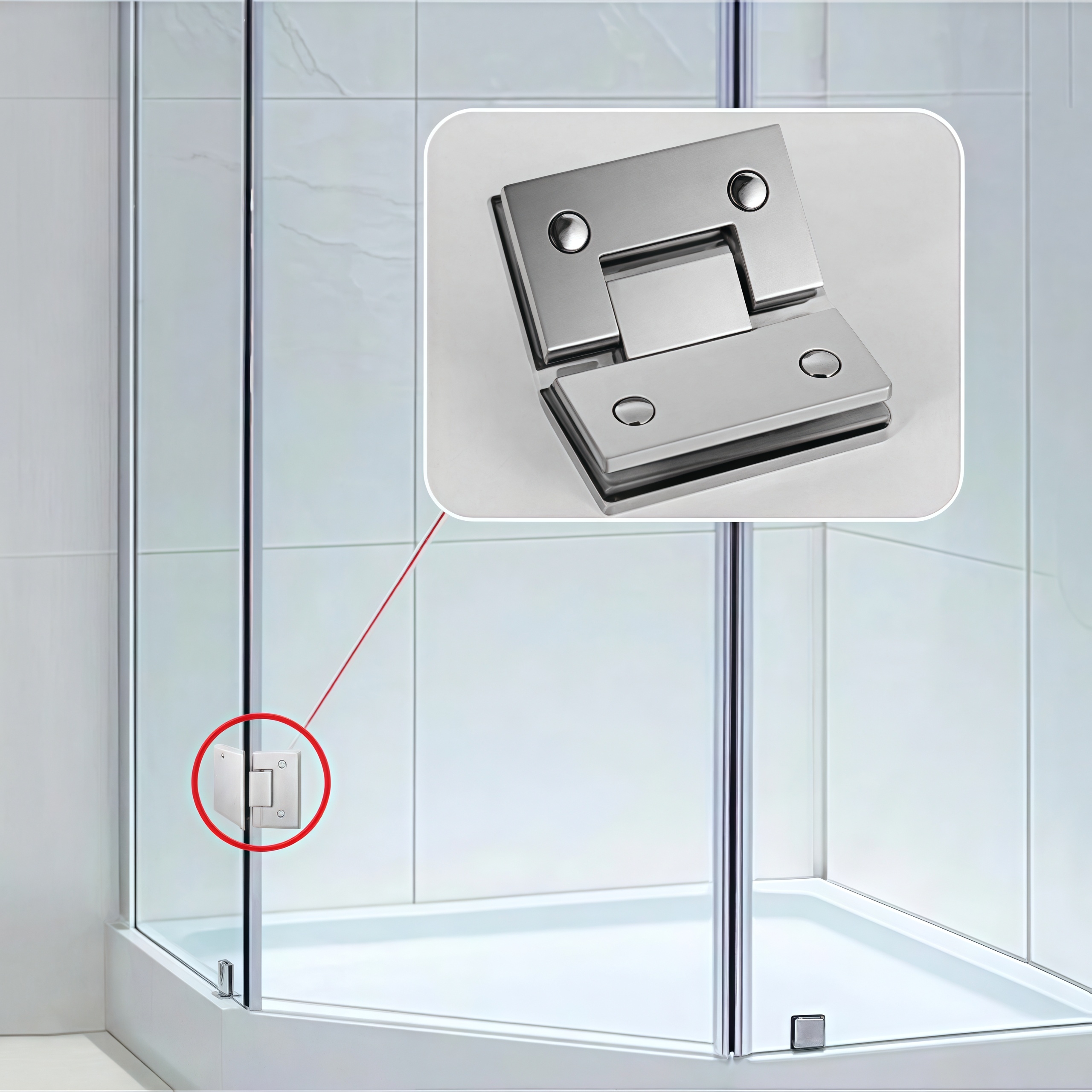
In frameless systems, there is one detail that is easily obscured by the appearance: the metal hinge must ultimately transfer force to the glass. However, this cannot be achieved simply by tightening the screws.
Visually, the hinge merely clamps the glass in place and secures it with screws. However, from a structural perspective, this is actually the critical node in the entire load-transfer chain of the glass door:
Door panel weight → Hinge clamping structure → Gasket / Liner → Glass → Holes or notches in the glass → Entire support system
In other words, whether the hinge can ultimately function stably depends not only on the thickness of the metal body itself, but also on how the glass and metal come into contact, how they are clamped together, and how force is transferred.
| Why can’t we simply assume that “tightening the screws is enough”?
Metal hardware can withstand significant localized pressure. Whereas glass, especially tempered glass that has undergone processing, requires even greater care to avoid improper localized contact and installation stresses.
Therefore, in clamping structures, materials such as gaskets and liners are typically placed between the metal clamps and the glass.
These are not merely optional “soft pads”, but integral components of the contact interface between the glass and the metal.
They generally serve several practical functions: → → → →
However, there is a common procurement misconception to keep in mind. The presence of a gasket does not automatically guarantee safety. What truly needs to be verified is whether the gasket’s material, thickness, dimensions, and installation method are compatible with the corresponding hinge structure and glass specifications.
| Is tighter always better? Not necessarily
This is a crucial point to remind purchasers about the installation of glass hardware. If the design pressure of the clamping structure exceeds the range that the glass joint can reasonably withstand, over-tightening may actually increase localized stress. Therefore, what should truly be controlled during installation is—
clamping structure + gasket/liner + glass thickness + tightening requirements
If the supplier provides installation instructions, you should strictly follow them, including:
- Verify that the actual glass thickness falls within the hinge’s permissible range
- Verify that the gasket/liner is installed in the specified position
- Verify that there are no foreign objects or hard particles between the glass and the metal
- Install according to the manufacturer’s specified fastening methods and requirements
- After installation, check whether the glass is securely held in place, rather than simply continuing to increase the clamping force
----------------------------------------------------------------------------------------------------------------------------------------
Glass itself must also be considered in conjunction with hardware from the very beginning. For frameless glass systems that incorporate glass hinges, glass fabrication is not a separate step. Standards such as ASTM C1048 and ISO 12540:2017 emphasize the performance requirements for tempered glass products, and these performance characteristics must be consistent with the design of the hardware interfaces.
Frameless Shower Enclosure Guidance Of The National Glass Association also incorporates dimensional limitations, hardware, structural support, and visual quality into a single set of design considerations.
IV. Opening Angle And Closing Mechanism Are Actually Two Separate Matters
When selecting hinges for glass doors, specifications such as 90°, 135°, and 180° are commonly seen. However, you cannot directly assume that a hinge will necessarily feature self-close, slow-close, or automatic return-to-position functions.
The opening angle determines the range of motion of the door leaf, while the closing behavior controls the closing process of the door leaf.
If an existing glass door is sagging, scraping against something, or unable to stay in the correct position, you should first determine whether the issue is caused by the door panel shifting out of place, a loose mounting structure, or a hinge adjustment problem. For specific instructions, refer to diagnosing and correcting glass door sagging, but do not treat routine adjustments as a one-size-fits-all solution for all problems.
V. Why Safety And Aesthetics Often Stem From The Same Engineering Decision
The precise positioning of the door panel not only determines whether a glass door can move smoothly but also directly affects the overall appearance of the door gap, glass edges, and hardware. If one focuses solely on appearance while neglecting actual movement and installation conditions, even if the door looks neat, it does not necessarily mean it functions optimally.
For example, alignment is first and foremost a functional issue. If the positional relationship between the movable glass panel and the fixed surface is incorrect, the door’s clearance and movement path will be affected. However, from the perspective of an architect or user, this same alignment also affects whether the door gaps are parallel, whether the glass edges are neat, and whether the hardware is positioned consistently.
Therefore, rather than asking, “Is this hinge a safety hinge or a design hinge?” It is better to ask, “Do the engineering properties of this hinge meet the structural, kinetic, environmental, and visual requirements of this glass system?”
VI. The Value Of Stainless Steel Glass Hinges Goes Beyond Simply “Resisting Rust”
Stainless steel is commonly used in architectural hardware, but “stainless steel” does not mean it will never rust. The corrosion resistance of stainless steel primarily comes from a passive film that forms on its surface. When the surface is damaged, this protective film can reform under appropriate conditions. However, if the corrosive factors in the environment are too severe, localized corrosion may still occur. ASSDA technical documentation indicates that stainless steel may still be subject to localized corrosion, such as pitting, under certain conditions. Therefore, when purchasing, one should not merely check whether a product is labeled as “stainless steel,” but must also assess whether the specific material is suitable for the intended environment.
| How should one choose between 304, 316 and brass?
ASSDA’s material selection guidelines for 316 note that, because 316 contains molybdenum, it generally offers better resistance to pitting and crevice corrosion than 304. However, 316 is not immune to corrosion in all environments. Nickel Institute’s architectural application guidelines similarly emphasize that materials should be selected based on actual exposure conditions.
Brass is a copper-based alloy commonly used in architectural hardware where a metallic finish, decorative effect, or specific surface color is required. Its performance depends on the specific alloy composition, product structure, and surface treatment. One cannot assume, based solely on the term brass, that it is suitable for all humid or outdoor environments.
This is why, when purchasing stainless steel glass hinges or stainless steel glass door hinges, the term “stainless steel” alone is not sufficient to determine the material. You should also verify the specific grade, the actual operating environment, the surface finish, and whether the product will be exposed to chlorides, cleaning chemicals, or prolonged moisture.
VII. Why Glass Shower Door Hinges Are A Particularly Typical Example
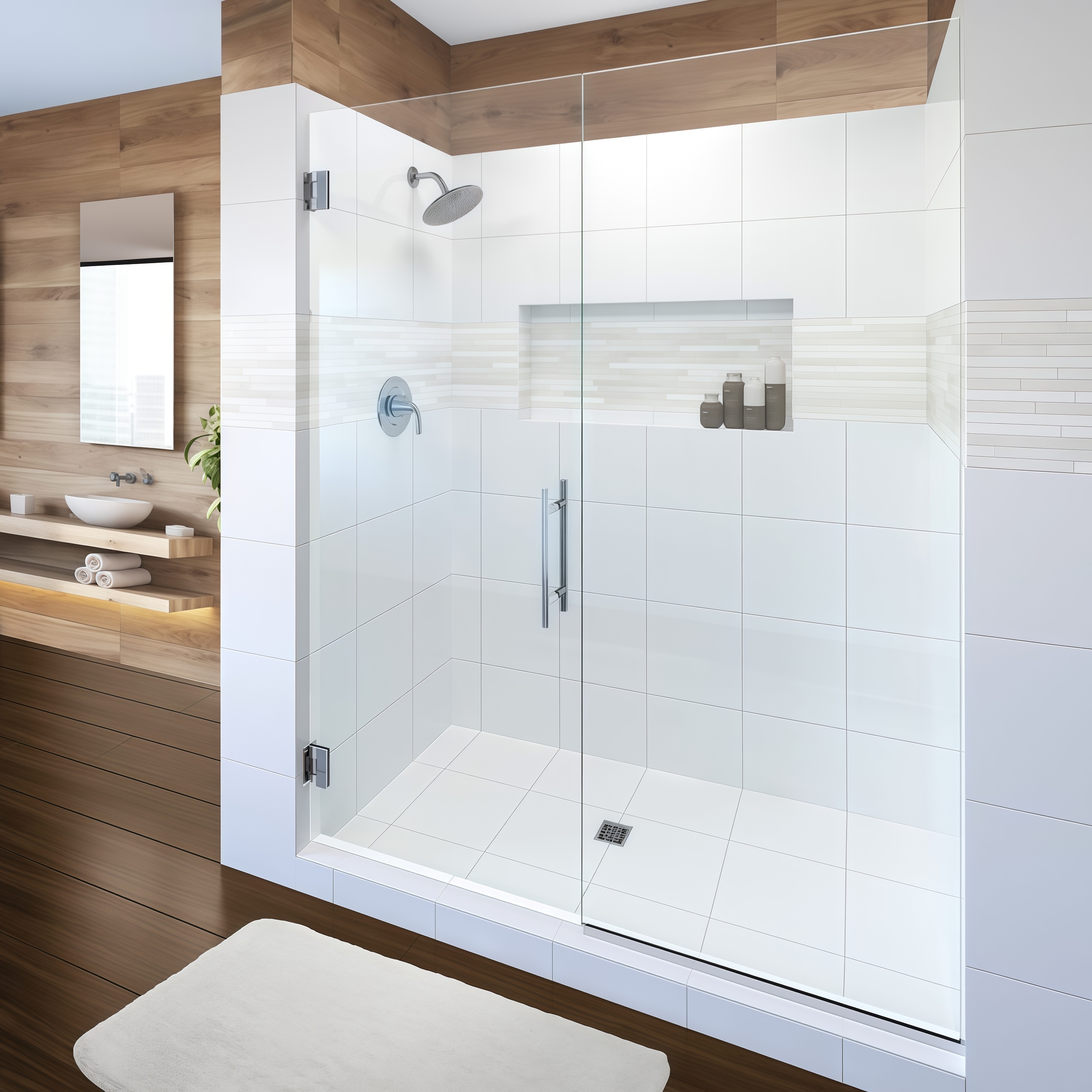
In practical applications, frameless shower enclosures are a very typical example. The design aims to preserve the glass’s sense of transparency as much as possible while minimizing visible metal hardware. However, during use, the hinges must withstand prolonged exposure to moisture, repeated opening and closing, and the weight of the glass door itself.
1. First, calculate the weight of the glass door, don’t just rely on the glass thickness
Estimating the density of ordinary glass at approximately 2,500 kg/m³, the theoretical weights of glass of different thicknesses are as follows:
For example, a glass door measuring 800 × 1900 mm has an area of 1.52 m². If 10mm-thick glass is used, the theoretical weight of the glass alone is approximately 38 kg, not including accessories such as door handles.
2. Check whether the hinge is compatible with the glass thickness
- Glass thickness— Confirm the specific thickness range supported to avoid mismatches between the clamping structure and the glass
- Glass processing— Verify whether pre-drilled holes, notches, or other processing is required, as well as the hole locations and size specifications
- Installation Method— Confirm whether the glass will be installed against a wall or against another piece of glass when selecting the hinge, and verify that the wall, fasteners, or the other piece of glass meet the corresponding installation requirements
3. Do not overlook the mounting interface
When requesting a quote, it is best to provide an installation diagram or on-site photos, and clearly specify the door panel dimensions, installation method, and mounting substrate. This helps suppliers determine whether the product is suitable, rather than recommending models based solely on appearance.
4. Opening and closing behavior must also be confirmed in advance
- Opening direction
whether the door panel opens inward, outward, or in both directions - Perimeter clearance
whether the door panel comes into contact with fixed glass, the wall, handles, or other hardware when opened - Closing mechanism
whether it features automatic return, positioning at a specific angle, or other functions - Actual installation location
whether there is sufficient installation and movement space between the hinge and the wall, the edge of the glass, and adjacent hardware
--------------------------------------------------------------------------------------------------------------------------------------
If you’d like to learn more about the overall selection process for shower enclosures, you can read choosing hinges for frameless shower enclosures.
If your project has already reached the stage of comparing specific products, you may also want to review frameless glass door hinge for architectural applications. Please note that whether a product is suitable for a specific shower enclosure should still be determined based on its verified technical specifications. Conclusions should not be drawn solely based on the product category or appearance.
VIII. What A Project Should Really Confirm With Suppliers
During the procurement phase, rather than simply asking, “Is this hinge safe?” it is better to request that the supplier provide verifiable technical information. This is because, for glass hinges, safety is not determined by any single component alone, but rather depends on the glass itself, the hinge specifications, the installation structure, and the regulatory requirements applicable to the project.
⭐First, confirm that the glass meets the project requirements, rather than placing all the responsibility on the hinge
Taking the U.S. market as an example, CPSC’s 16 CFR Part 1201 establishes safety requirements for applicable architectural glazing materials and related products, covering applications such as doors, bathtub doors and enclosures, and shower doors and enclosures.
⭐Request that the supplier provide specific technical specifications for the hinge
If the supplier provides the maximum door weight, you should further verify the corresponding door width, glass thickness, number of hinges, and installation conditions. Do not directly apply the specifications of one hinge model to hinges with different structures.
⭐Finally, verify that the installation of the entire system complies with regulatory requirements
If the project is intended for the U.S. market, start by reviewing the relevant CPSC regulatory documents to verify the applicable glazing requirements. Then, combine this with the building codes of the project’s location and specific product documentation to confirm the actual requirements that must be met.
IX. FAQ
1. Do glass hinges make frameless glass doors safer?
They can improve the system’s safety performance, but they cannot guarantee “safety” on their own. The correct hinge must be matched to the glass thickness, door load, mounting condition, glass preparation, and supporting structure. Safety should be understood as the result of the entire glass-door system, rather than a single property of a specific hardware component.
2. Are stainless steel glass hinges guaranteed never to rust in humid environments?
No such guarantee can be made. The corrosion resistance of stainless steel is influenced by factors such as material grade, chloride exposure, surface condition, cleaning, and maintenance. Grade 316 typically resists pitting in chloride environments better than Grade 304, but corrosion is not entirely impossible even in sufficiently harsh environments.
3. Does the finish of a glass door hinge affect only its appearance?
No. Finish alters the hardware’s color, reflectivity, and overall visual harmony. Specific surface conditions and treatment methods may also affect cleaning, contaminant buildup, and long-term surface performance. However, corrosion resistance cannot be judged solely by the finish name without considering the base material.
4. Why is a gasket or liner typically required between a glass hinge and tempered glass?
They are used to establish the glass-to-hardware interface required by the design and to prevent direct, hard metal-to-glass contact. Specific materials, thicknesses, and fastening methods should follow the hinge manufacturer’s technical specifications. Do not assume that any gasket is suitable for any hinge or glass.
5. Does a 90°, 135°, or 180° glass hinge mean it can automatically return to its original position?
Not necessarily. The angle typically describes the installation geometry or opening configuration, while self-closing, self-centering, spring return, or damping are separate motion control characteristics. These should be verified separately during procurement. Closing behavior cannot be inferred from the angle designation alone.
Reference & Sources
- ASTM International — ASTM C1048-25: Standard Specification for Heat-Strengthened and Fully Tempered Flat Glass
- ISO — ISO 12540:2017, Glass in building — Tempered soda lime silicate safety glass
- National Glass Association — Frameless Shower Enclosures Design Guide
- Australian Stainless Steel Development Association — General Corrosion Resistance: The Normal State for Stainless
- Australian Stainless Steel Development Association — 316: The First Step Up
- Nickel Institute — Architecture, Building and Construction
- U.S. Consumer Product Safety Commission — 16 CFR Part 1201 Architectural Glazing Materials