Glass Standoffs And Stair Structures Work Together To Build Stable Glass Staircases
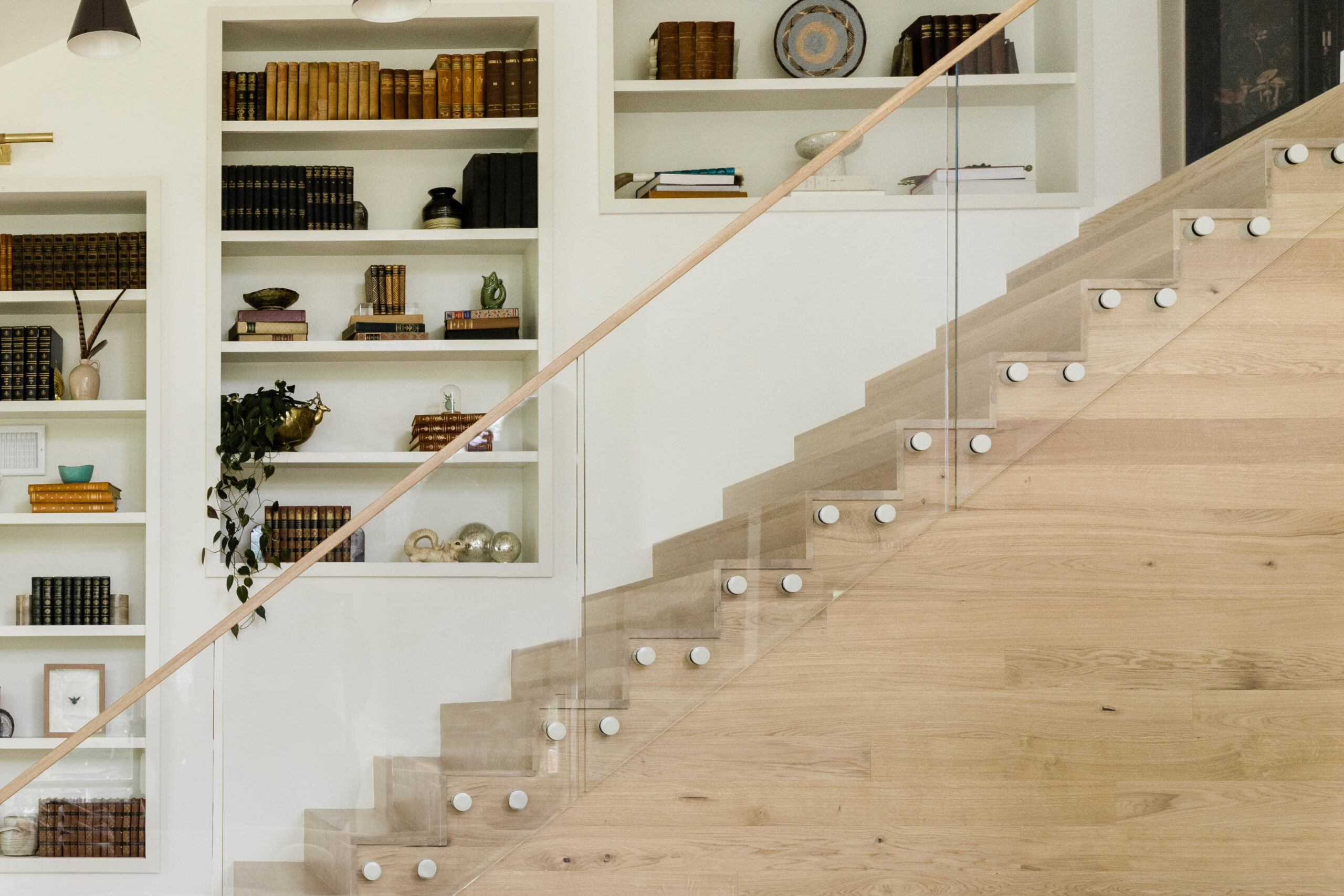
The load-bearing relationship formed between the glass, the glass standoffs, and the stair structure determines a glass staircase's true stability rather than the glass itself.
The hardware mounting technique, the load path, and long-term stability are all directly impacted by the choice of stair tread material, such as steel, concrete or wood.
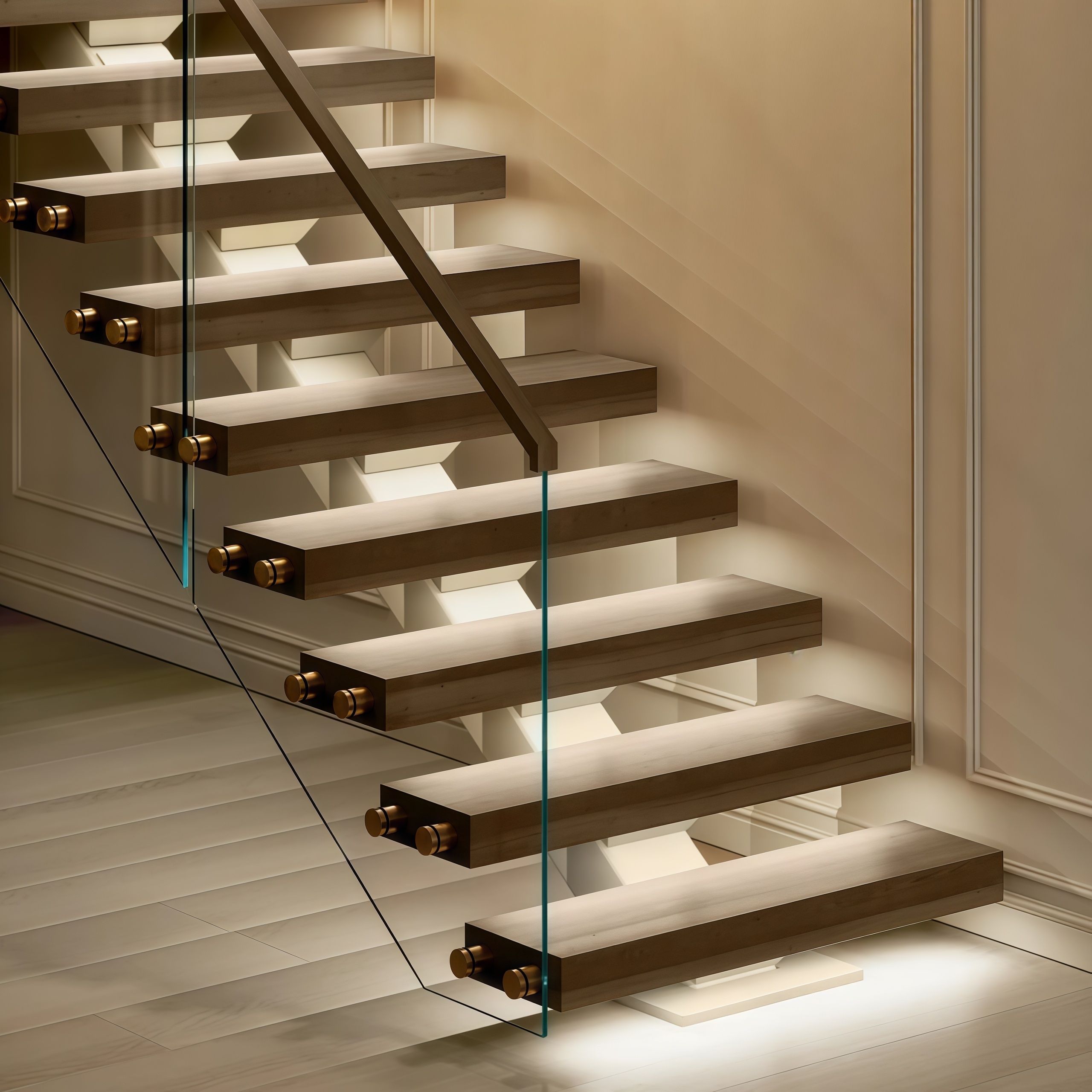
Wooden Staircases: Pay Attention To Localised Load Distribution And Substrate Strength
When it comes to fastening, wood behaves differently than steel or concrete. As a result, the internal structure of the tread must be carefully considered before adding glass standoff fittings.
Wood is a popular material for homes, upscale villas, and boutique commercial spaces because of its warm texture and natural grain, which soften the cold, stiff feel of glass structures. But the main drawback of wooden treads is their comparatively soft surface. Long-term resistance to the constant lateral pressure applied by glass panels cannot be achieved by relying only on the thickness of the surface plank.
Glass railing standoff pins and wooden stairs require the addition of a steel plate or hidden metal support beneath the wood finish. The main load-bearing points should be structural beams, and to strengthen the bolted connections, the substrate needs to be reinforced. As a result, the interior structure now bears the load for the glass standoffs instead of the wood surface.
Clean lines of metal and glass make up the visual aesthetic, but the real safety depends on internal structural strengthening that is hidden from view.
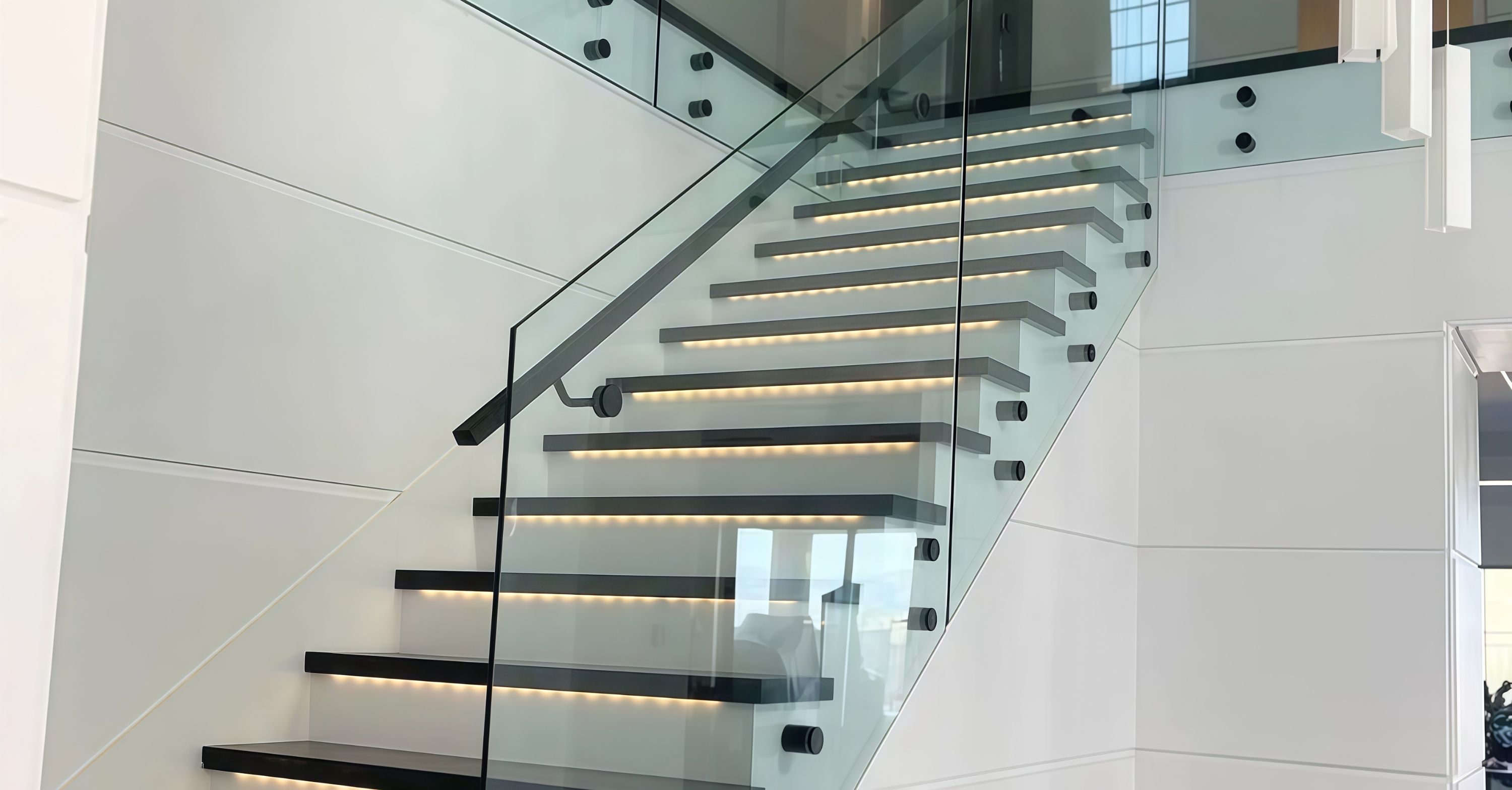
Concrete Staircases: Ideal For Load-bearing Glass Systems Since They Provide The Strongest Fixation
The most popular kind of staircase with glass railings is made of concrete, which provides better structural stability. Glass standoff hardware can be firmly fastened to the main structure using expansion bolts, chemical anchors, or embedded components because concrete has a high compressive strength.
There are a few things to take into account when combining concrete steps and glass standoffs. Support sites should stay away from concrete that is structurally weak. Pull-out and lateral resistance are directly impacted by fixation depth. The chance of loosening over time is reduced by deeper linkages into the core structure. Installation location, connecting techniques, and structural design must all be taken into account because some cantilevered concrete steps have a limited thickness.
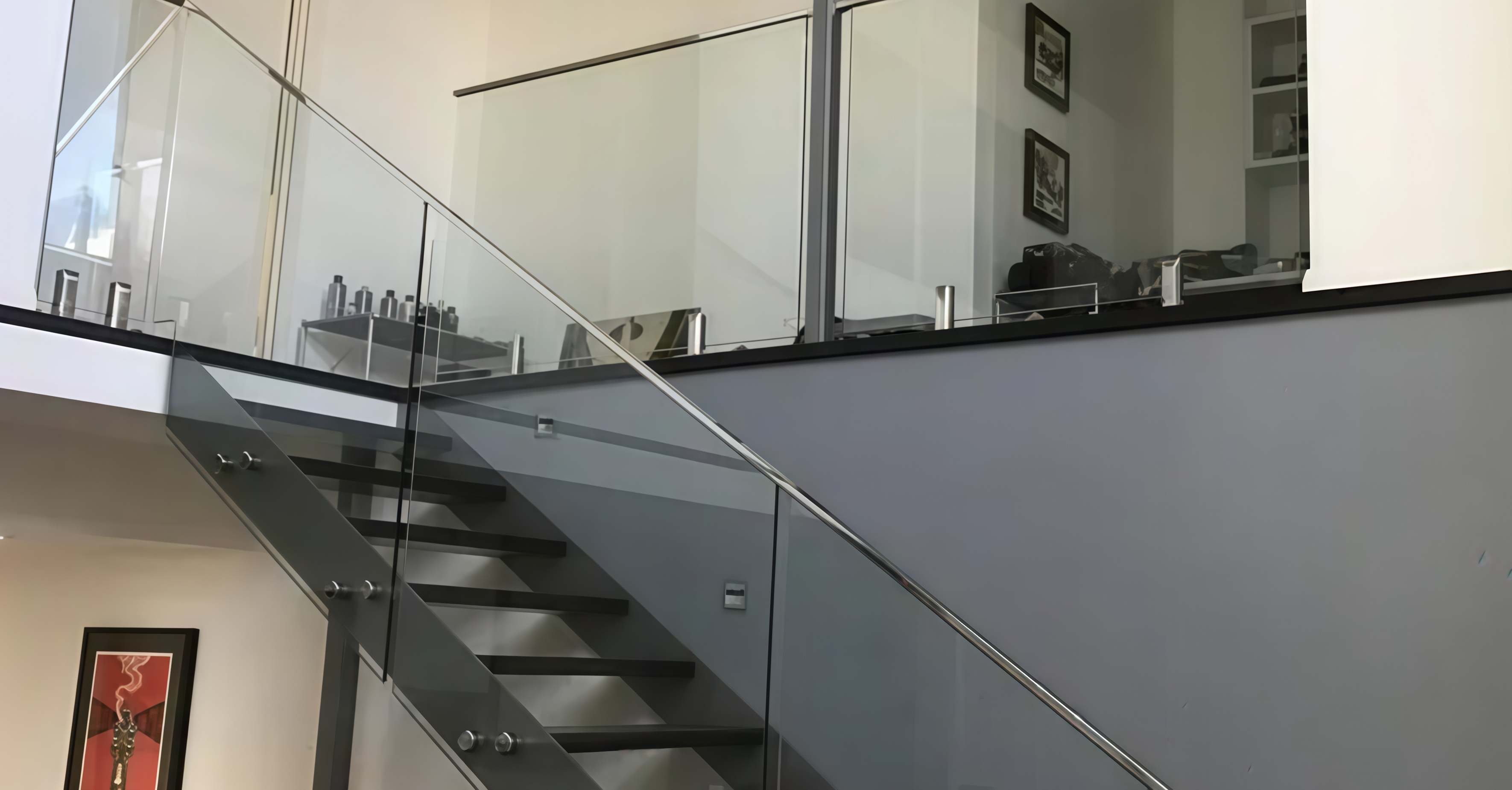
Steel Structure Staircases: Using Accurate Connections To Achieve High Strength And Stability
The main load-bearing elements of steel-structure stairs are usually steel beams, plates, or metal frames, which enable loads from the glass balustrades to be transferred straight to the main steel structure.
Glass Standoff Steel Plate Connection Point Steel Beam Frame Building Structure is the load path.
It is necessary to perfectly align several glass standoffs while installing glass balustrades. Uneven load distribution may come from some supports bearing excessive pressure due to any displacement in the base of the steel structure. As a result, rather than depending just on material strength, matching glass standoffs with steel staircases prioritises production accuracy and installation fit.
Standoff Glass Ensuring Long-Term Stability
Glass railing standoffs must efficiently transfer lateral pressures exerted on the glass onto the stair assembly since they are essential hardware that connects the glass to the staircase construction. By allowing several fixing points to share the load, a sound structural design lowers the risk of loose connections and structural fatigue by preventing any one support from withstanding excessive strain over time. Long-term performance is directly affected by manufacturing accuracy and connection-structure design, even though material attributes underpin long-term stability. Equally crucial is the interface between the hardware and the glass. A glass staircase can only maintain its clean, transparent appearance while being safe and stable over the course of its service life by guaranteeing a dependable mounting base and seamless load transfer.
Glass standoffs are necessary for a dependable glass staircase system to minimise localised stress concentrations and long-term fatigue by uniformly transferring external forces acting on the glass to the staircase structure. The logical planning of the mounting base, fixing techniques, and overall load-bearing dynamics at the original design phase are critical to the hardware's reliable performance, whether for residential, commercial or large-scale projects.