What Makes The Right Sliding Door Handle For Your Glass Door?

Every sliding door handle is a load-bearing connection point as much as a grip. It is the part your hand touches more than any other, and the wrong choice can feel flimsy, loosen over time, or look out of place. A few practical checks make the choice much easier.
The short version: match the handle to the bolt spacing and glass thickness of your door first, choose through-glass mounting for heavier panels, and pick a finish that suits the room. Get those three details right, and the handle will feel solid for as long as the door lasts.
Through-Glass or Surface-Mounted?
Handles for glass doors come in two main mounting styles, and the difference matters more than the shape:
- Through-glass handles are held by bolts and escutcheons on both sides of the panel, with the glass drilled before tempering. They offer the strongest grip and are standard for heavier doors.
- Surface-mounted handles are glued or clamped onto the glass. They are easier to install but better suited to lighter panels and lower traffic.
1.Through-Glass Handles
A door handle for glass door panels is usually through-glass when the door is heavy or used often. The bolts pass through the panel and spread the load across both faces, which is why this style is the default for sliding glass door handles in bathrooms and commercial spaces. The trade-off is planning: holes must be drilled before the glass is tempered.
2.Surface-Mounted Handles
Surface-mounted models make sense for light interior partitions and temporary dividers. They install quickly, but the adhesive or clamp carries the whole load, so they are not the right door handle for sliding glass door installations that see daily pulling. If you are unsure, choose through-glass.
For sliding glass doors and shower enclosures, through-glass mounting is the safer, longer-lasting choice. If you are replacing an existing sliding glass door handle, check the current bolt spacing first, because the new handle must line up with the existing holes.
What Should You Match to the Door?
The door itself decides which handle works:

What Should You Match to the Door?
The door itself decides which handle works:
- Glass thickness determines the bolt length and gasket depth needed for an 8–12 mm panel
- Panel size and weight create leverage, so the handle must be firmly anchored
- Sliding glass doors benefit from low-profile or recessed handles that do not catch on the frame
- Finger clearance behind the handle affects how comfortable the grip feels
A handle that looks elegant on a showroom door can feel awkward on a narrow bathroom panel. Consider how the door is used daily before choosing a style. The same rule applies when you shop for door handles for sliding glass doors: the handle is part of the door's structure, not an accessory, and the specification sheet should state the glass thickness range it supports.
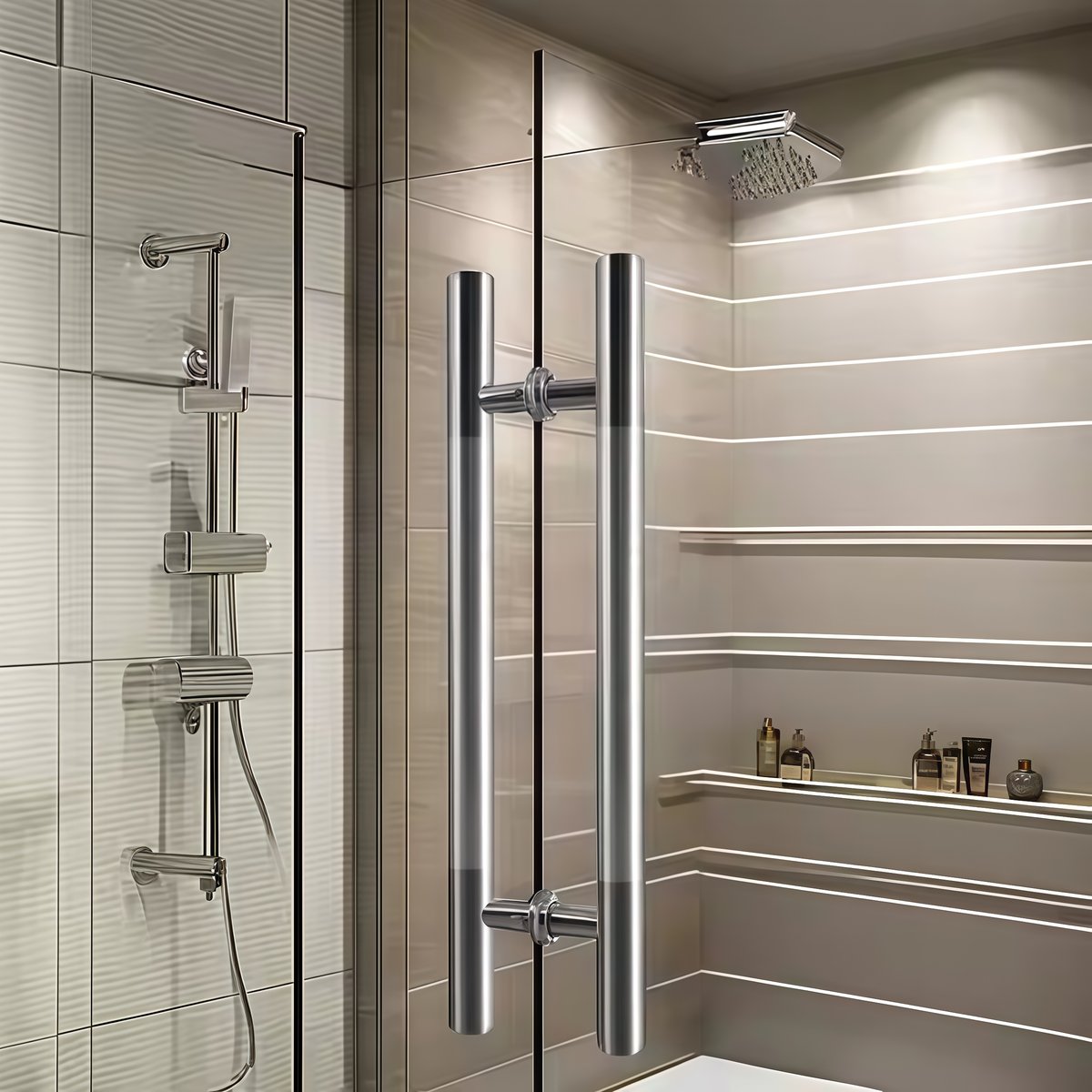
Which Finishes Survive Wet Bathrooms?
Handles in bathrooms and kitchens face constant moisture, so the material matters as much as the design. Stainless steel with a corrosion-resistant finish is the benchmark for glass door handles. Brushed or mirror stainless steel gives a clean, modern look, PVD-coated colors such as black titanium, rose gold, or bronze suit designer interiors, and brass or copper works for classic and luxury spaces provided they are properly sealed.
Painted or plated zinc handles wear quickly in wet environments, especially where hands grip the surface. The finish will fade, and the handle will look tired long before it fails mechanically. Wherever the door sits close to a bathroom or kitchen, stainless steel with a sealed finish should be the default.

What Does A Well-Designed Handle Do?
Beyond appearance, a good glass door handle gives a solid, non-slip grip even with wet hands, spreads the pulling force evenly across the glass edge, keeps screws and gaskets hidden for a clean look, and matches the rest of the door hardware. Longer models, sometimes called glass door pulls or door pulls for glass doors, run vertically along the panel and give the hand a natural pulling line. A glass door pull handle of the right length makes a heavy door feel lighter than a short knob ever could. Small details, such as the radius of the grip and the distance from the glass, decide how the handle feels in daily use.
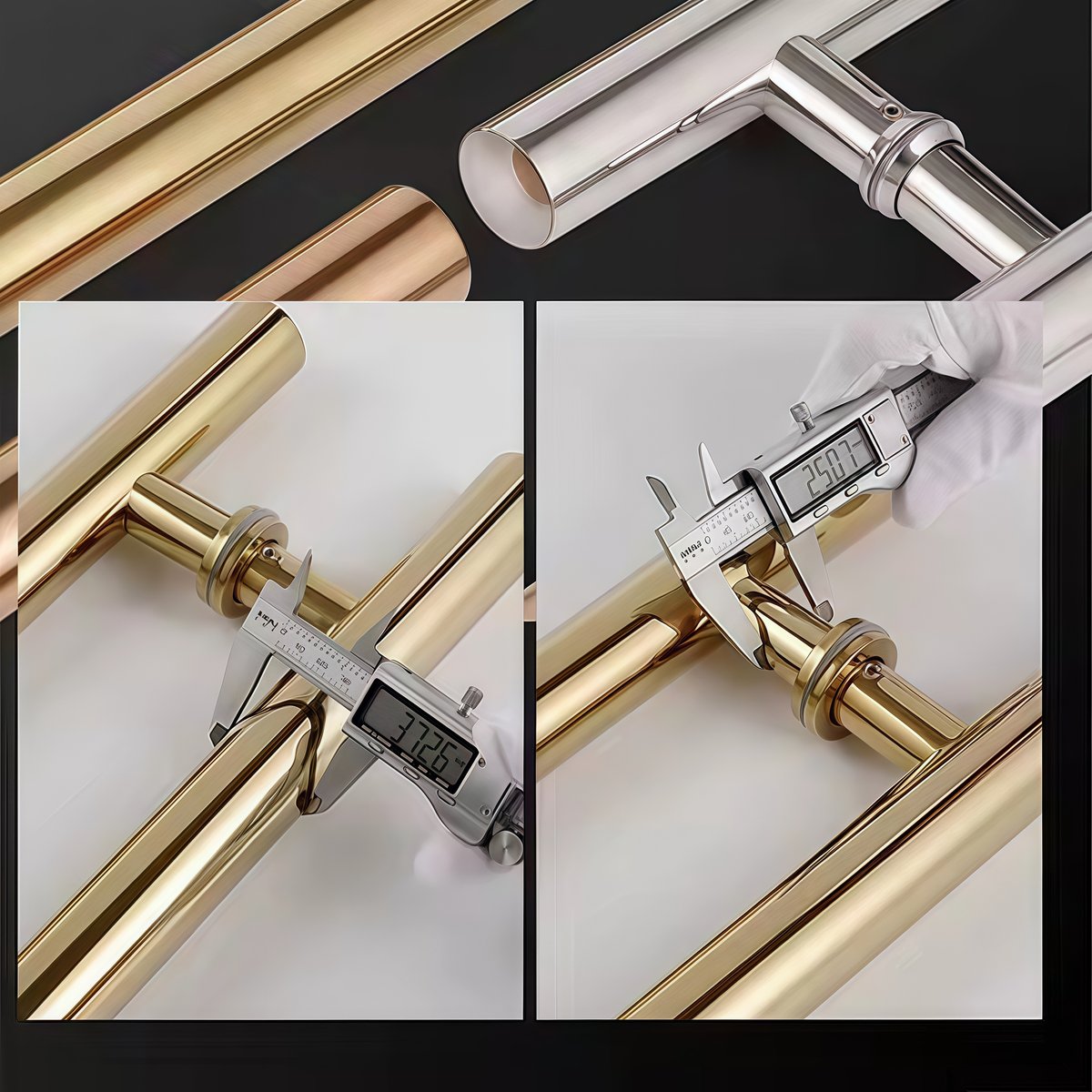
Can You Replace A Handle On An Existing Door?
Replacing a handle is one of the easiest door upgrades, but only if the geometry matches. When changing handles on an existing panel, confirm that the new bolt spacing matches the existing holes. If it does not, the glass must be re-drilled before tempering, which means ordering a new glass door with handle holes prepared at the factory. Checking the specification before ordering saves both time and money.
When a sliding glass door handle replacement is needed, order the screw kit and gaskets together with the handle. Handles that arrive with their own matched fixing kit install cleaner and keep the finish consistent on both sides of the glass.
A sliding glass door replacement handle with a different bolt pattern is the most common reason a simple job turns into a new panel. The same advice applies to replacement door handles for sliding glass doors: match the pattern, not just the looks.
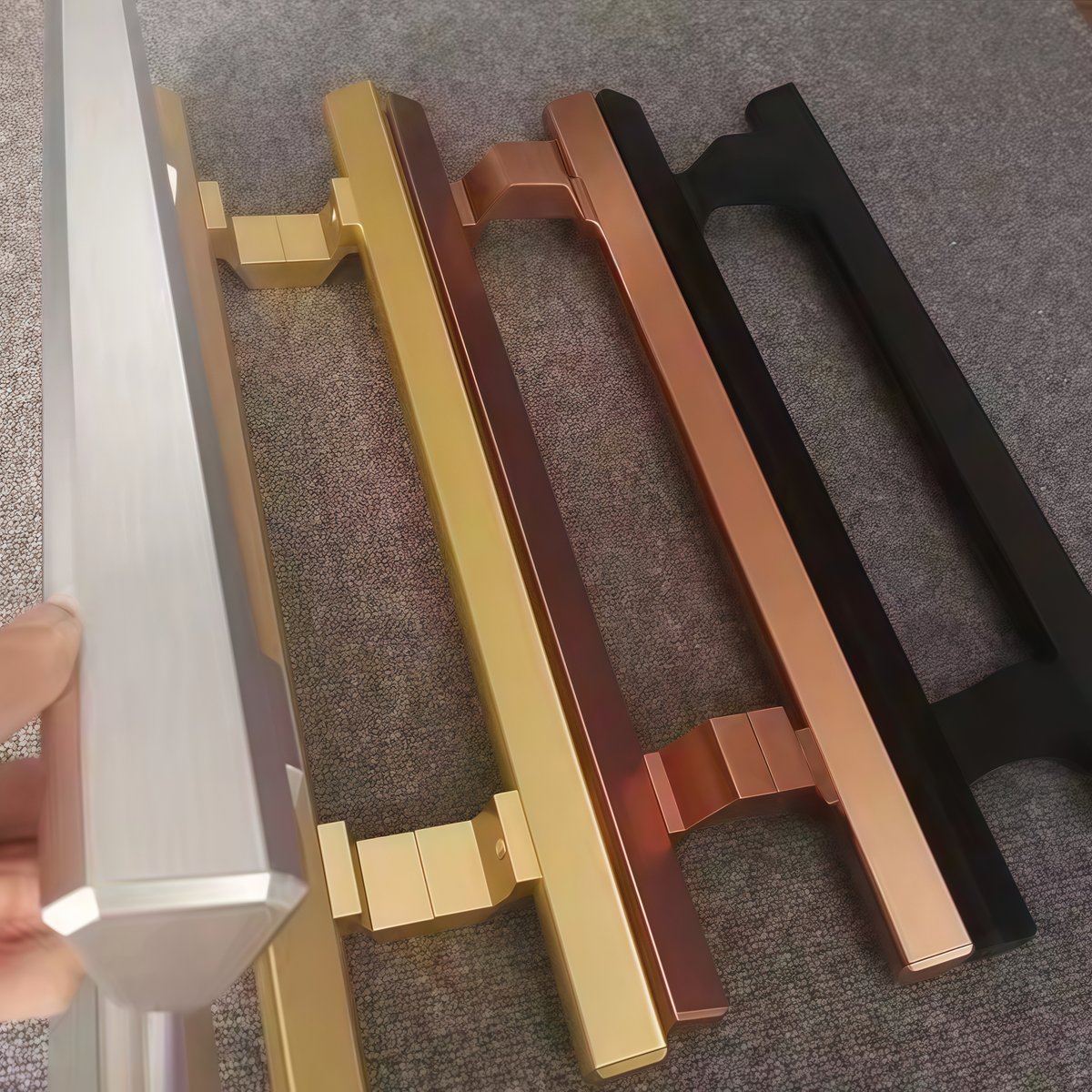
The cleanest installations treat the handle as part of a complete hardware system. When handles, rollers, limiters, and track guides share the same finish and design language, the door looks intentional rather than assembled from parts. A sliding glass door handle set usually includes the handle, escutcheons, bolts, and gaskets, which removes most guesswork at installation.
The Busrom sliding door kit integrates handles with high-precision rollers and matching accessories, so every component is coordinated for the same glass thickness and load. Choosing a handle for sliding glass door panels that fits the system, not just the door, keeps the door comfortable, safe, and visually consistent for the long term.
The finish of the sliding glass door handles should echo the finish of the rollers, hinges, and any visible track.
Loose screws from daily pulling are solved with thread-locking compound. Faded coating on plated handles in wet rooms is avoided by choosing stainless steel. Mismatched bolt spacing when replacing a handle is avoided by measuring first, and gaskets that slip out of place are avoided by using handles with captive gasket grooves. None of these problems are dramatic, but each one makes the door feel less solid. When ordering handles for sliding glass doors, check whether the screw kit, escutcheons, and gaskets are included; a complete set installs cleaner and keeps the finish consistent on both sides of the glass.
Frequently Asked Questions

1/Do Sliding Glass Door Handles Fit Standard Bolt Spacing?
Most sliding glass door handle ranges share common patterns, but spacing is not universal. Measure the existing hole centers before ordering, and confirm the glass thickness range on the specification sheet. A handle that matches both will install cleanly. Anything else needs a new panel.
2/Can You Put a New Handle on Tempered Glass?
No, tempered glass cannot be drilled after tempering. If the new glass door handle replacement has a different bolt pattern, the panel must be remade with holes drilled before tempering. Always confirm the pattern before you buy.
3/Are Glass Interior Door Handles the Same as Internal Types?
Glass interior door handles and glass internal door handles describe the same hardware for indoor partitions. Interior door handles glass panels use the same mounting logic as bathroom doors: through-glass for heavy use, surface-mounted for light partitions. Interior glass door handles follow the same rule.
4/How Do You Stop a Handle from Loosening?
Tighten the bolts evenly, use the supplied gaskets, and re-check after the first few weeks of use. A little thread-locking compound on the bolts prevents loosening from daily pulling. If the handle still moves, check that the gaskets sit correctly and the bolt length matches the glass thickness.

Final Checklist
- Measure the bolt spacing and glass thickness before you order
- Choose through-glass mounting for doors that get real daily use
- Pick stainless steel with a finish that survives the room
- Order the screw kit, escutcheons, and gaskets together
- Re-check the bolts after the first few weeks of use
Busrom's door handle series covers through-glass and surface-mounted styles in brushed, mirror, and PVD finishes for 8–12 mm glass. To see why a quality handle defines the performance of the entrance, or to discuss your project with the Busrom team, the door hardware specification starts with the numbers on your panel.
The same part is listed under several names in catalogs: sliding glass door handle, glass door handle, glass door pulls, sliding door handle glass fittings, and door handles for sliding glass doors. Whichever name you see, the critical details stay the same: the bolt spacing must match the glass holes, and the finish must suit the room where the door sits.