Does Glass Edge Treatment Affect The Installation Performance Of Glass Clamps?

"Does glass edge treatment affect the installation of glass clamps?"
"Glass edge treatment greatly affects a clamp's stability, visual appeal and long-term dependability after installation, but it does not decide whether a clamp may be mounted."
The glass edge itself is the point of contact, even though the main purpose of a glass clip is to hold the glass and transfer loads to the supporting framework. As a result, how well the clamp fits the glass depends on edge-processing quality, edge form and treatment technique. Understanding the effects of various edge treatments in advance helps reduce installation problems, and improve the quality of the finished product for the majority of procurement projects.
1. The fit between the glass railing clips and the glass is impacted by glass edge treatment.
To transfer clamping force uniformly during installation, glass clamps rely on stable contact between the clamping pads and the glass surface. The handrail glass clamps may not fit perfectly against the glass if the edge treatment is insufficient and exhibits noticeable unevenness, edge chipping or dimensional errors. On the other hand, glass with precisely ground edges ensures more consistent contact during clamp installation since it has a smoother surface and tighter dimensional tolerances.
2. Edge grinding lowers the possibility of glass damage and increases installation safety.
Glass railing brackets installation entail fastening the glass with bolts or clamping devices. Sharp edges that are left untreated not only make it more difficult for installers to do their jobs, but they also raise the possibility of glass damage. Untreated edges frequently include a large number of microcracks that can spread when an external force is applied. Additionally, sharp edges can slow down on-site work and put installers at risk for injury. By efficiently eliminating tiny nicks and microcracks brought on by cutting, edge grinding produces smoother edges and increases the glass's resistance to clamping pressure.
3. Stress distribution during clamp installation is influenced by glass edge treatment.
Rubber or cushioning pads are usually included with glass clamps to protect the glass by reducing hard contact and boosting friction. The clamping pads impart pressure to the glass surface when the clamp is tightened. Pressure tends to concentrate at particular locations if the glass edge is uneven because of height changes, localized nicks, or uneven edge thickness. The glass railing hardware is at risk of loosening over time because of this concentrated stress, which keeps it from seating precisely against the glass.
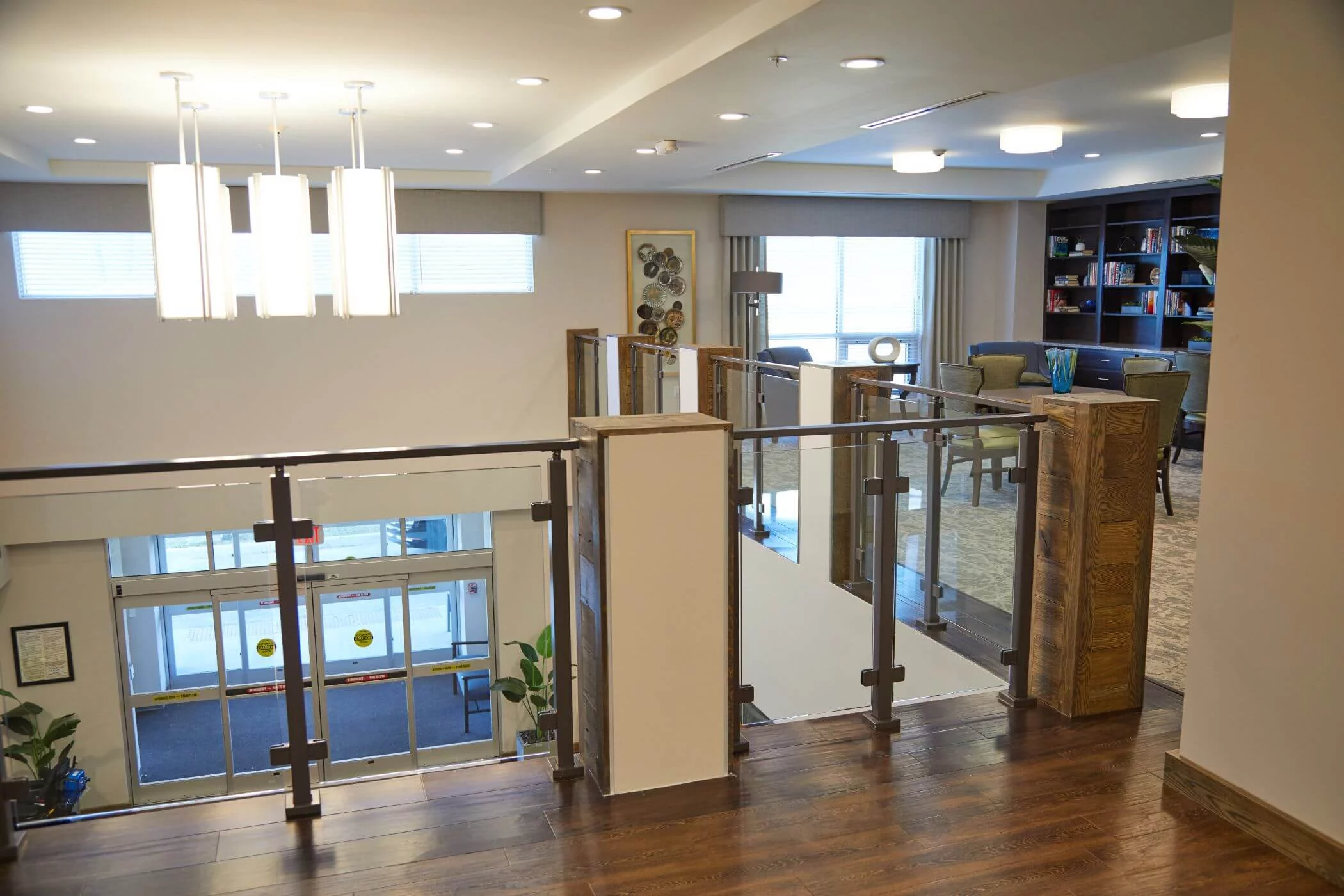
Certain projects call for chamfering the glass edges in addition to edge grinding. The main purpose of chamfering is to make the edges less sharp, which improves user safety. The chamfer's dimensions need to be closely monitored. The effective contact area between the mounting clamp and the glass may be reduced by an excessive chamfer, which would hinder the clamp's ability to completely cover the edge zone and impair clamping effectiveness. Therefore, it is crucial to confirm in advance that the glass thickness, clamp dimensions and clamping range are compatible when utilizing chamfered glass.
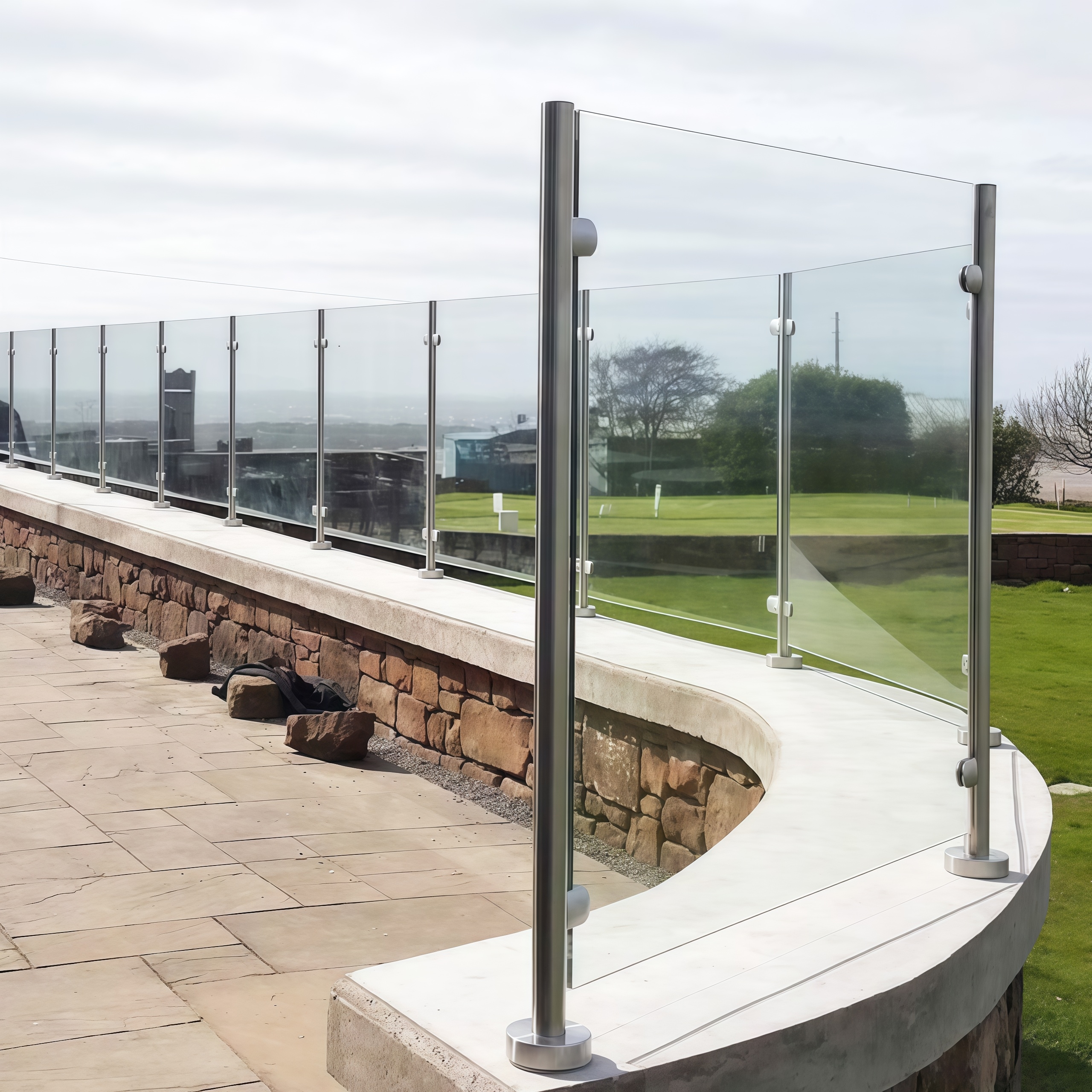
Glass stair railings have an open construction, which means that the large amount of transparent glass creates a visual focal point around the borders. Beyond safety concerns, the way the glass edges are treated has a big impact on the project's final appearance. A rough finish that diminishes the overall perception of quality might be caused by irregular edge lines or a lack of visual harmony between the glass and the stainless steel glass bracket clamp. In projects like contemporary architecture, hotels, villas and upscale homes, where clients value both safety and painstaking attention to detail, this is especially crucial. On the other hand, a clean, seamless visual impression is produced by well-finished glass edges combined with stainless steel glass clamps, giving the railing system a more upscale appearance.
What inspections of the glass edges need to be done before the clamps are installed?
- Examine the glass's edges to make sure there are no obvious chips, cracks or notches.
- Make sure there are no notable height differences in the regions where the railing clips will be installed by checking the edges' levelness.
- To prevent installation issues due to manufacturing tolerances, make sure the glass dimensions match the specifications.
- Verify that the edge treatment approach complies with project specifications. Planning is required, for example, because residential and commercial projects have distinct requirements for edges.