Behind Every Premium Stainless Steel Door Handle Is A Precise Manufacturing Process

A premium stainless steel door handle is more than just a metal tube with a shape. Several production steps are involved in its construction, such as material selection, cutting and shaping, welding, surface treatment, quality control and shipping packaging. The final product's strength, corrosion resistance, appearance, and long-term usability are all influenced by each step. Using typical 304 or 316 stainless steel handles as an example, the process from raw material intake to finished product shipment usually entails 7 to 10 major steps and a production cycle of 15 to 30 days. The precise duration varies depending on order volume, surface finishing requirements, and structural complexity.
Selection Of Raw Materials
It's important to choose the right stainless steel. For both indoor and outdoor doors, grade 304 stainless steel satisfies the requirements of the majority of residential and commercial applications. On the other hand, Grade 316 stainless steel is perfect for high-end projects, coastal areas, and high-humidity settings because it provides exceptional resistance to corrosion, salt spray and humidity. The factory thoroughly inspects the raw materials for thickness, surface quality and material composition before starting production.
Accurate Cutting
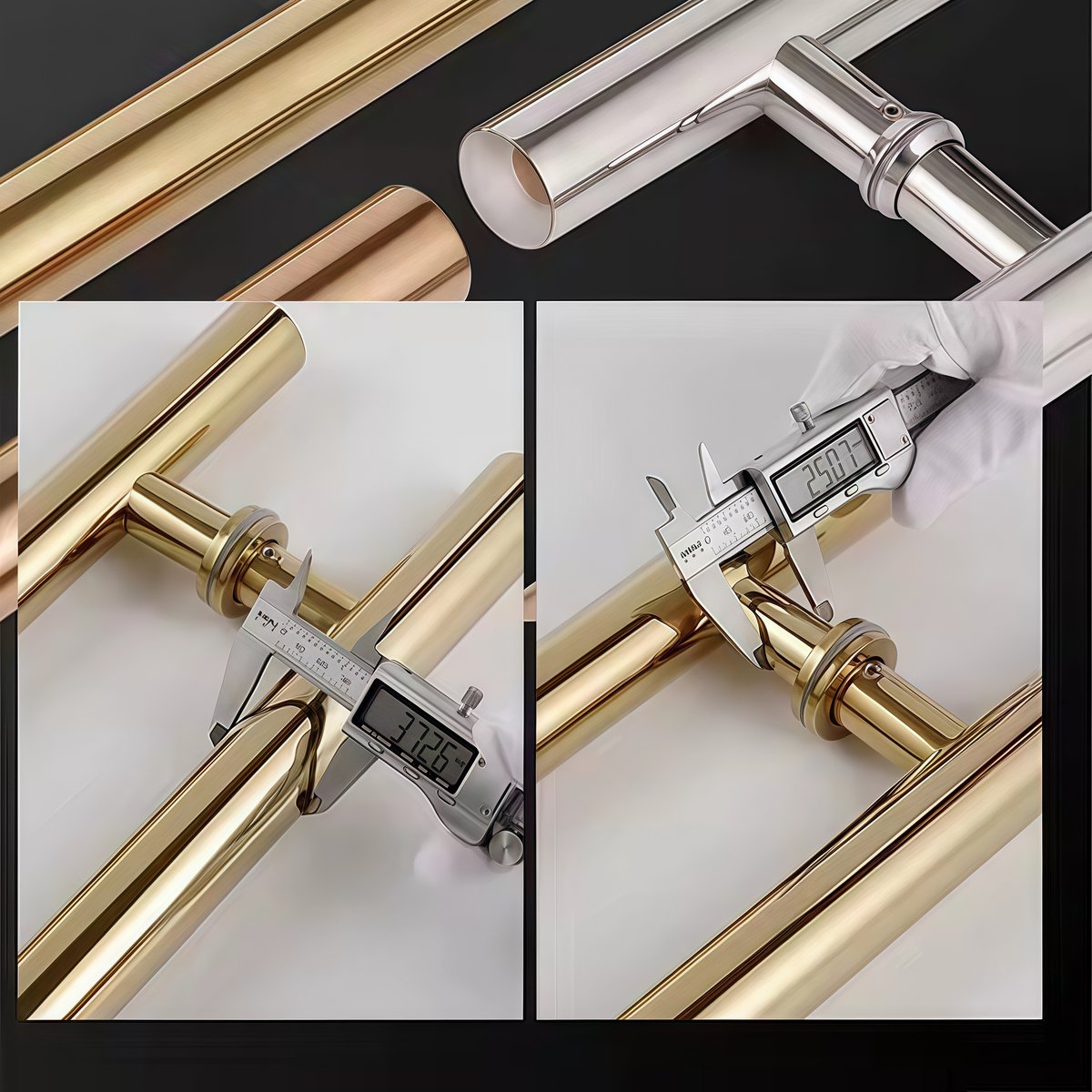
The door size, installation setting, and overall design proportions are usually considered when adjusting handle dimensions. In order to ensure that the length satisfies design requirements, experts precisely process the stainless steel tubing during cutting using specialized equipment. To avoid problems such as mounting-hole misalignment or asymmetry during installation, the length tolerance is typically kept within±0.5mm.
Forming And Shaping
Door handles can be straight, curved, U-shaped, or custom-molded. For example, straight handles require a very straightforward procedure that focuses on connection point placement, end finishing, and sizing. To guarantee structural stability and balanced proportions, numerous measurements and adjustments are made during the shaping process.
Welding
A main body, mounting bases, and connecting hardware are the usual components of door handles. The crucial process that unites these parts into a cohesive whole is welding. Technicians examine the connections for structural integrity after welding, looking for problems including porosity, surface smoothness, weak welds, and whether the connection satisfies strength requirements. After extended exposure to push-pull pressures, the handle may loosen or even break if the welding is not done correctly.
Precision Grinding And Weld Treatment
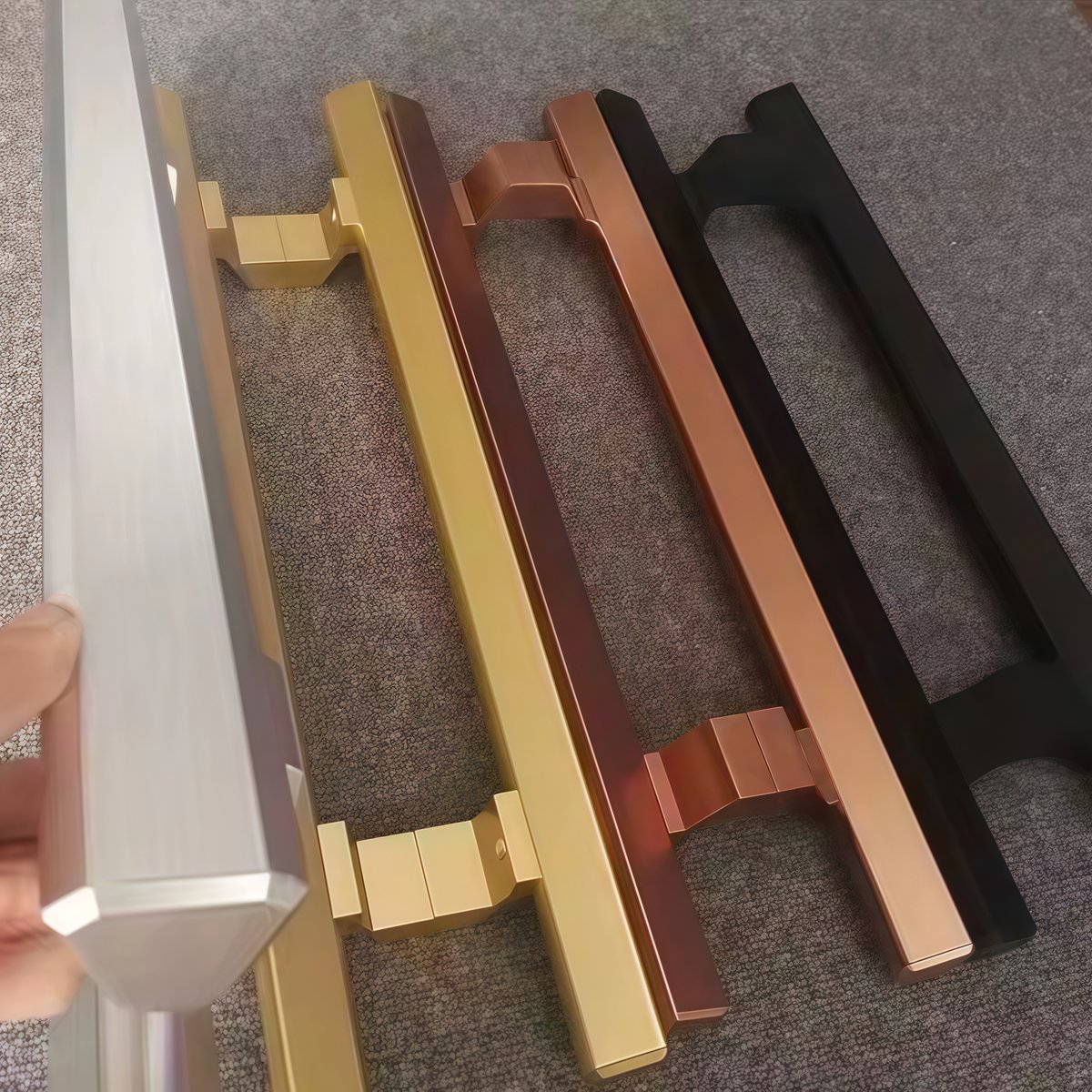
Multiple grinding stages are necessary to guarantee a smooth, visually acceptable finish since welding marks frequently remain on the handle surface after the welding process. To get rid of noticeable weld points, burrs, and surface imperfections, coarse grinding is done initially. The welded portion is then finely ground to blend in perfectly with the handle's main body. In order to achieve the desired surface finish, such as a brushed texture or a mirror-polished appearance, polishing is finally done in accordance with customer specifications.
Surface Maintenance
Surface treatment is an important step that influences the stainless steel door handle's long-term performance and final appearance. To obtain particular textures and hues, procedures including brushing, mirror polishing, or PVD coloring are used in accordance with client specifications. After that, the product is cleaned and put through quality checks to guarantee a smooth surface, consistent color, and superior resistance to wear and corrosion.
Functional Testing And Product Assembly
Technicians install mounting screws, bases, and other accessories during the assembly and testing stage, making sure that every connection point is secure. To ensure that the handle length, mounting hole spacing, and interface locations adhere to design criteria, dimensional checks are carried out. Additionally, structural stability is examined. To make sure it stays safe over time, the product is put through numerous push-pull tests in conditions that mimic the real world.
Packaging And Final Quality Inspection
Surface scratches, color consistency, dimensional accuracy, accessory completeness, and packaging compliance with shipping regulations are all checked during the final quality inspection. Export-oriented goods are, of course, packaged differently to avoid impact or surface damage while in transit.
Making a stainless steel door handle involves much more than just basic machining. Material selection, structural design, precision finishing, and quality inspection are all part of this extensive manufacturing process. A meticulous attention to detail is evident in every step. It takes both manufacturing experience and technical know-how to turn regular stainless steel into an architectural hardware product that strikes a balance between functionality, durability, and aesthetics. Therefore, creating high-quality stainless steel door knobs and winning over customers requires rigorous production processes and careful quality control.