How to Enhance the Structural Safety of Shower Enclosures Through Sound Glass Fixing Solutions
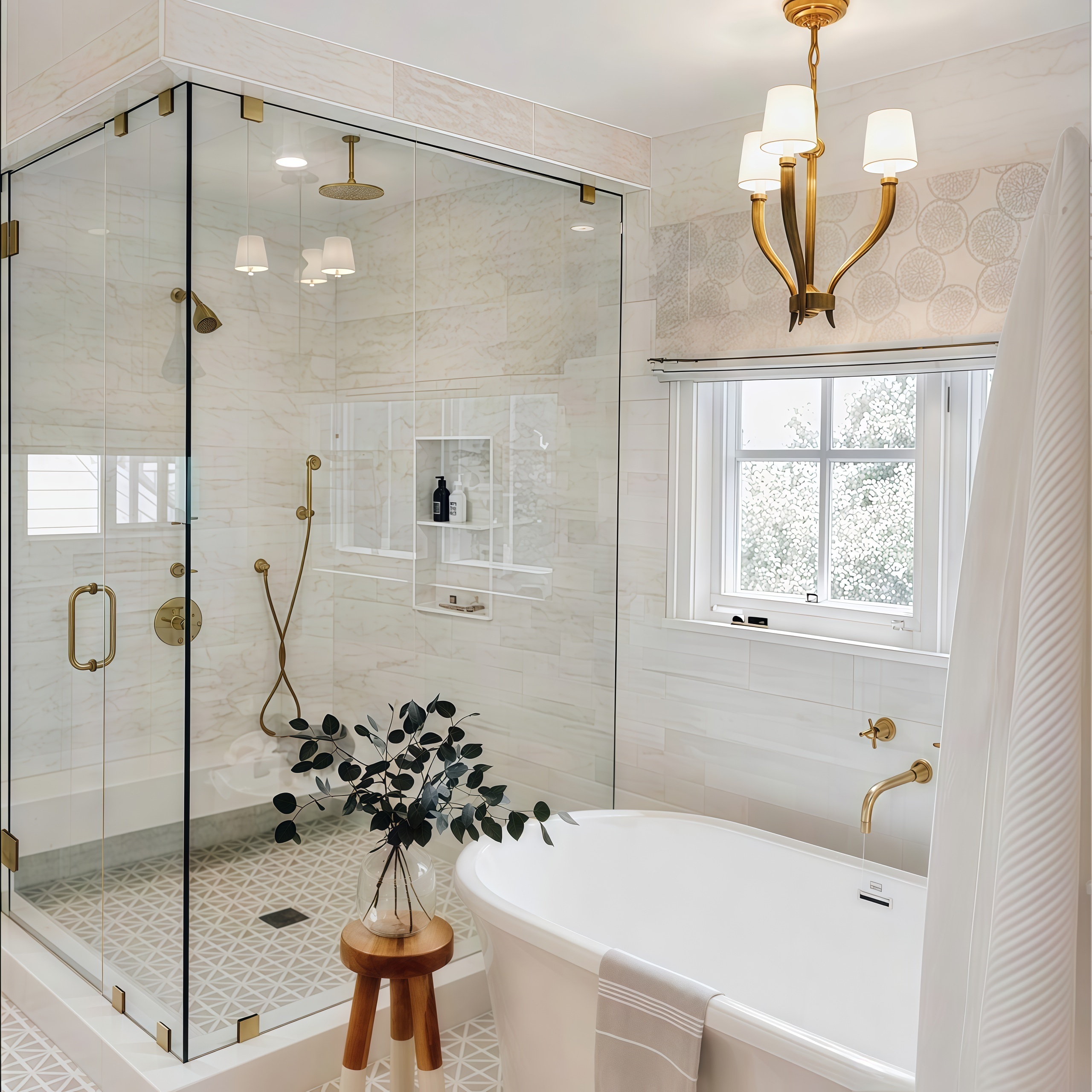
Lots of customers see bathroom glass clips as simply gadgets to "hold the glass in place", yet in reality, they play a vital role in dispersing anxiety, restricting glass displacement, improving general security, and making sure long-term safety and security. Sector information shows that in a high-quality shower unit equipment system, panel clamps offer about 30% to 45% of the architectural assistance. In contrast, the glass fences themselves bear about 55% to 70% of the load. Both elements are crucial. Consequently, choosing the proper kind of glass and appropriately establishing the number of repair clips are important aspects influencing the security and life expectancy of the shower unit.
Currently, over 95% of shower units on the market use tempered safety glass, with average float glass seldom being made use of.
Why is this the case?
The main factor is security.
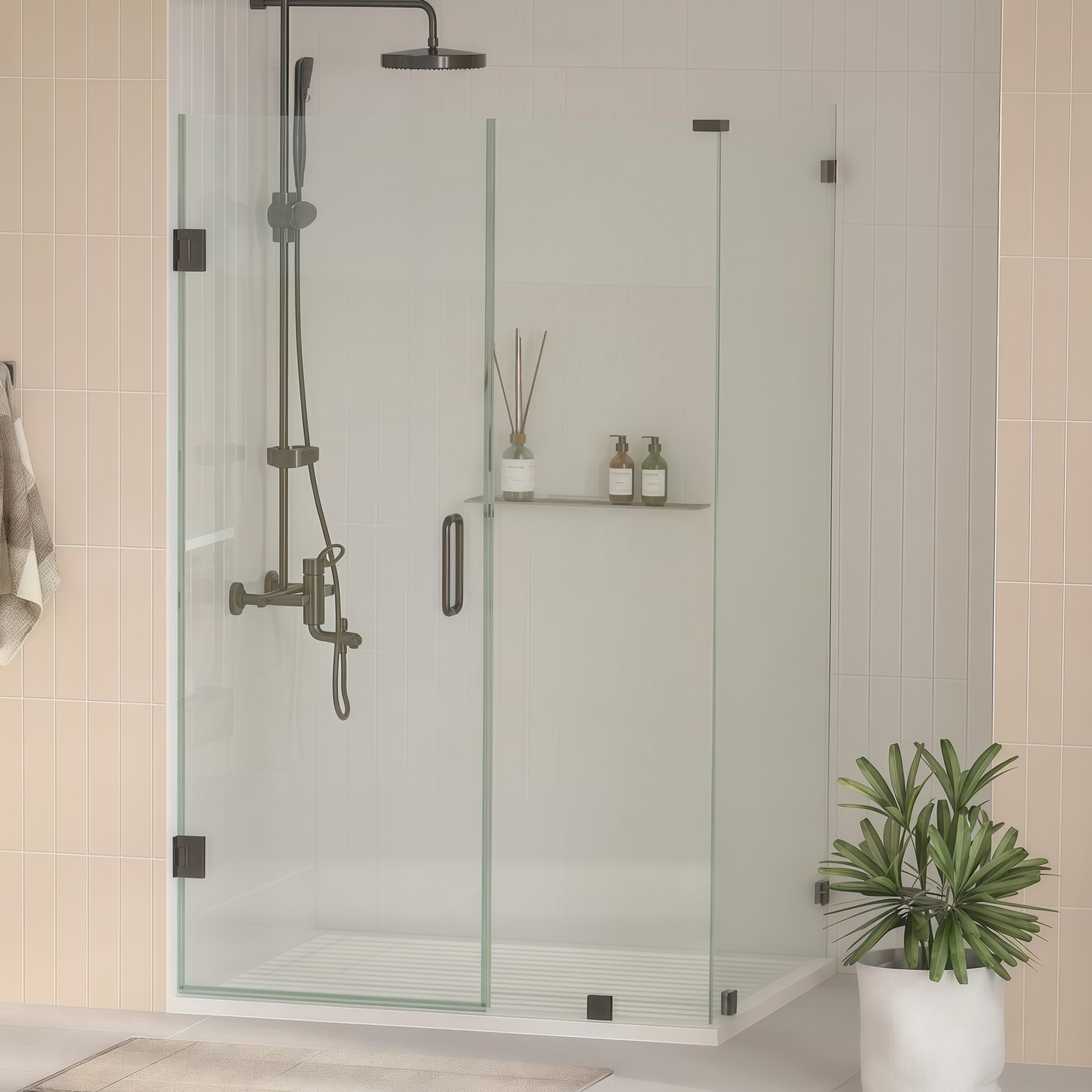
Tempered glass is created by warming the product to temperatures above 620°C, followed by rapid, uniform cooling, which develops a surface-compression-induced layer of compressive stress. This surface stress often exceeds 90 MPa, enhancing the overall toughness to 4-5 times that of average glass.
The resulting toughened glass offers substantial benefits, including a flexural toughness boost of over 300%, an impact resistance about four times greater than standard glass, and the capacity to withstand temperature level differentials of 180°C to 250°C. In contrast, while common glass is more affordable to produce, it has limited impact resistance. It is prone to developing penetrating fractures and breaking into sharp fragments when subjected to impact or local stress, posing significant safety risks.
Different shower enclosure structures need varying glass densities.
So, what common glass densities are offered?
Typical densities for toughened glass include 6mm, 8mm, 10mm and 12mm.
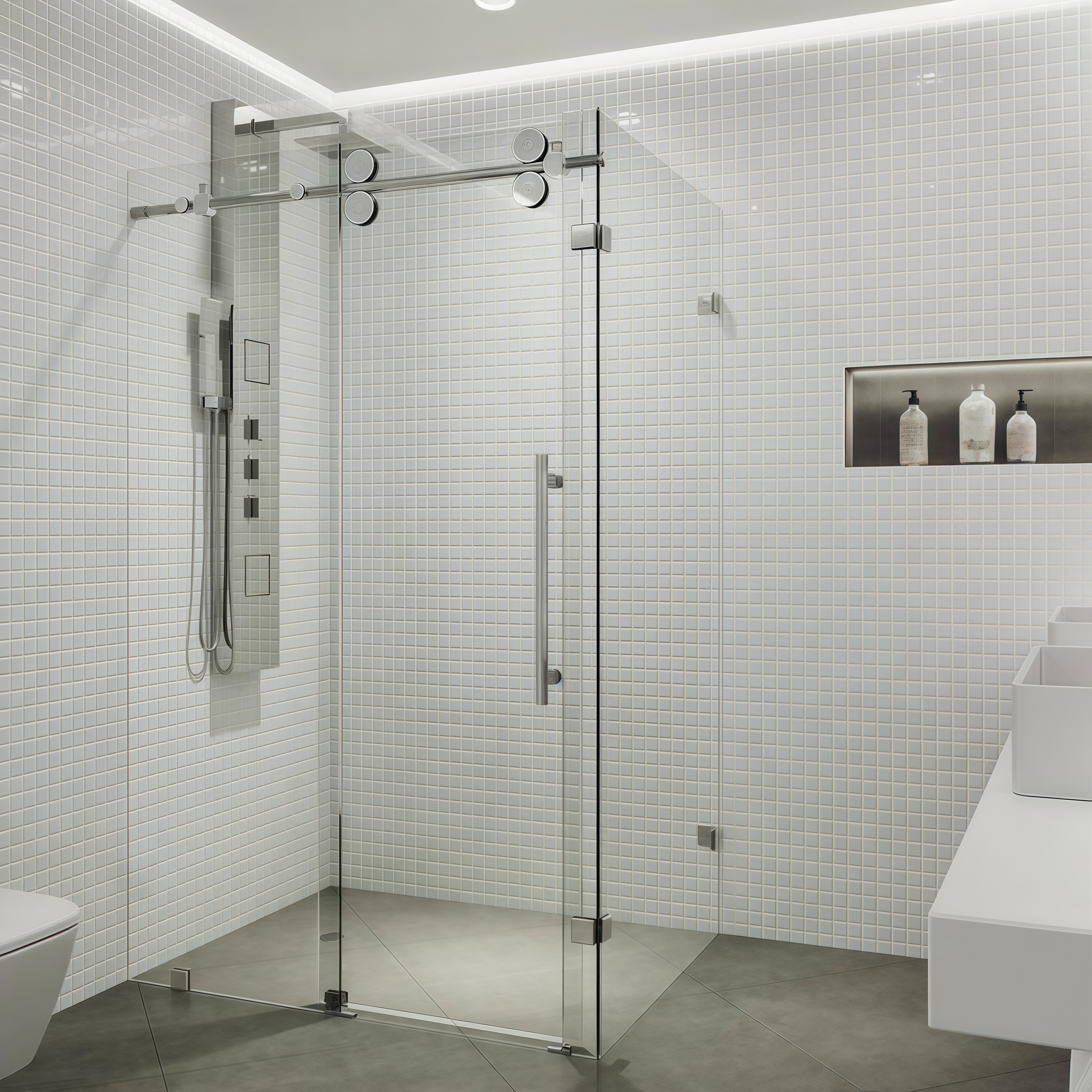
For rental buildings or portable shower units, 6mm glass suffices, provided the elevation is kept within 1,900 mm. This thinner glass provides advantages such as lighter weight, reduced prices, and easier installation.
However, 8mm glass is presently one of the most commonly used specifications for domestic homes, accounting for a market share of over 60%, as it satisfies the daily usage demands for the majority of 90-degree edge shower rooms. 10mm glass which is significantly being embraced for premium domestic tasks, specifically for frameless shower enclosures, large-scale glass partitions and hotel installations.
12mm toughened glass is considered an architectural-grade specification. However, the considerable boost in weight imposes more stringent requirements on the dealing with clamps, wall brackets, adapters, and the mounting substrate.
There is no fixed requirement for the number of clamps. The arrangement is identified by the glass measurements, weight, installation approach and structural load requirements.
Does this mean that using more clamps for a washroom is always better?
Not necessarily.
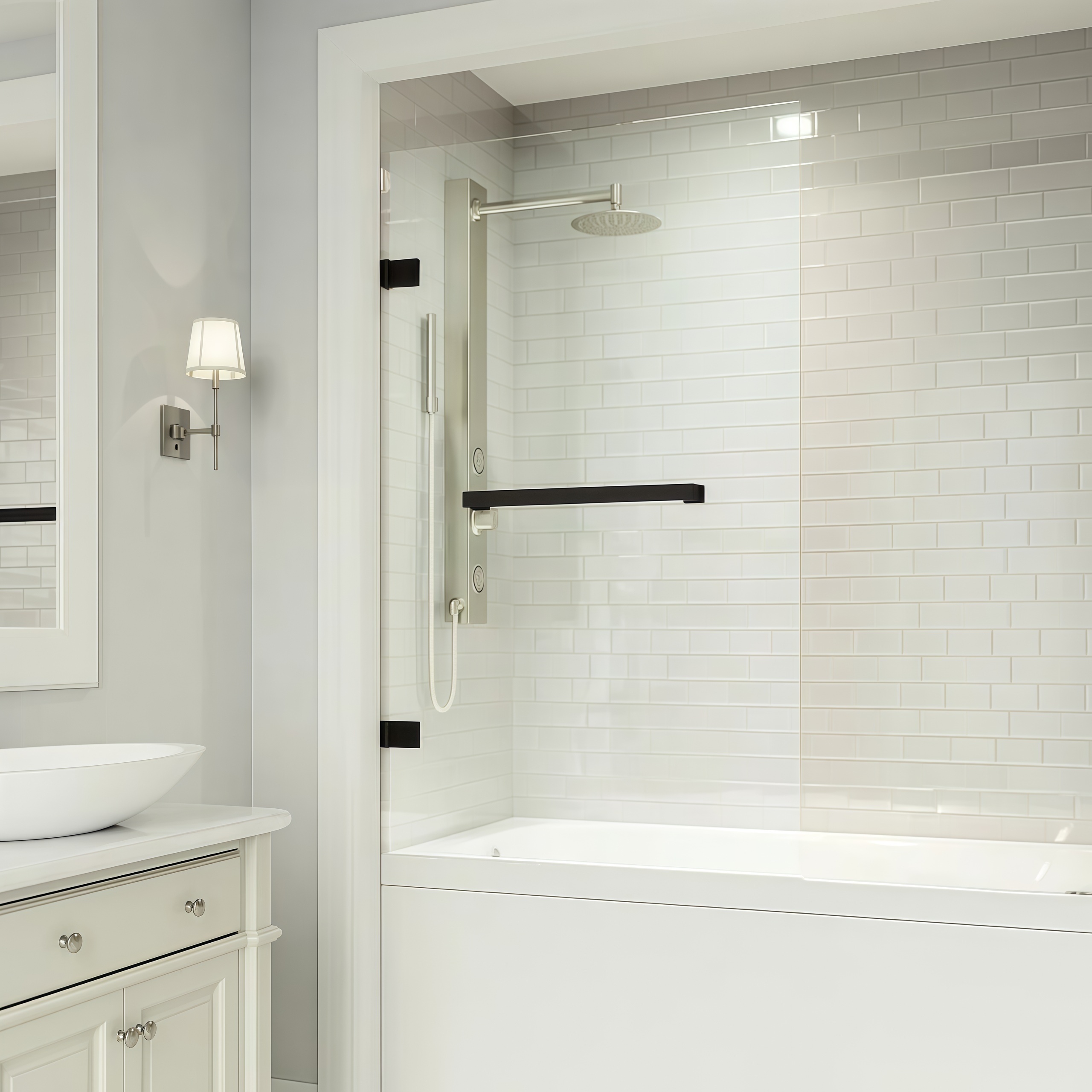
An incorrect layout can bring about localized tension focus and the accumulation of installation errors. This causes unequal tension distribution across the glass, possibly triggering extra interior tension because of thermal expansion and contraction.
For the most typical single-panel set glass shower enclosure, such as a partition determining approximately 900 × 2000 mm, 4 clamps are typically made use of, with two positioned at the top and 2 at the bottom. In contrast, L-shaped, U-shaped or three-sided glass enclosures, which are widely made use of in homes and include heavier glass, more panels, and complicated link points, need a greater number of clamps to accommodate these variables.
For large-scale personalized shower units in hotels, exclusive clubs, or premium houses, where glass panels are larger and ceiling elevations greater, the number of clamps might get to 10, 12, or even more than 16. Some projects use FEA to replicate stress variations over the glass's service life, maximizing clamp placement and quantity based on the results.
Therefore, selecting the proper glass type and density, combined with a clinically determined clamp configuration, not only enhances overall structural stability and extends the shower unit's lifespan but also ensures a safer, more comfortable day-to-day user experience.
.png)
Busrom Team
Committed To Providing The Highest Quality Indoor & Outdoor Solutions Worldwide.