What Should You Look For When Choosing A Bathroom Door Handle?

The right bathroom handles do more than open a door. In a frameless shower enclosure, the handle is the point where the daily pull of a heavy glass panel meets the glass itself, all while surrounded by steam, water, and cleaning chemicals. Choosing a shower door handle that can handle that combination keeps the enclosure comfortable and safe for years.
The short version: choose through-glass mounting for frameless doors, confirm the glass thickness range and bolt spacing on the specification sheet, and pick stainless steel with a corrosion-resistant finish. Those three decisions prevent most loose-handle and rust problems before they start.

A Handle in a Wet Room Works Harder Than Any Interior Handle
A standard interior door handle rarely faces constant moisture. Bathroom handles, by contrast, are touched with wet hands, sprayed with shower water, and exposed to cleaning products almost every day. That changes the material requirements completely: corrosion resistance becomes the first priority, grip must stay secure when both the handle and the hand are wet, seals and gaskets must keep water away from the fixing bolts, and finishes must survive regular wiping without fading. In short, a shower door handle is a piece of wet-area hardware, and it should be specified as such.
A bathroom handle is chosen for the room as much as for the door. When the handle shares its finish with the hinges and glass clips of the enclosure, the shower room feels designed rather than assembled.
Through-Glass or Surface-Mounted?
For frameless enclosures, through-glass mounting is the safer, longer-lasting choice. If you are replacing an existing shower door handle, check the bolt spacing first, because the new handle must line up with the holes already drilled in the glass. A handle for glass shower door panels must also match the glass thickness range, usually 8–12 mm.
- Through-glass handles pass through the panel with bolts and escutcheons on both sides, offering the strongest grip for heavier doors
- Surface-mounted handles are fixed to one side of the glass, which is simpler but better suited to lighter panels
Five Specs to Check on the Data Sheet
Look for these details before ordering shower door handles for glass doors:
- Glass thickness range, typically 8–12 mm for shower enclosures
- Material, with stainless steel preferred for wet areas
- Finish, such as brushed, mirror, or PVD-coated colors
- Grip depth, so fingers clear the glass comfortably
- Screw kit included, so the fixing hardware matches the finish
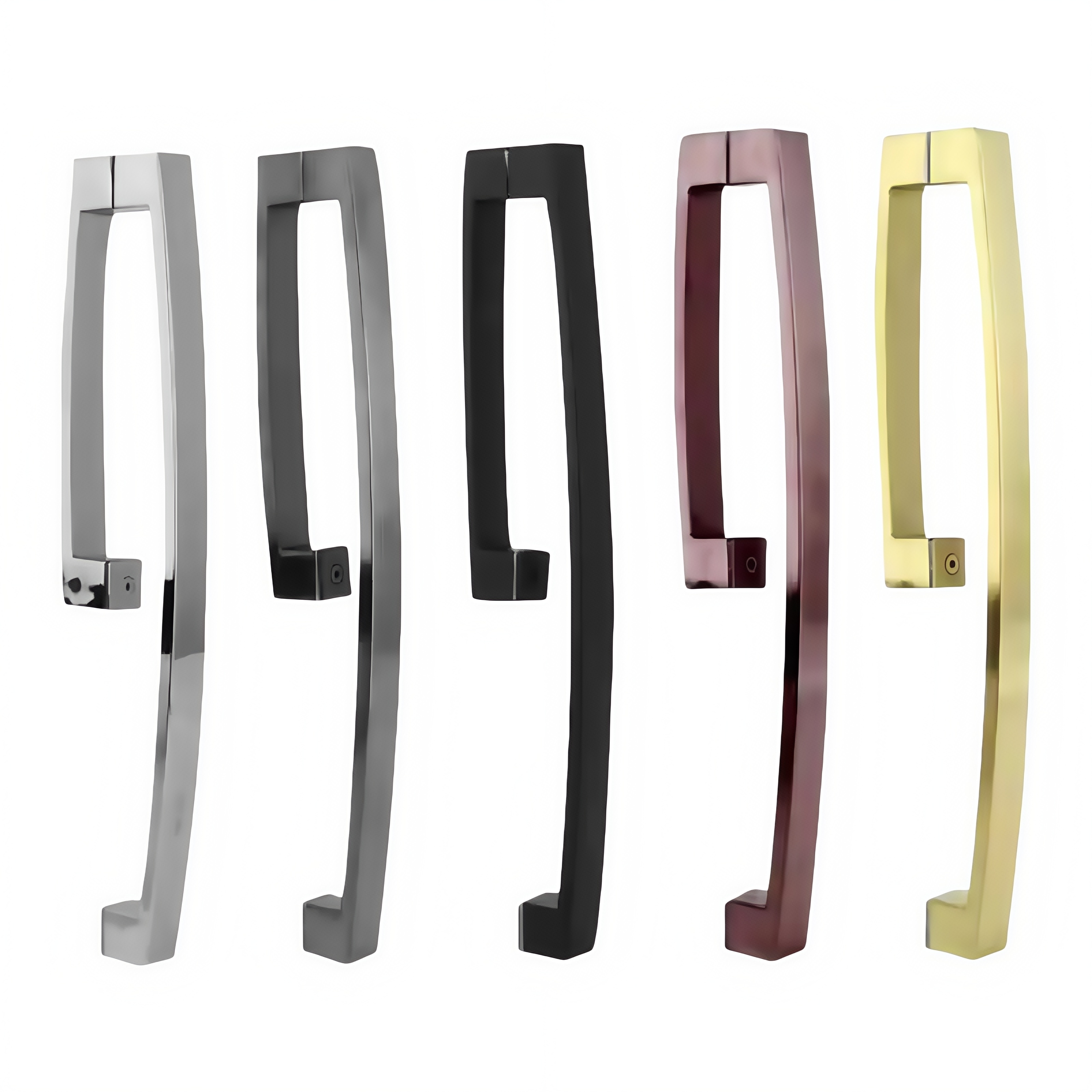
Finishes are not just about looks in a bathroom. The same handle in the same room will age very differently depending on the coating. Brushed or mirror stainless steel stays clean and hides water marks well, PVD-coated black titanium, rose gold, or bronze add a designer finish without sacrificing corrosion resistance, and a brass shower door handle suits classic interiors provided the base is properly sealed. Painted or plated zinc should be avoided because the coating wears quickly where hands grip the surface. Whatever finish you choose, the base material must be corrosion-resistant, because a pretty coating over a weak base will fail at the first scratch.
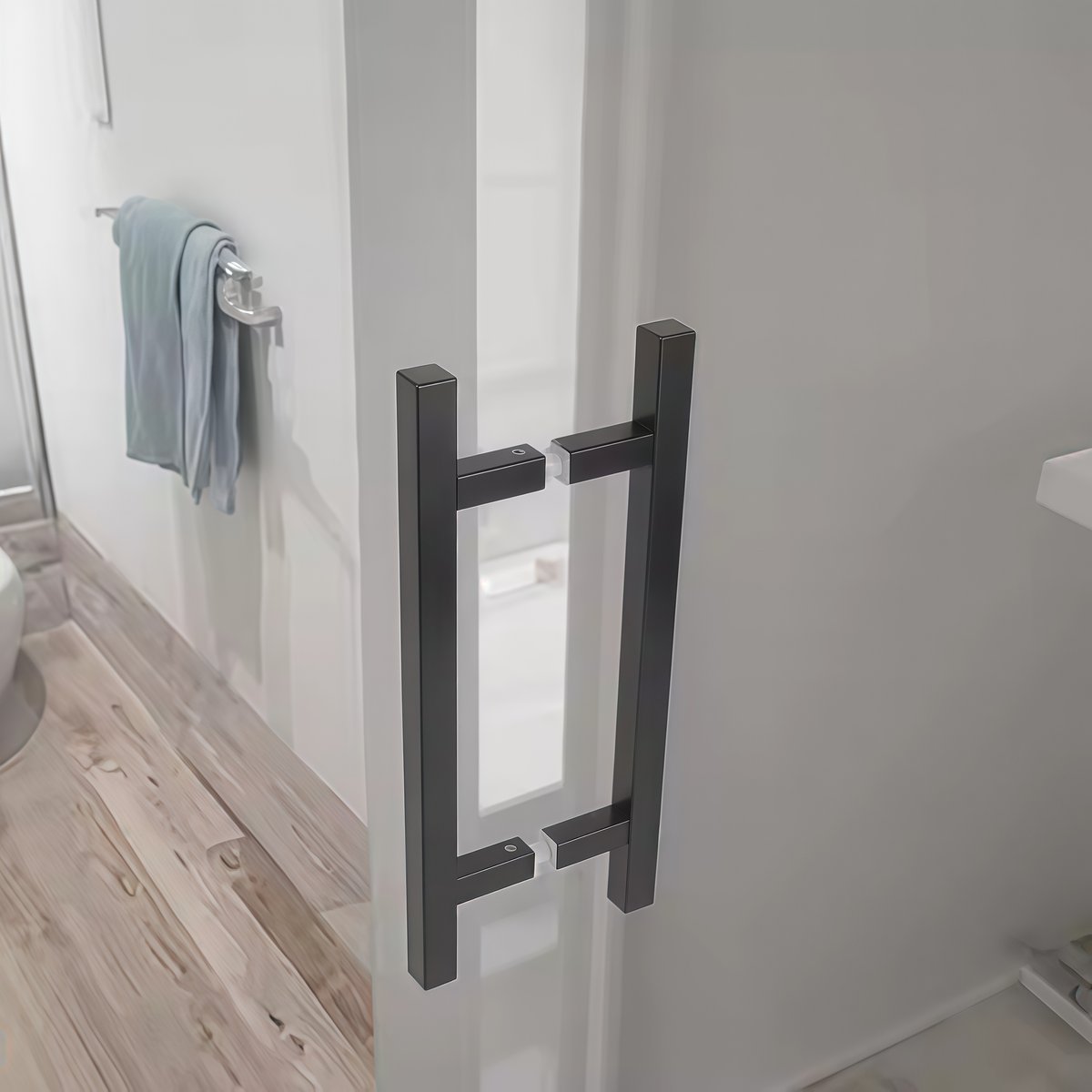
Installation is straightforward when the preparation is right. Clean the glass around the drilled holes and remove any swarf, fit the rubber gaskets so metal never touches the glass directly, tighten the bolts evenly and alternate from side to side, then re-check the screws after the first week once the gaskets have settled. A frameless shower door handle installed with even torque stays tight for years; a handle installed in a hurry will announce itself with a rattle within months.
Shower door handle replacement is one of the simplest bathroom upgrades. The key is geometry: measure the bolt spacing of the existing handle and order a shower glass door handle with the same pattern. If the spacing does not match, the glass must be re-drilled before tempering, which means ordering a new panel.
Whether you search for a shower door handle replacement or a glass shower door handle replacement, the measurement steps are the same: confirm the glass thickness, record the bolt spacing, and match the finish before placing the order. Order the gaskets and bolts together so the shower door handle replacement parts match the finish. A replacement shower door handle with its own fixing kit installs cleaner, and a shower door replacement handle that arrives complete is less likely to rattle later. When replacing, upgrade the gaskets at the same time, because fresh gaskets restore the seal that keeps moisture away from the fixing bolts.
~Some tips to keep new~
A few simple habits extend the life of bathroom door handles in any wet room. Wipe the handle after each shower to reduce water marks, clean with mild soap rather than abrasive cleaners, check the screws every few months and tighten them as needed, and replace worn gaskets before they crack. None of this takes more than a minute, but it makes the difference between hardware that looks new for years and hardware that shows its age in months.
How Do You Know When a Handle Needs Replacing?
Most shower door handles give clear warning signs before they fail. A handle that rocks slightly when pulled has loose bolts, and a handle that has lost its coating is letting moisture reach the base metal. Both are easy to spot during a quick monthly check: rock the handle gently and watch for movement at the escutcheon, look for rust stains or white residue around the fixing points, check the gaskets for cracks or hardening, and test the grip with wet hands to make sure it still feels secure. If any of these signs appear, plan a replacement before the handle fails completely. Replacing a worn handle is far simpler than repairing a chipped glass edge caused by a loose fitting, which is why the monthly check is worth the minute it takes.
(Sliding glass shower door handles follow the same rule as hinged ones: check the grip, the gaskets, and the bolt torque. A sliding shower door handle stays low-profile so it does not catch on the track.)

A Quick Recap
- Mount through-glass on frameless doors, surface-mounted only on light panels
- Confirm glass thickness, bolt spacing, material, and screw kit on the data sheet
- Choose stainless steel with a sealed finish for wet rooms
- Check screws and gaskets monthly, and replace the pair together
Busrom's bathroom handle series covers through-glass and surface-mounted styles in brushed, mirror, and PVD finishes for 8–12 mm glass. If you are designing a wet room, read why bathroom handle design matters more than ever, compare square and cylindrical handle profiles, feel free to consult us for advice.