Glass Standoffs Look Simple - So Why Do Railing Projects Still Go Wrong
I. What is a Glass Railing Standoff?
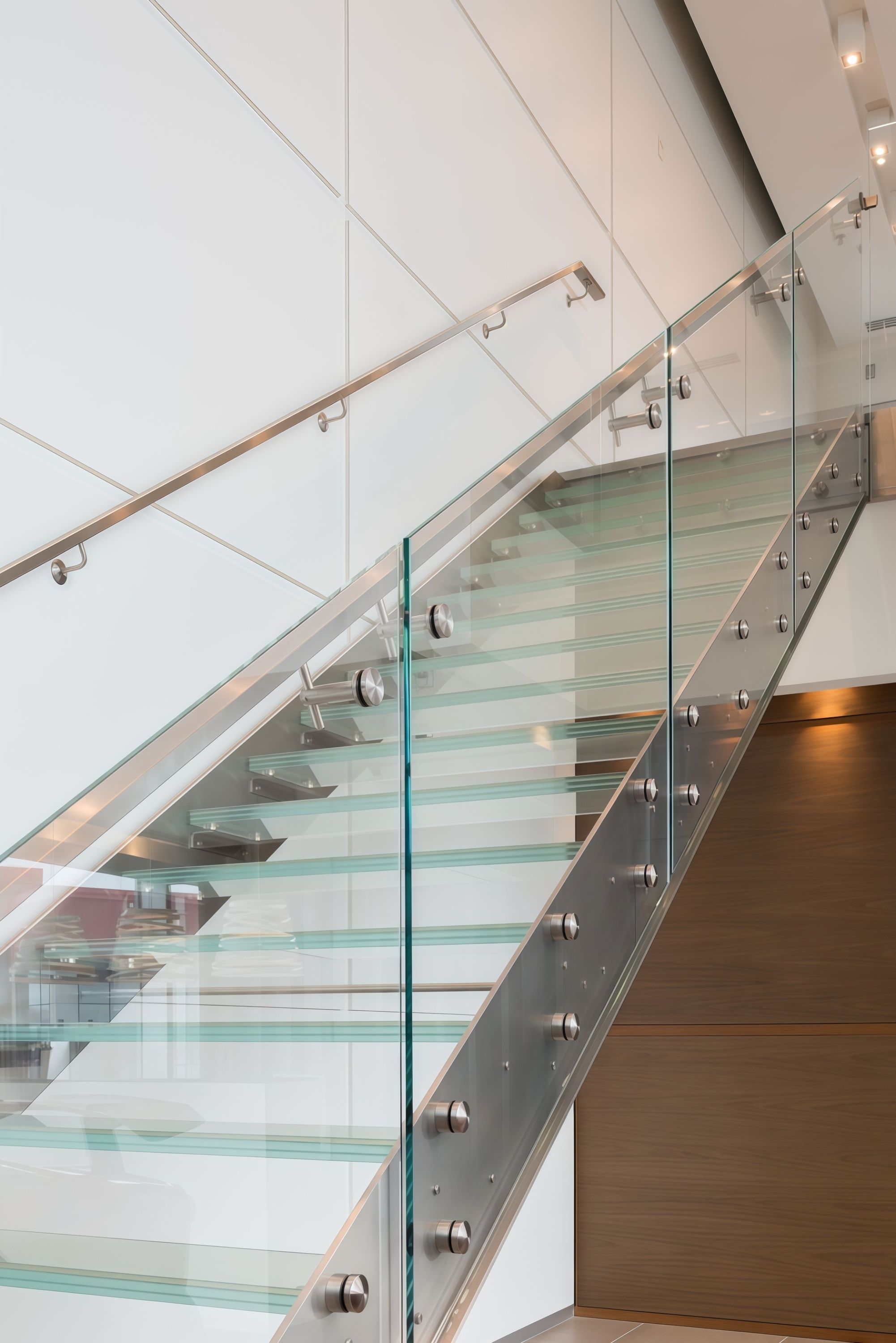
Glass railing standoffs are point-fixing hardware components used in architectural glass systems such as frameless glass railings, guardrails, balustrades, and glass stair panels. It is mounted onto stair stringers, balconies, structural walls, concrete slabs, steel structures, or other engineered load-bearing substrates.
A key reason standoffs are frequently used in modern glass railings is their ability to secure the glass via relatively small point connections, thereby minimizing the visual obstruction caused by continuous frames or traditional vertical posts. However, the visible metal component represents only part of the assembly. The actual fixation involves the glass hole, gaskets or sleeves, caps and bases, internal threads, connecting fasteners, anchors, and the load-bearing structure behind the finished surface.
Therefore, it is more accurate to view a railing standoff as a "connection node between the glass panel and the building structure" rather than simply "metal cylinders holding up the glass".
II. How do glass handrail standoffs support the glass, and is it complex?
Imagine someone leaning against a glass railing. The load first enters the glass panel, reaches the fixing point, passes through the protective interface between the glass and the hardware, the standoff body, and the connecting fasteners, before finally transferring to the anchor and the supporting structure behind it.
If any link in this load path is significantly mismatched, simply making the visible standoff larger will not automatically solve the problem. A massive stainless steel fitting connected to an unsuitable anchor still constitutes an improper connection. Conversely, a proper anchor cannot correct glass hole locations that do not match the hardware, nor can it compensate for incorrect geometric connection configurations.
When clients ask, "How much load can this glass standoff bear?" they often need to provide additional details: the type of standoff, the glass specifications, the projection distance, the fasteners used, the mounting substrate, and the project's specific design requirements.
For this very reason, determining whether a glass standoff connection is suitable requires more than just examining a single hardware component; it must be considered in the context of the entire railing system. ASTM E2353-21 specifies system performance testing for glazing in permanent glass railings, glass guardrails, and glass balustrades, covering static strength, impact performance, and post-failure performance.
III. Why is the gasket contact interface important?
When evaluating glass guardrail standoffs, purchasers often focus first on the metal components themselves—such as surface finish, machining marks, color, and overall appearance.
However, at the actual point where the glass is secured, seemingly inconspicuous components, such as gaskets, washers, or bushings, are equally critical.
→ Their function is to establish a controlled contact interface between the rigid metal and the glass, rather than serving merely as "plastic parts thrown in with the packaging".
The specific configuration depends on the standoff design, the glass holes, and the fastening method. Therefore, beyond simply asking about the stainless steel grade, one should also know what protective components are used inside and outside the glass holes, whether these parts are compatible with the hardware, and how the fasteners pass through or connect to the glass.
IV. Someone might wonder: does a larger glass standoff necessarily mean a stronger connection?
If you place two standoffs on a table, the thicker, heavier one usually looks stronger, but the outside diameter is just one dimension.
Two fittings with similar external dimensions can differ significantly in terms of internal bore, effective cross-section, threading, base design, connecting screws, and internal structure. Another parameter that deserves special attention is the projection.
Projection refers to the distance the standoff holds the glass away from the mounting surface. The geometric relationship of the connection differs depending on whether the glass is mounted flush against a stair stringer or positioned further away from a fascia or wall. A longer projection does not automatically imply unsuitability, but it does alter the connection geometry.
(Therefore, relying solely on the cap diameter makes it difficult to determine if a product is truly suitable for a project.)
V. What Is the Standoff Actually Fixed To?
Once the railing installation is complete, the glass and stainless steel hardware are the most visible elements. Anchors are usually out of sight, and the primary structural components bearing the load are often concealed behind the finish.
⭐ Key questions to clarify early in the project include:
- What structure will the glass standoff ultimately be anchored to?
- Is it concrete, structural steel, a stair stringer, engineered timber, or a finished wall where the internal load-bearing structure is unclear?
Note that these conditions are not interchangeable. A fixing arrangement suitable for concrete cannot simply be applied to steel structures just because the external standoff looks identical. When mounting to timber, it is not enough to ask "which screw to use". One must also verify that there is a suitable load-bearing structure behind the mounting point.
Consequently, debating whether to choose a 50 mm or 60 mm standoff at the very beginning of a project is premature. It is generally more important to first confirm where the hardware will ultimately connect before selecting the visible components.
VI. What is the optimal spacing between glass railing standoffs?
It is impossible to provide a single, universal spacing rule applicable to all projects based solely on glass thickness.
There are two hypothetical projects, both utilizing 12 mm glass
| Project A: A small glass panel alongside an indoor staircase.
| Project B: A large-format panel at the edge of an outdoor balcony.
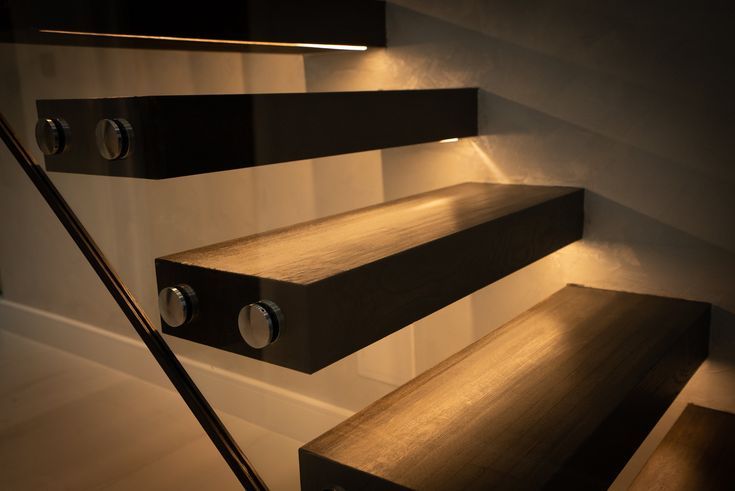
Even though both projects use 12 mm glass, the required support layouts will differ. For standoff railing systems, the maximum bracket spacing can reach approximately 610 mm, while the maximum glass panel width is typically limited to around 1,220 mm. This illustrates that spacing and panel size must generally be considered in tandem.
While glass thickness may be identical, factors such as panel dimensions, glass make-up, hole positioning, edge distance, standoff projection, anchors, the substrate, and specific project design criteria will vary.
Consequently, there is no single, universally valid answer to the question, "How far apart should glass standoff mounts be spaced for 12 mm glass?" There is no single, uniform answer.
The same applies to the question, "Are four glass standoffs enough for a single glass panel?" Glass thickness is a crucial factor, but it does not constitute the entire design.
Simply copying a spacing specification from another project—while appearing precise, may be based on entirely different conditions. For safety-critical applications like guardrails, priority should be given to the specific panel, connections, load-bearing structure, project design, and applicable requirements, rather than relying on a generic spacing chart.
VII. 304 vs 316 Stainless Steel: What Do Material Grades Really Change?
Both 304 and 316 are austenitic stainless steels commonly used in architectural glass hardware, but the distinction between them goes beyond a simple "indoor vs outdoor" classification.
In terms of material composition, the key factor to consider is molybdenum (Mo).
Taking typical 304 and 316 grades as examples: 304 contains approximately 18.1% Cr and 8.3% Ni, whereas 316 contains about 17.2% Cr and 10.1% Ni, with the addition of roughly 2.1% Mo. Based on the commonly used Pitting Resistance Equivalent (PRE) formula, the typical PRE values are approximately 18 and 24, respectively.
This means the PRE value for 316 is about 33% higher than that of 304. The Nickel Institute also explains the improvement in chloride resistance of molybdenum-containing 316 compared to 304.
Furthermore, the material grade itself cannot substitute for proper connection design. 316 cannot rectify incorrect glass hole locations, make an unsuitable anchor suitable, reinforce an inadequate substrate, or correct an improper projection. The material grade should address the environmental and corrosion-resistance challenges for which it was selected, while the connection design itself must still resolve geometric and structural requirements.
Therefore, the more valuable question is not simply "304 or 316?" but rather a simultaneous assessment of the environment to which the hardware will be exposed and the specific connection requirements of the project. That is:
Environment → Chloride Exposure → Moisture / Crevice Conditions → Surface Finish → Material Grade
VIII. Why are product photos alone insufficient to specify a standoff?
Many inquiries begin with a product photo and the question, "Can you provide a quote for this?" Naturally, this is a standard first step.
Photos are excellent for conveying appearance—general shape, finish, proportions, and visual style.
However, determining whether a glass standoff can be quoted immediately requires more than just a photo. Several key dimensions are usually missing.
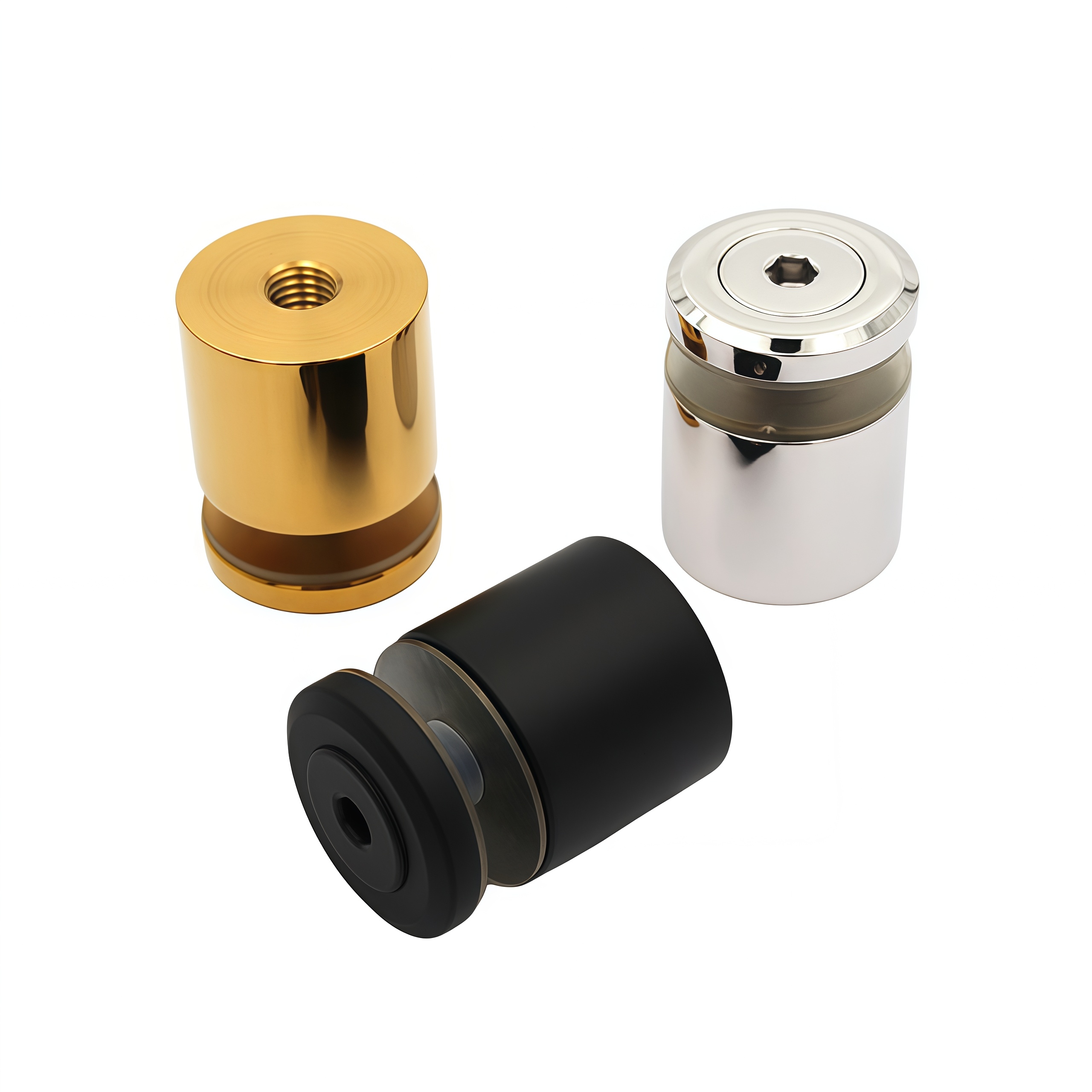
In the market, standoff hardware may look identical, such as having a round metal cap — yet differ significantly in the technical specifications required for glass fabrication and installation. Two seemingly identical standoffs in photos might actually require different projections, glass-hole dimensions, thread types, connecting screws, or mounting arrangements. One project might involve mounting to concrete, while another connects to structural steel.
In short, a photo tells the supplier, "I want something that looks like this," whereas a drawing and project details explain, "This is what the connection actually needs to achieve." For custom architectural hardware, the distinction is significant.
When sourcing, what information should you provide to the supplier upfront? To minimize back-and-forth communication, prepare these eight items:
Glass Thickness, Glass Hole Size (Diameter), Standoff Size (Diameter), Substrate, Finish (Brushed/Polished), Color, Quantity, Application
IX. What should be checked before mass-producing glass standoffs?
The most valuable pre-production checks are not abstract reviews of the "entire system," but rather a step-by-step verification of the specific interface dimensions that determine whether the hardware will actually fit the project:
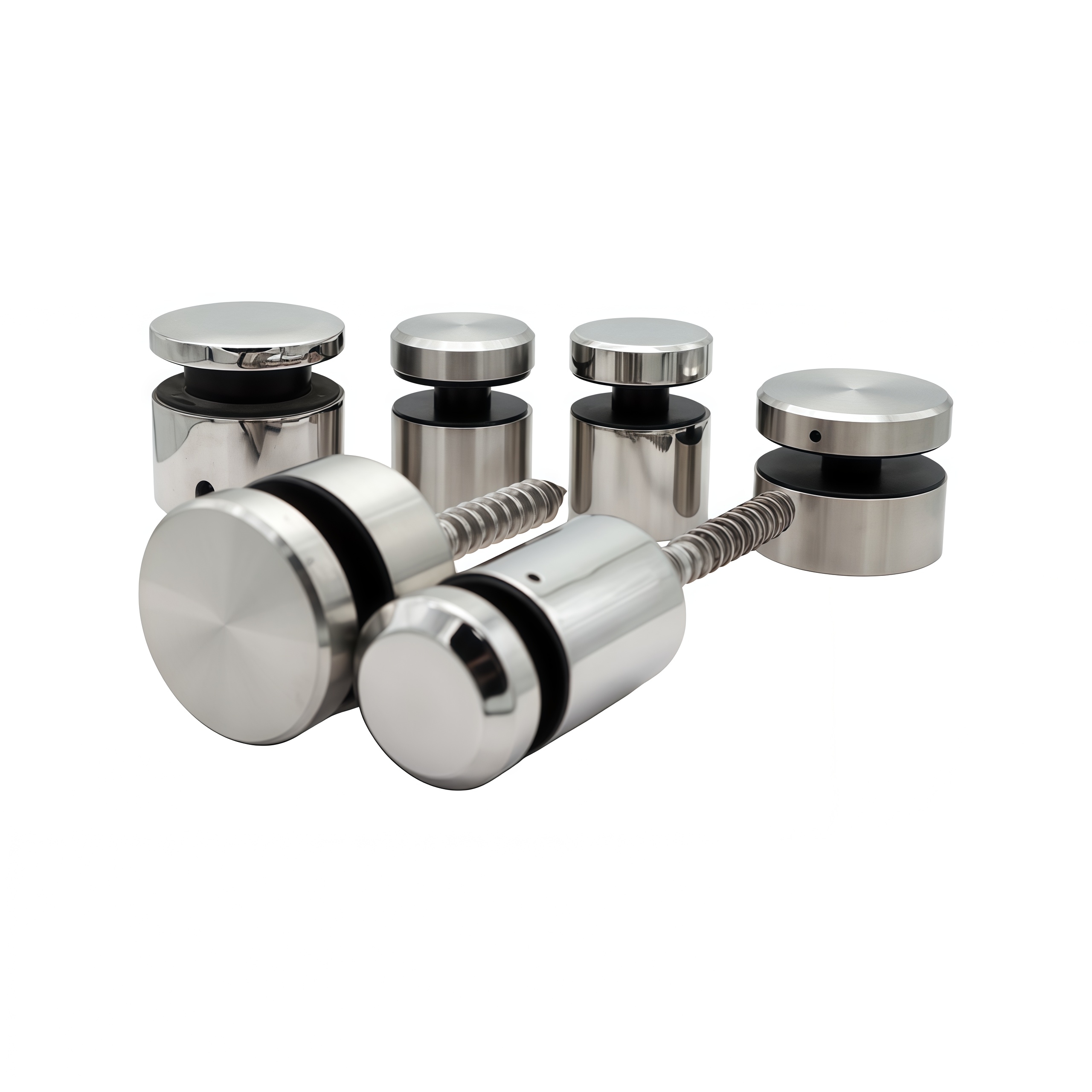
- Glass thickness & glass-hole dimensions
- Required projection
- Internal configuration & thread
- Connecting screw / fastening arrangement
- Gasket / sleeve interface
- Mounting substrate
- Material & finish
- Drawing compatibility
------------------------------------------------------------------------------------------------------------
!! What buyers should prioritize remembering is not simply "filling in every parameter," but rather locking down the interface dimensions that directly impact assembly:
Glass Hole → Gasket → Glass Standoff → Thread → Connecting Hardware → Substrate
------------------------------------------------------------------------------------------------------------
!! If even one of these interfaces is not verified, the following issues may arise:
Glass hole mismatch → Hardware cannot be installed → Connectors require replacement → On-site rework
------------------------------------------------------------------------------------------------------------
X. Why do manufacturing tolerances become apparent during on-site installation?
When holding a single standoff in your hand, slight dimensional variations may not be easily noticeable. However, when several standoffs are installed behind a pre-drilled glass panel, those same variations become much more obvious.
Problems truly come to light only when the components are assembled with the processed glass, multiple fixing points, and the mounting substrate.
For pre-drilled glass, it is crucial to check the cumulative dimension from the first hole to the last, rather than just the distance between adjacent fixing points. Simply put:
| Individual component tolerance: Checking if a single standoff fitting is out of tolerance.
| Cumulative tolerance: Checking if the final fixing point still aligns with the glass hole after multiple standoffs are installed together.
Since the positions of the glass holes are fixed, the standoff fittings must also be installed at their planned locations. Consequently, what initially appeared to be minor dimensional variations can turn into significant alignment issues during installation.
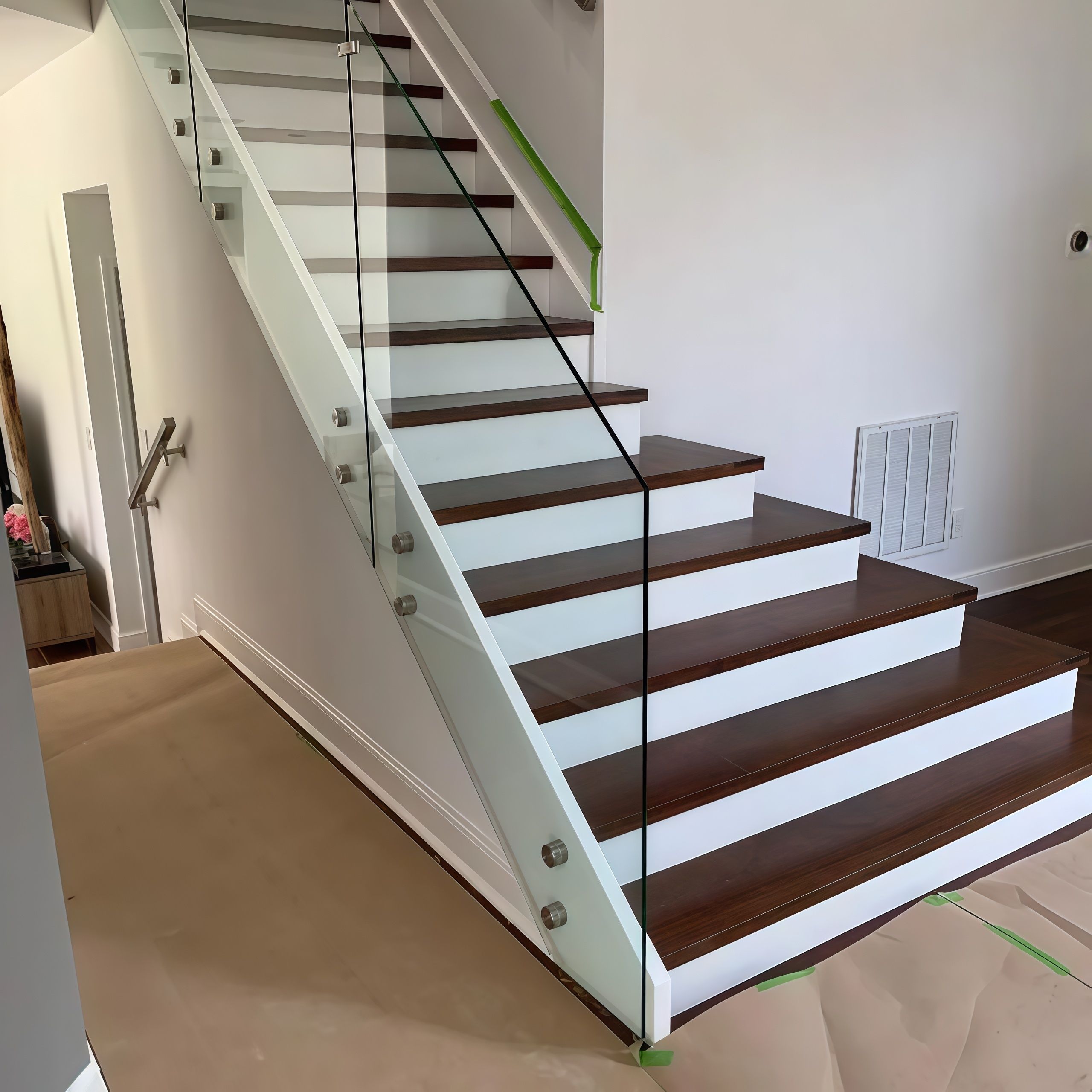
When glass holes are fixed in position, any fluctuations in component projection, centerline offsets, or inconsistencies in critical dimensions force on-site installers to address the discrepancies. This often leads to a progression of issues: starting with "this hole is a bit hard to align," moving to "tighten this side first," and escalating to "pull the glass over a bit."
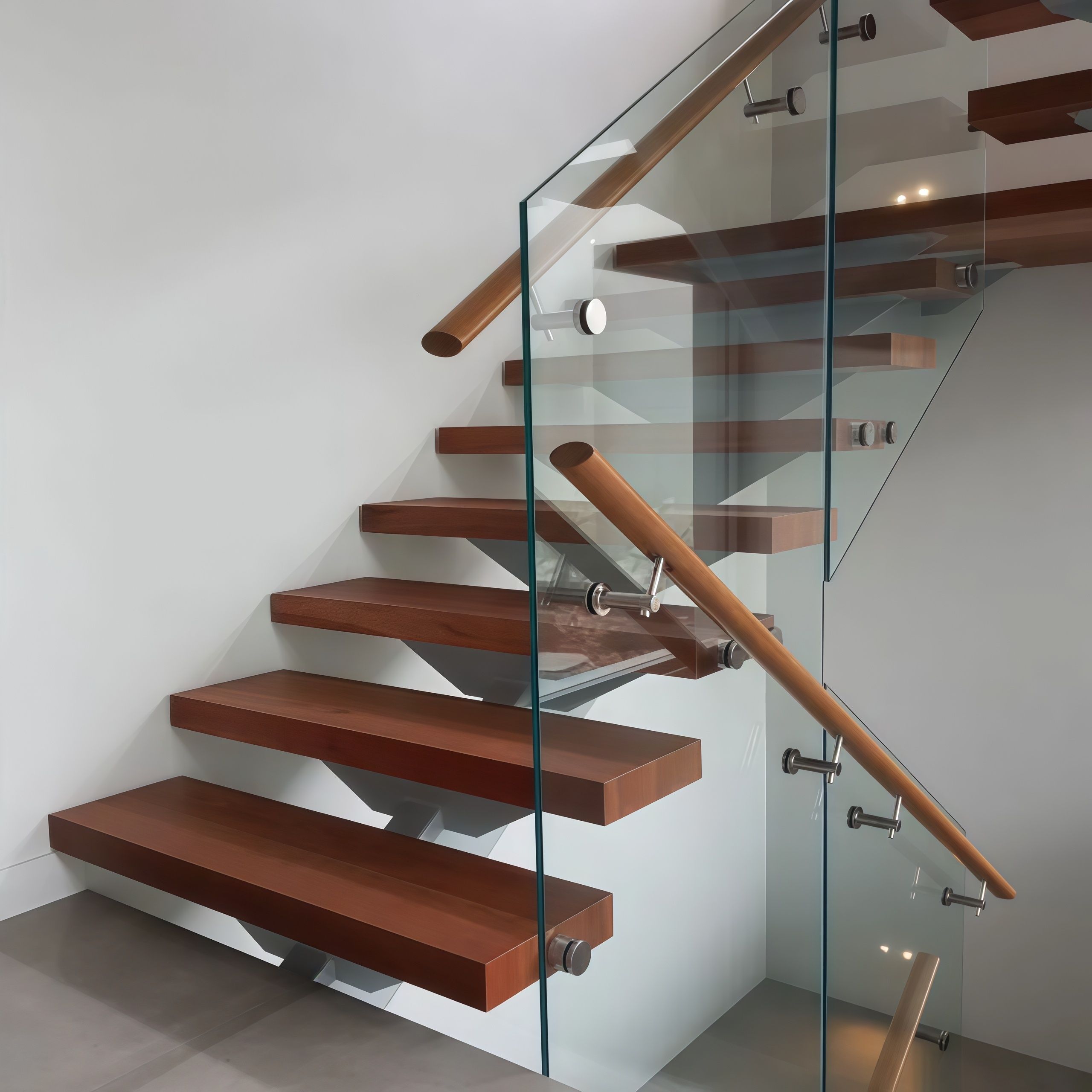
Multi-point glass fixing should not rely on forcibly moving the panel to compensate for hardware errors. The ideal scenario is for correctly processed glass and accurately manufactured hardware to align naturally at the planned fixing points. From an on-site perspective, the issue of manufacturing tolerance boils down to a simple question: once the glass arrives, do the fixing points align accurately?
△ Do not treat "forced adjustment" on-site as a standard installation method.
When glass holes and standoffs do not align naturally, installers may resort to temporary workarounds:
1. Secure one side first, then adjust the other
Tighten one end first, then adjust the subsequent standoff mounts based on the remaining hole positions. This is manageable over short distances, but if cumulative deviation already exists, alignment issues become increasingly apparent at the final fixing point as the installation progresses.
2. Loosen some fixing points to reposition
Previously installed standoffs must be loosened and repositioned to align with the glass holes. Repeated disassembly and reassembly not only wastes installation time but also risks disrupting the installation sequence already completed.
3. Forcing the panel into position
Moving or pulling the panel to locate the correct mounting holes. For multi-point fixed glass railings, this method can adversely affect the joints between adjacent glass panels and their overall alignment.
4. Widening specific installation gaps
Increasing the gap in certain areas to gain more room for adjustment. While this may resolve immediate assembly issues, it creates noticeable inconsistencies in gap widths, compromising the overall installation quality.
5. Replacing specific connectors
Replacing parts on-site when a glass standoff fails to align with the glass mounting hole. However, for large-scale installations, this increases the need for spare parts and raises replacement costs.
6. Making additional adjustments to the on-site structure
Modifying the substrate on-site when deviations affect the wall, steel structure, or other mounting bases. This transforms an issue of hardware dimensional compatibility into a construction-site problem, disrupting the original installation schedule.
XI. Why must glass fabrication be coordinated prior to installation?
For point-fixed glass railings, many dimensions that determine the success of the installation are effectively "locked in" before the glass even arrives on site.
Include: glass hole locations, required projections, structural fixing points, fastening/anchoring methods, and alignment between glass and hardware drawings. Failure to confirm any of these critical dimensions in advance can lead to installation issues on site.
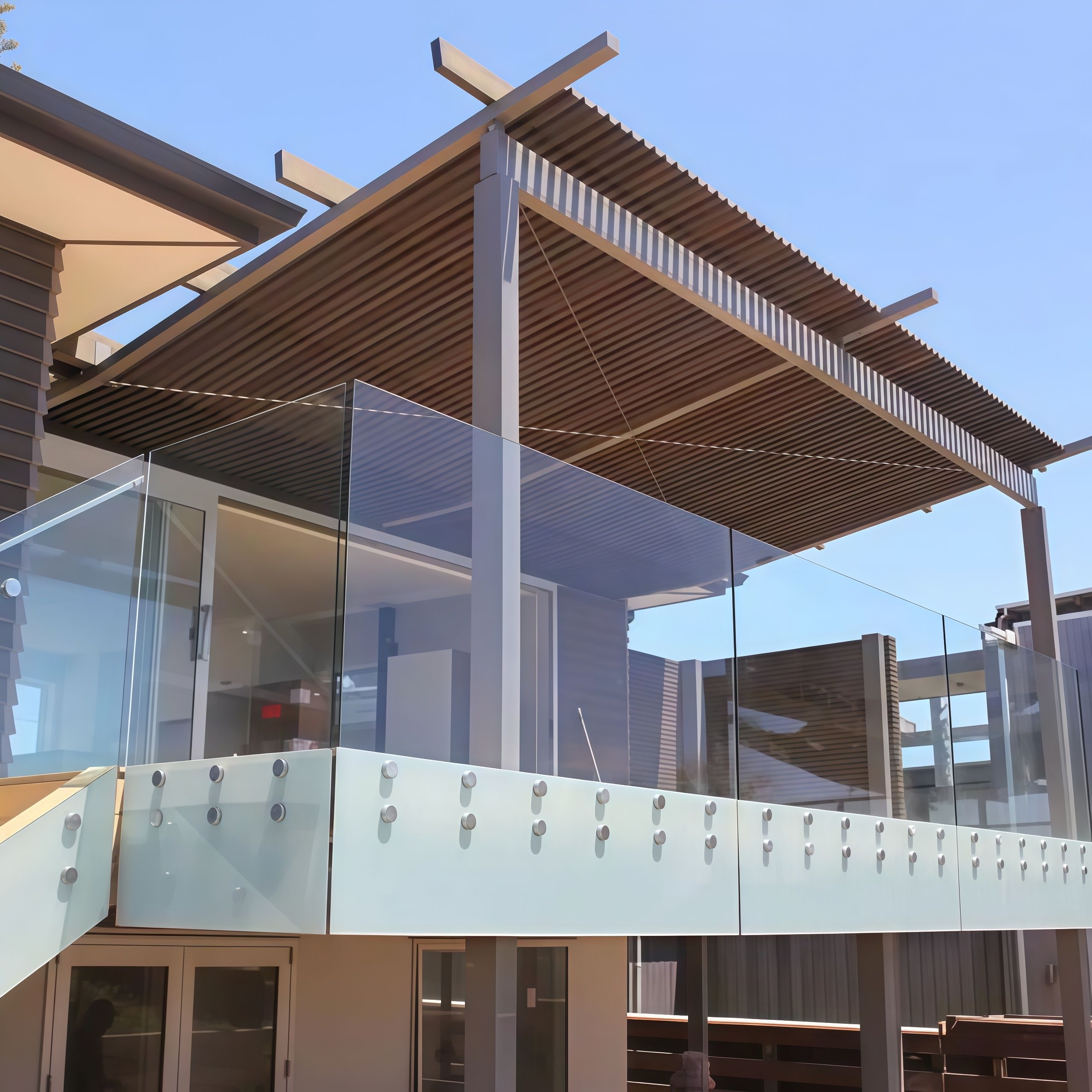
This is particularly crucial for heat-treated glass. Required fabrication, such as drilling, cutting, and notching, should be coordinated and completed before heat treatment. On-site modification of finished glass should not be considered a standard procedure. Technical guidelines from the National Glass Association also recommend completing fabrication steps like drilling, cutting, and notching prior to heat treatment.
△ Why can a 1mm error escalate into a much larger problem on site?
Imagine a glass panel secured by four standoff fixing points.
Theoretical spacing: 500mm + 500mm + 500mm
Total distance: 1500mm
If there is a positional discrepancy between the actual glass holes and the hardware fixing points, the final fixing point must accommodate not only the error of a single component but also the cumulative error across the entire installation chain.
For instance, if each 500mm spacing allows for a tolerance of ±0.5mm, the theoretical cumulative range from the first point to the last would be 1498.5mm–1501.5mm, a total span of 3mm.
Therefore, glass fabrication and standoff production cannot simply be completed according to their respective "acceptable dimensions". Instead, the overall dimensional relationship from the first fixing point to the last must be verified.
→→ 💡A more logical project workflow is not to "fabricate the glass first and then find a standoff that looks about right", but rather to coordinate the glass, hardware, fixing points, and supporting structure as much as possible before production begins. If a glass panel must be forcibly pulled to align with the fixing points on site, applying greater tightening force cannot compensate for incorrect geometric alignment.
XII. FAQ
1. What does "glass standoff projection" mean?
"Projection" refers to the distance the standoff holds the glass away from the mounting surface. It affects the clearance between the glass and the structure as well as the connection geometry. Therefore, it should be determined based on the specific project requirements rather than selected solely based on the product's appearance. For instance, when purchasing, do not rely merely on a name like "2-inch standoff," as "2 inches" might refer to the cap diameter rather than the projection.
2. Do glass railing standoffs always require holes in the glass?
For common point-fixed railing standoffs, pre-drilled holes in the glass are usually required for mounting, though specific requirements depend on the actual fitting design. Consequently, the hardware configuration and hole layout should be confirmed before glass fabrication begins.
3. Can glass railing standoffs be installed on concrete, steel, or timber?
While these substrates are all common in glass railing projects, the same fixing method cannot be used simply because the standoff itself is identical. The correct fastener or anchor depends on the actual load-bearing structure, not the standoff's appearance. If structural drawings exist for the project, it is best to provide them for verification before hardware production.
4. Is 316 stainless steel mandatory for outdoor glass railings?
Not necessarily. However, if the project involves exposure to chlorides, material selection requires greater caution, and 316 stainless steel is the preferred choice. The Nickel Institute notes that 316 offers superior chloride corrosion resistance compared to 304.
5. Can I reuse the standoff mount layout from a previous project if the glass thickness is the same?
Not necessarily. Even if the nominal glass thickness is identical, factors such as panel dimensions, glass make-up, hole locations, projection, anchors, substrates, and design conditions may differ, requiring adjustments to the fixing layout. To ensure suitability, every specification should be re-verified when reordering products.
6. What information is needed for a custom glass standoff quote?
It is recommended to provide details such as glass thickness, panel dimensions, hole drawings or coordinates, mounting substrate, material and finish, color, project environment, and quantity. Architectural or shop drawings should also be provided if available.
7. Can the standoff dimensions be modified after the holes have already been drilled in the glass?
You can discuss this with the supplier, but it should not be a standard installation adjustment method. This is particularly true for tempered glass. Processing steps such as hole drilling, cutting, and slotting must generally be completed before heat treatment. Consequently, if the glass is processed before the hardware dimensions are finalized, it often leads to subsequent issues requiring rework or hardware replacement. Therefore, the correct pre-production workflow is: Hardware Drawing → Glass Hole Drawing → Structural Fixing Points