Why Does The Internal Structure Of A Glass Hinge Determine Its Load-Bearing Capacity And Service Life?

In essence, a bathroom glass hinge's service life is a long-term test of its structural resilience. Imagine a glass door that is opened and closed twenty times every day. This amounts to more than 7,000 cycles a year. Tens of thousands of cycles can occur annually in high-frequency settings like hotels.
Every internal part of the shower door hinges is continuously stressed during such frequent cycling, which might result in problems including pivot pin wear, altered connection structure, and increased rotational resistance. As a result, the interior structural design influences both the initial installation quality and the long-term stability of the product.
Variations in internal structural design have a direct impact on load-bearing capacity and the ability to sustain smooth operation over time, even among hinges of the same stainless steel composition and specifications. Hinges may experience dozens or even hundreds of cycles every day in projects like hotels, flats, and upscale homes. The glass shower panel hinges may seem problem-free at first if the interior design is poor, but problems like sagging, loosening, strange noise, and stiff operation will eventually surface.

Load-Bearing Stability Is Determined By The Internal Pivot Structure
The fundamental element in charge of controlling the several forces produced during operation, including tension, shear, and rotating torque, is the internal pivot structure. By distributing these stresses throughout the pivot pin, bushings and internal supports, a well-designed glass hinge keeps the load from focusing on one area. This guarantees that the shower door will stay steady and correctly positioned even after prolonged use.
Operational Smoothness Is Impacted By Internal Friction Mechanisms And Bushings
There is constant rotation between internal metal components during each opening and closing cycle. To guarantee smooth, steady rotation, premium glass shower door hinges use wear-resistant internal structures or precision bushings. A sturdy internal design reduces wear in high-frequency environments, such as hotels or commercial projects, where usage can surpass 50 cycles per day or 18,000 cycles annually, guaranteeing the hinge stays stable even after tens of thousands of operations.
Load-Bearing Capability Is Impacted By Internal Connection Techniques
Certain basic shower door hinge uses fixing screws to transfer forces while clamping the glass primarily using the outside case. Multiple components can share the load thanks to a structurally optimized hinge that gradually transfers force from the glass connecting region to the main body, where it is subsequently dispersed through an internal support system. This interior load-bearing architecture is significantly more important to engineering clients than just making the product thicker.
During Operation & Internal Cushioning Structures Reduce Impact Forces
A glass door produces inertial impact when a user pushes it forcefully. This impact force is sent straight to the hinge pin, mounting screws, and glass clamping area in the absence of an efficient internal cushioning device. The hinge may become loose due to prolonged, repeated impact. However, to guarantee a smoother door closure, high-quality hinges use precision-engineered fittings or internal damping devices.
Long-term Stability Is Impacted By Internal Precision
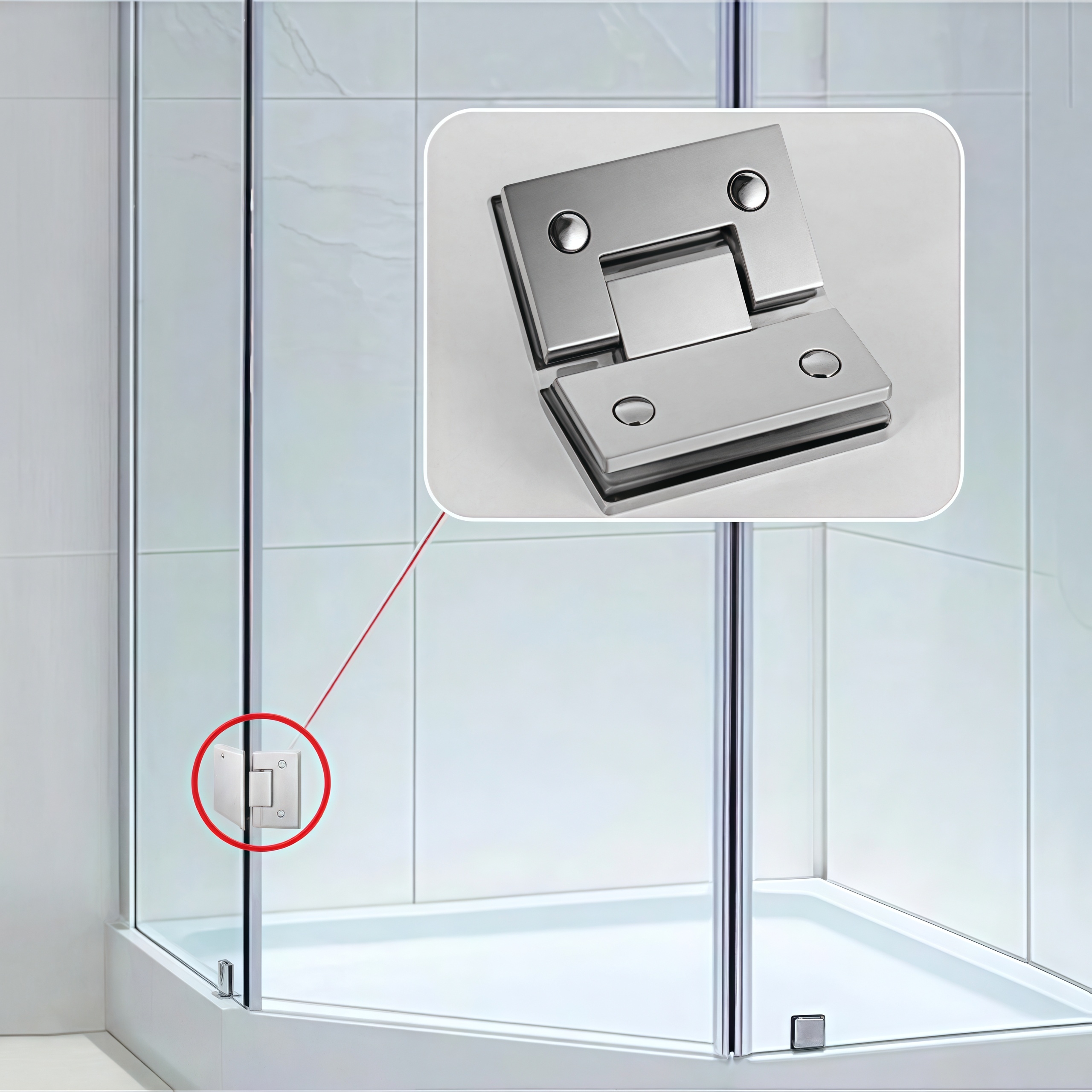
Both material strength and manufacturing accuracy must be taken into consideration when designing glass to glass door hinges. With prolonged use, an excessive amount of clearance between parts may eventually cause the gap to expand. On the other hand, high-precision machining guarantees a correct fit between parts, reducing structural loosening even after extended use.
Internal Rotation Control Affects Product Longevity And User Pleasure
The internal mechanism controls the stability of the door's opening and closing trajectory, and the hinge for glass shower door rotates every day. Inadequate internal design can lead to problems that worsen user experience and put more strain on internal components, such as jerky rotation, uneven opening angles, or door rebound. Consequently, a more stable movement trajectory and reduced stress on the hinge are guaranteed by increased precision in the internal-rotation mechanism.
The internal structural mechanism that consistently supports the weight is what gives a glass shower door hinge its genuine worth, not its outward appearance. A better internal structure results in a more seamless and secure daily experience for customers. It means longer product lifecycles, constant project quality, and reduced maintenance costs for engineering clients. When installed, a high-quality glass hinge does more than merely hold the door up. Under difficult usage conditions, such as frequent operation and prolonged weight-bearing, it remains stable.