Can One Sliding Door Kit Be Used For Both Interior Doors And Bathroom Doors?
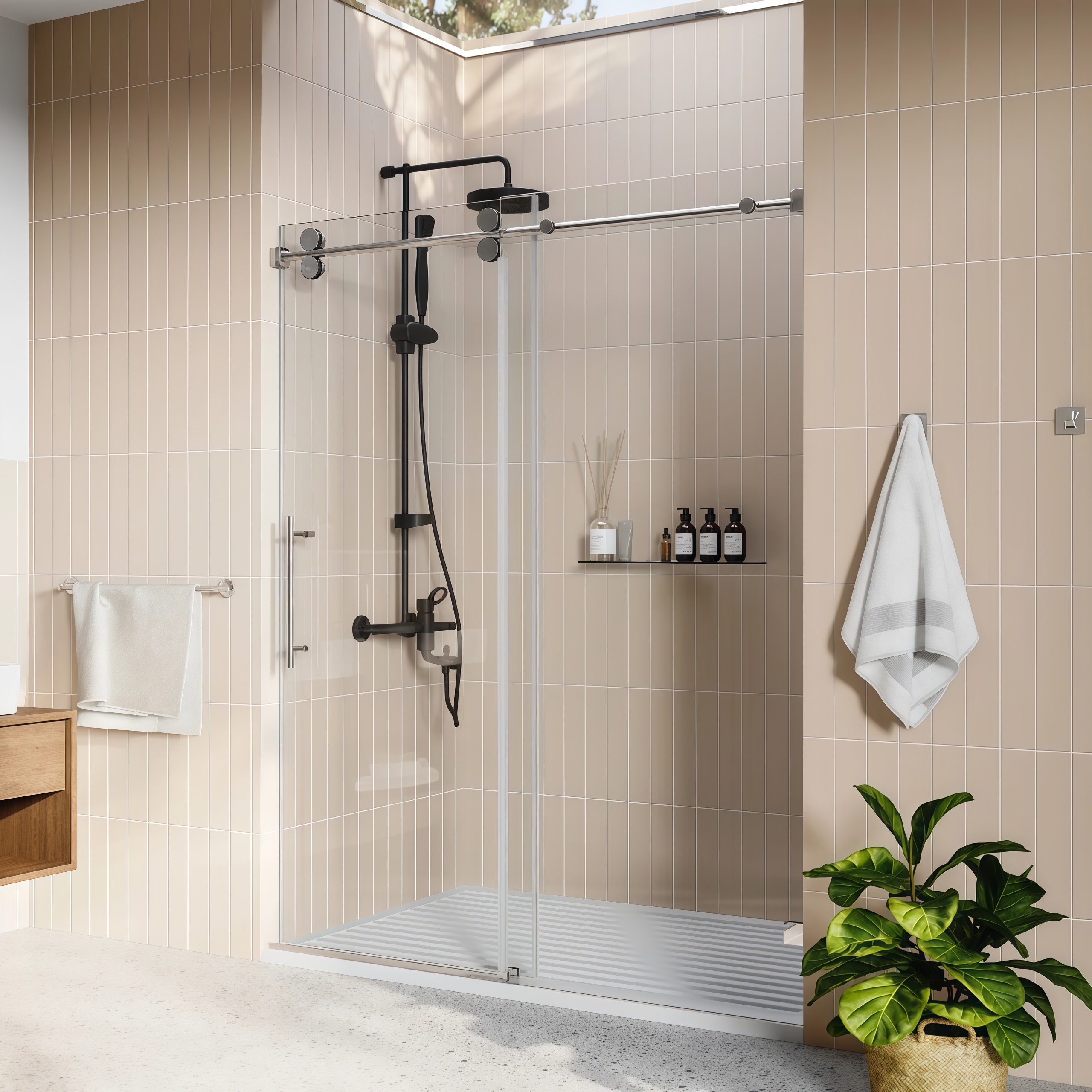
Although all sliding door kits are hardware systems that use rollers to move a door panel horizontally, different use cases require different features in terms of design compatibility, load-bearing capacity, protective performance and aesthetics. While sliding mechanisms for glass, wood or metal panels may be used in both interior and bathroom doors, the environmental factors and design specifications they must contend with are very different. As a result, it is not possible to assume that a single sliding door kit will work in every situation.
Interior Sliding Door Kits Place a Stress on Design Integration and Space

Sliding door designs are commonly used between kitchens and dining areas, bedrooms and walk-in closets, and living rooms and studies. The sliding door hardware becomes an essential component of the spatial architecture in these situations. It plays a crucial part in spatial division and optimisation in addition to being a useful accessory.
These kits have an open, simple and architectural visual style. Surface finishes can go well with a variety of home designs, including light luxury, industrial chic and modern minimalism. For example, a transparent glass door combined with a black roller kit creates an open partition effect that is reminiscent of high-end homes or commercial spaces, while silver stainless steel tracks lean toward a simple, classic modern appearance. The main aesthetic benefit of sliding doors over conventional hinged doors is that the door frame bulk is reduced, resulting in a smooth transition between the walls and the surrounding area.
Important distinctions between the two kinds:
- For standard hinged doors to open, a clearance arc of about 0.8-1 square metre is usually needed.
- Sliding doors minimise wasted space by moving mostly along the wall surface.
Bathroom Sliding Door Kits Stress Cleanliness, Lightness and Elegance
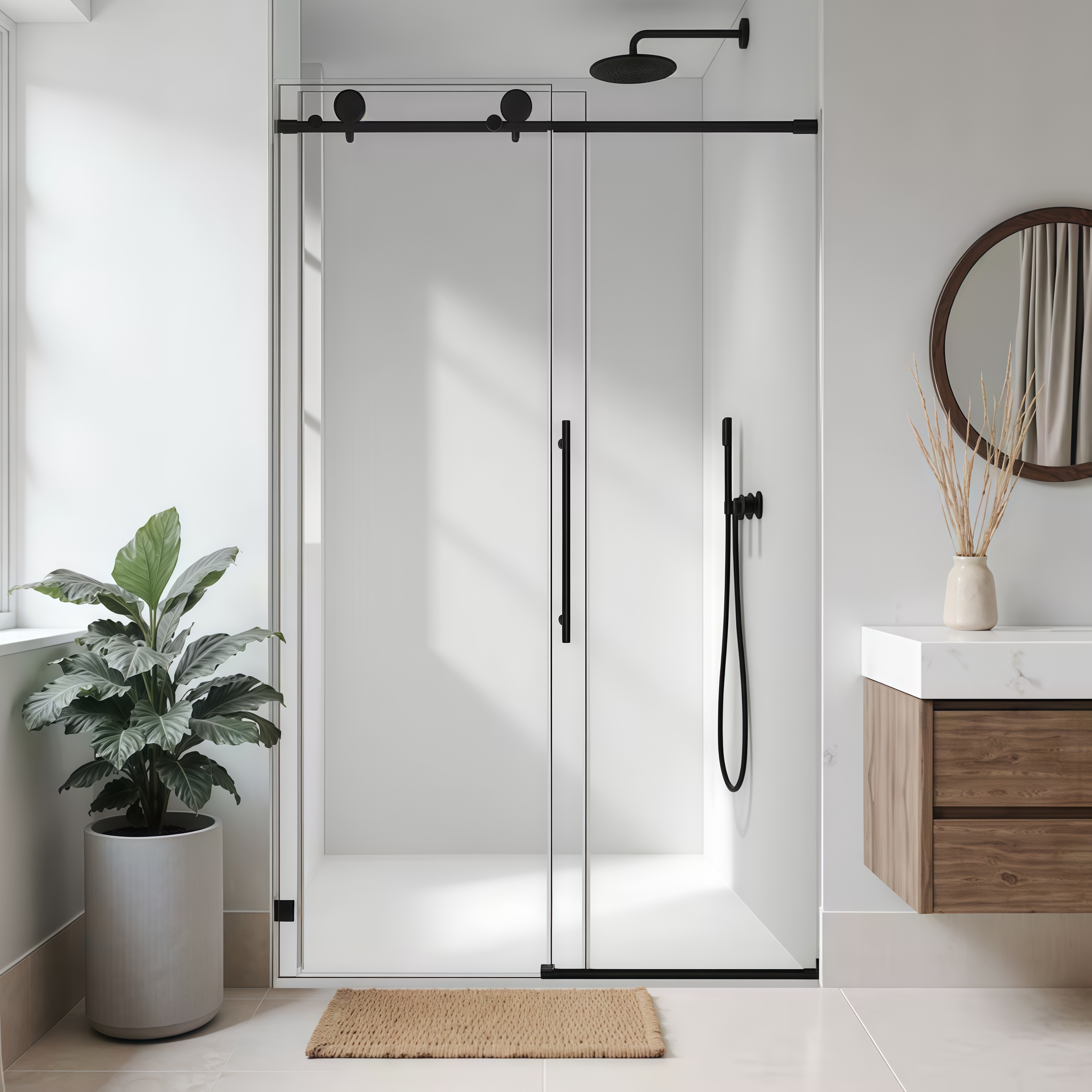
Bathrooms are usually small places that are always in contact with moisture and humidity. As a result, the sliding system must not only work seamlessly but also complement glass shower enclosures, sanitary products and the overall design of the bathroom. Additionally, unlike interior doors, the hardware kit is made to minimise visible bulk because bathroom sliding doors typically have glass panels.
The goal of shower sliding doors is to guarantee stability while enabling the hardware to function as a sophisticated accent inside the glass-dominated area, rather than to draw attention to the hardware itself. For example, a silver stainless steel roller system combined with transparent tempered glass produces a bright, clean bathroom. On the other hand, a black sliding door kit combined with black-framed glass is more in line with contemporary design trends seen in upscale residential bathrooms, hotels and apartments.
Is it possible to utilise the same sliding door kit for bathroom and interior doors?
Certain sliding door kits are structurally compatible with both bathroom and interior doors. However, the particular environment and product design determine whether they are suitable for long-term use. One product may be adequate for both situations if the door weight, dimensions, and installation environment are comparable. However, universal application is not advised for all kits. It is necessary to take a comprehensive approach to factors including door type, usage environment, load-bearing requirements, material qualities and design requirements.
Requirements for utilising the identical sliding door kit in both situations:
- Materials as 304 or 316 stainless steel and must be sufficiently resistant to corrosion.
- Both applications' requirements must be satisfied by the load-bearing capacity.
- The visual design should be adaptable, ideally with a neutral finish and basic, linear styling.
Sliding door system design requirements vary depending on the installation environment.
When evaluating a kit's compatibility, the installation environment is just as important as the door itself.
- Wall structure and mounting stability are the main concerns for interior doors. For instance, the track mounting point must have sufficient load-bearing capacity for large wooden or glass doors. Even if the rollers themselves have a good load-bearing capacity, long-term stability may be jeopardised if the wall structure is inadequate.
Interior sliding door systems tend to prioritize→structural load-bearing design
- The emphasis switches to water resistance and ease of maintenance for bathroom doors. The roller mechanism shouldn't be too complicated because restrooms need to be cleaned frequently. If not, it might make regions difficult to clean and make upkeep more difficult in the future.
Bathroom sliding door systems tend to prioritize→precision and stability
Through careful material selection, load-bearing design and surface finishing, a well-designed sliding door kit can be appropriate for a variety of situations. However, rather than just having the same structural design, interior and bathroom sliding door systems should still be optimised for their specific settings when producing items for the professional market. Beyond simply facilitating mobility, a truly market-ready sliding door kit guarantees long-term stability and safety in a variety of spatial settings while blending in with the overall design.