How To Choose Laminated Glass Railings: From Glass Composition And Behavior After Breakage To Hardware Compatibility

If a request for quotation for a railing simply specifies "laminated safety glass", different suppliers will provide varying product configurations and quotes. While it may appear that everyone is quoting the same type of glass, the actual scope of delivery can vary depending on whether the base glass has undergone heat treatment, the type of interlayer used, how the panels are secured, whether top handrails are included, and which assembly type the quote corresponds to.
The problem is that these differences aren't necessarily apparent from the glass thickness listed on the quote. It is only when the glass is being processed, hardware is being procured, or on-site installation begins that discrepancies in specifications are discovered, requiring a reevaluation of the design and, in some cases, a reassignment of responsibilities.
For architects, glass contractors, and project procurement personnel, evaluating laminated glass railing requires more than just considering the type and thickness of the glass. It is also essential to verify the specific composition of the glass, the performance criteria of the railing system, and whether the actual installation method aligns with the relevant documentation.
I. “Laminated” And “Tempered” Address Different Issues. When Purchasing Glass Railings, How Can You Clearly Specify The Glass Specifications?
When researching tempered glass railings, one often encounters a seemingly simple question, "Should I choose tempered glass or laminated glass?"
This question can easily lead purchasers to overlook a key fact: tempering and lamination are not mutually exclusive options. Tempering describes the heat treatment applied to the glass sheet itself, while lamination describes the structure formed by combining glass with an interlayer. Therefore, the two glass sheets in laminated glass can also be heat-treated.
1. First, distinguish between two concepts. The processing method of the raw glass and the composition of the finished product
To understand these two terms, start by examining the scope of the relevant standards.
ASTM C1048 covers heat-strengthened and fully tempered glass for architectural and other applications, focusing primarily on flat glass that has undergone heat treatment.
ASTM C1172 addresses the quality requirements for laminated flat glass used in construction, covering products formed by bonding two or more sheets of glass with an interlayer.
These two standards address different subjects and should not be simply interpreted as two mutually exclusive types of glass.
When making actual purchases, you can use the table below to quickly determine what the existing specifications cover and what is missing.
It is important to note that "semi-tempered laminated glass" does not mean it can directly replace fully tempered laminated glass. Because the base glass is processed differently, its behavior upon breakage will also differ. The final selection should be based on project design requirements, applicable codes, and relevant product documentation.
2. Use a specific example to understand how to specify the thickness of laminated glass
Suppose a drawing specifies the use of two sheets of glass, each 8 mm thick, with a nominal thickness of 1.52 mm for the interlayer. The nominal total thickness can be calculated as follows:
8 mm + 1.52 mm + 8 mm = 17.52 mm
The result of 17.52 mm is merely the arithmetic sum of the nominal thicknesses of each layer. It does not represent the actual measured thickness of the finished product, nor does it indicate that this configuration is suitable for a specific guardrail design.
For example, if a glass fabricator quotes based on one combination of glass sheets, while a hardware supplier confirms the mounting hardware based on a different configuration, even if both parties believe they meet the requirements for "17.52 mm laminated glass", they will ultimately be unable to achieve an accurate product match.
3. Why Stating Only “Suitable for a Certain Thickness Range” Is Insufficient to Confirm Hardware Compatibility
Purchasing personnel need to further verify whether this range applies to the laminated glass actually in use, rather than relying solely on the total thickness.
It is recommended to divide the verification process into three steps:
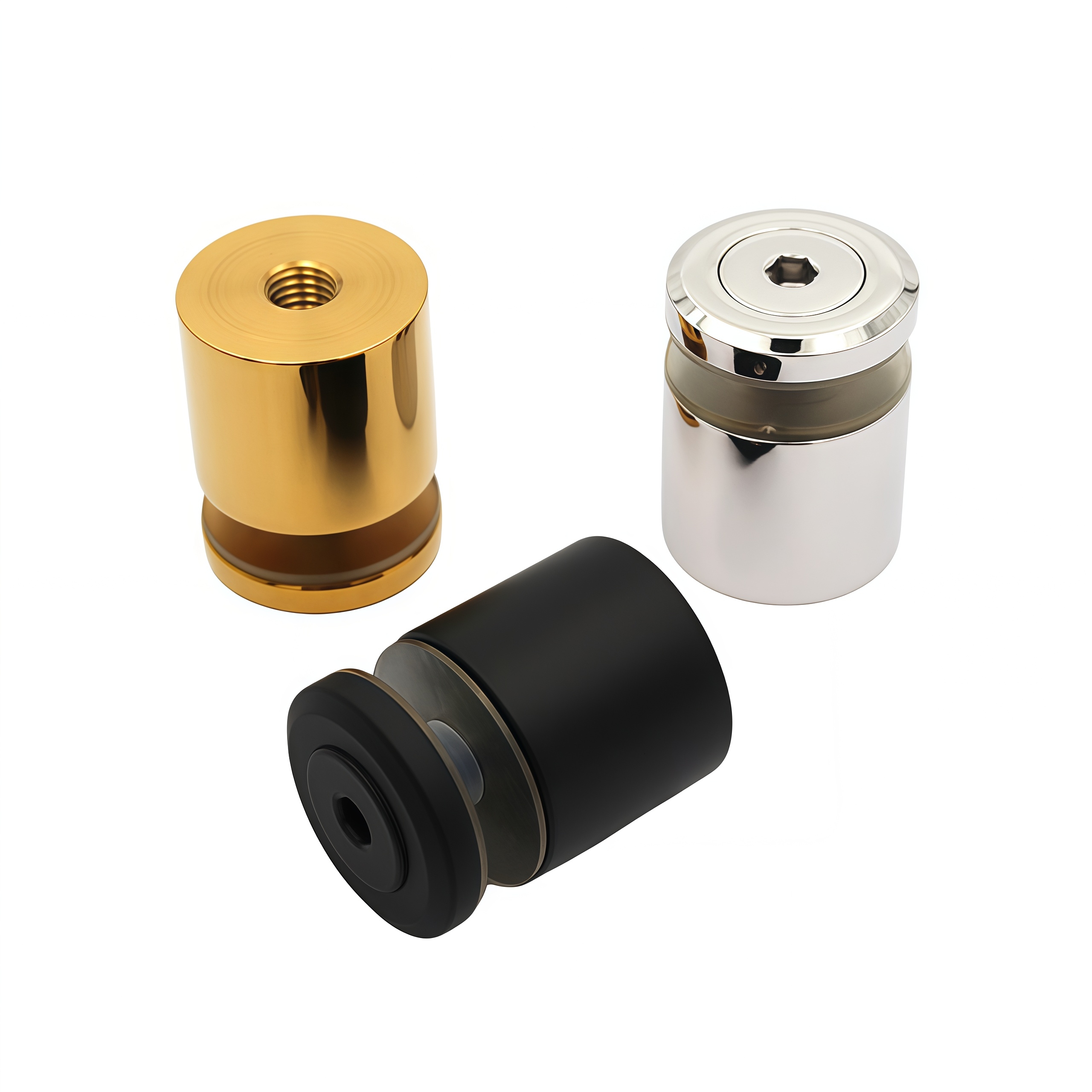
⭐Step 1: Provide a complete description of the glass composition
Do not simply state "laminated glass, approximately 17.5 mm thick".Clearly specify the nominal thickness, heat-treatment condition, and the thickness of the interlayer material.
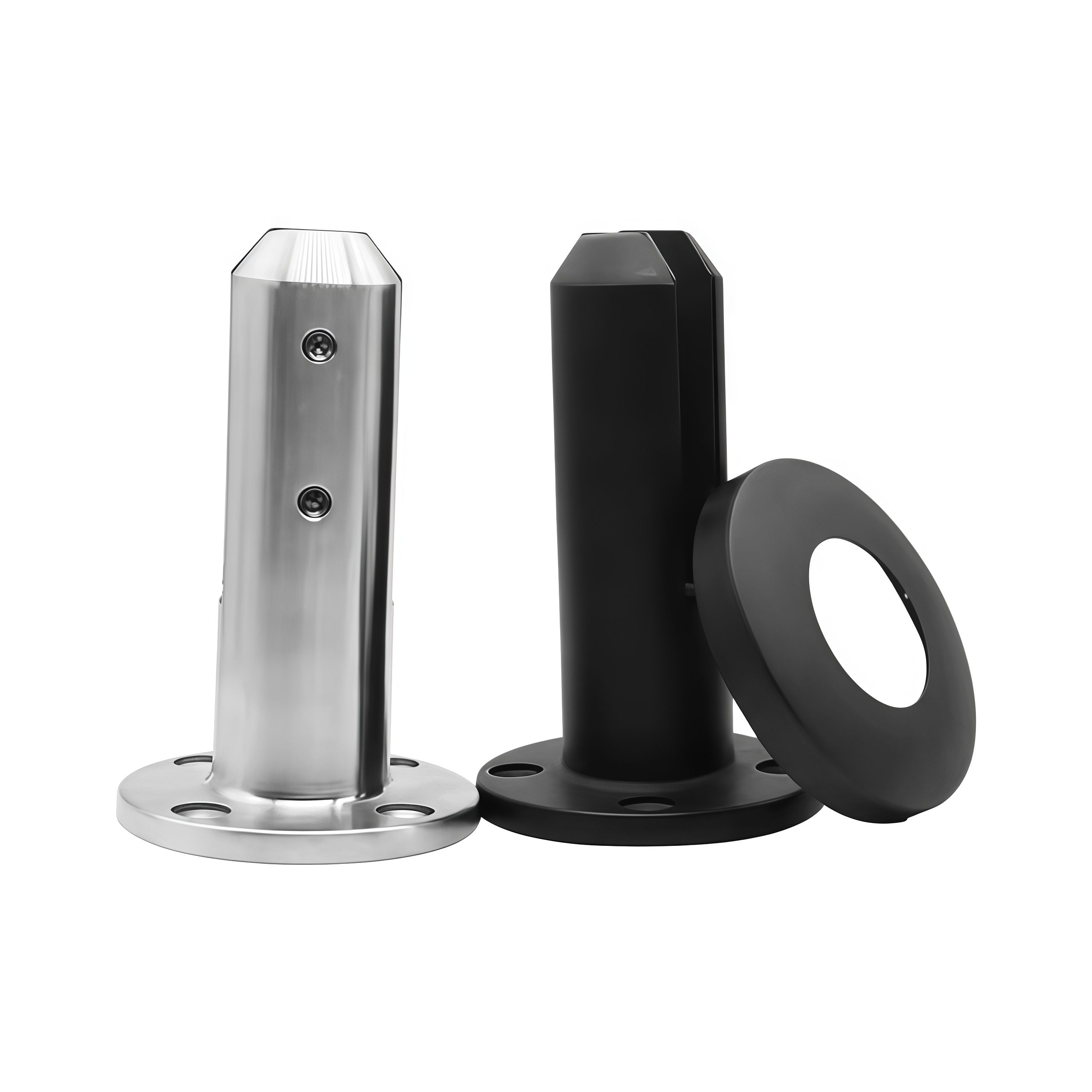
⭐Step 2: Have the hardware supplier confirm the specific conditions of applicability
Provide complete glass specifications, panel dimensions, connection locations, and installation methods, and request that the supplier confirm suitability.
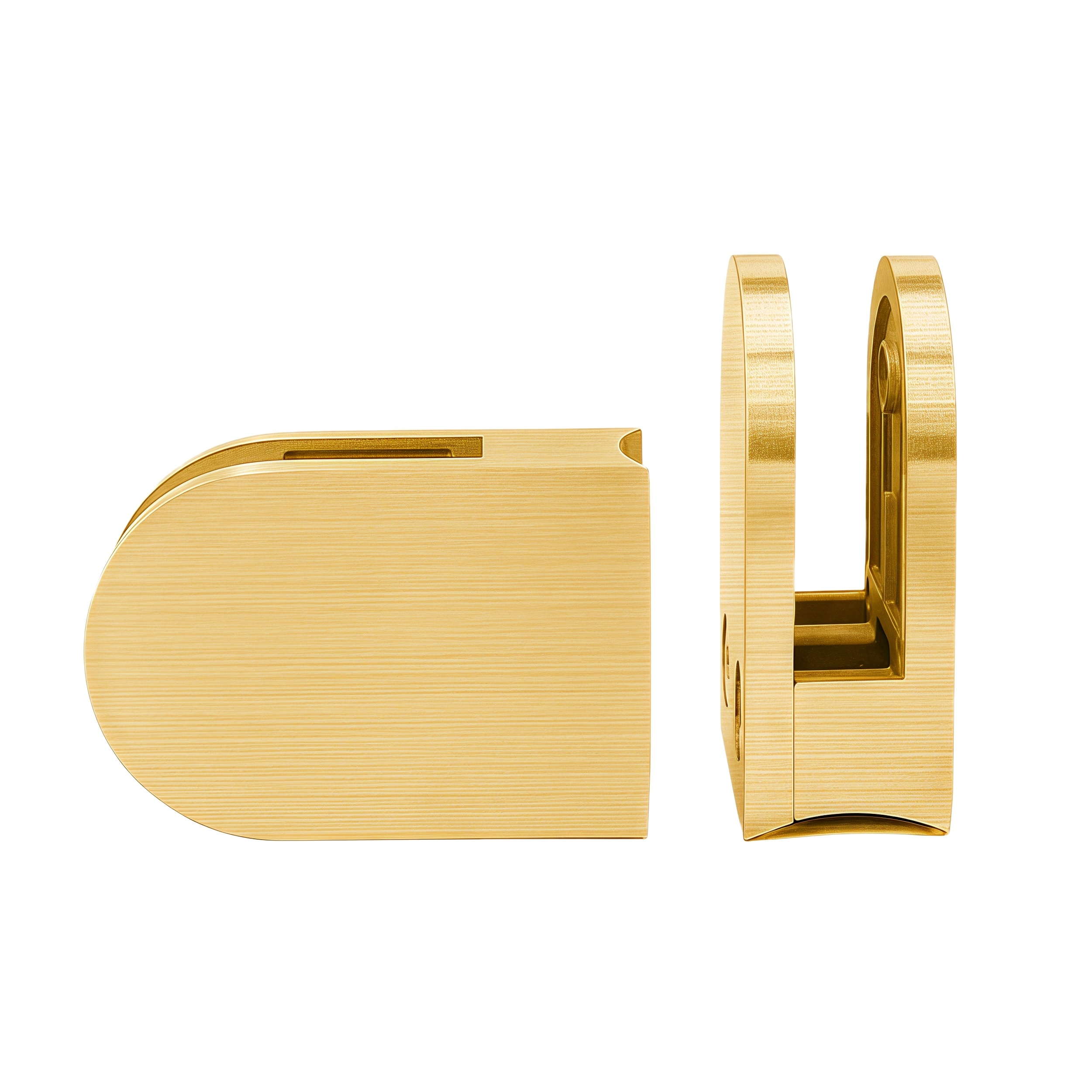
⭐Step 3: Verify product documentation rather than relying solely on verbal confirmation
Request that the supplier provide applicable technical data sheets, installation instructions, and test or evaluation documents relevant to the project requirements.
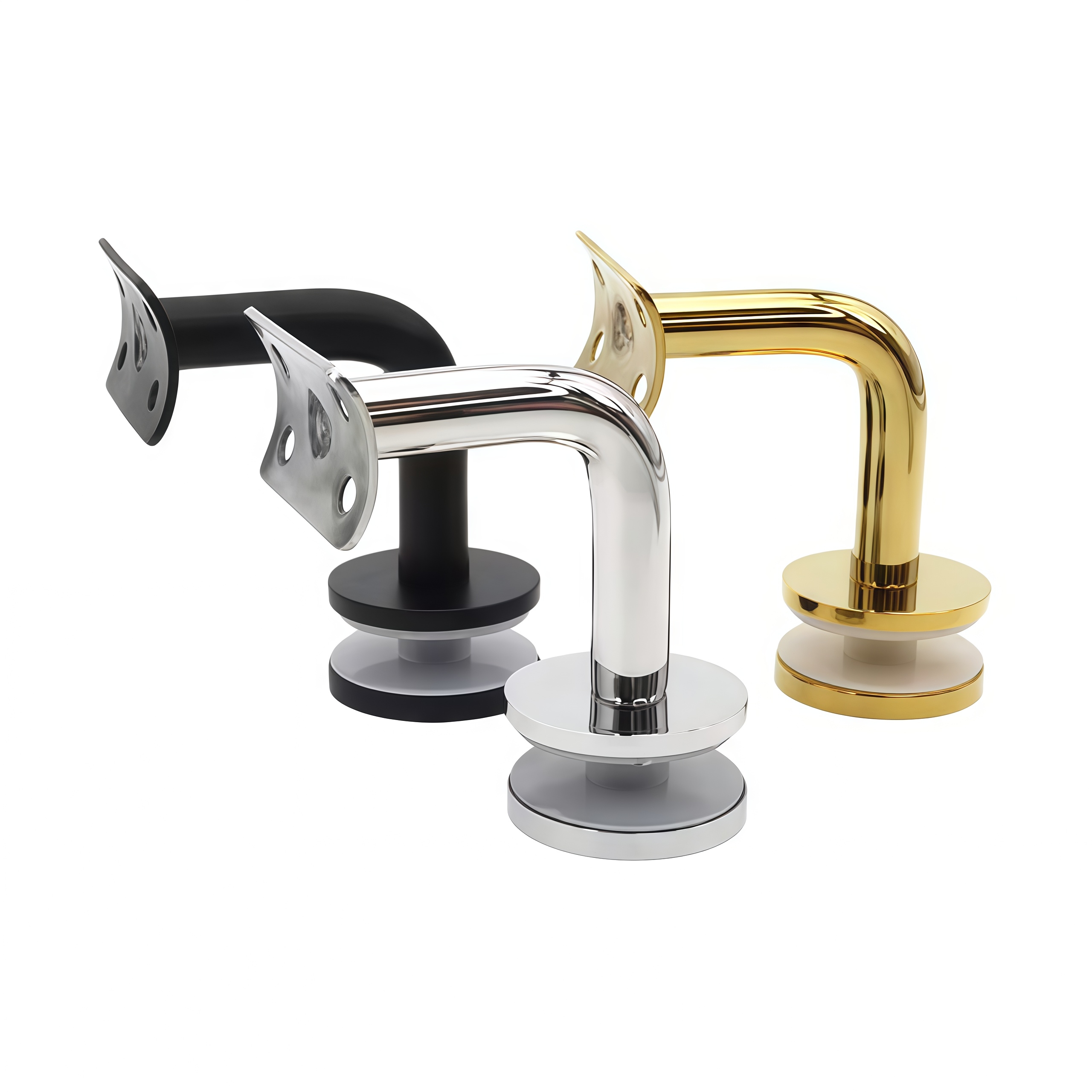
The core of the procurement decision is not merely asking how thick the glass is, but confirming what the glass is composed of, what treatments it has undergone, and whether this composition is compatible with the actual connection system and project requirements. When this information is clearly specified during the request-for-quote stage, it provides a common basis for verification during the quoting, fabrication, hardware selection, and subsequent acceptance processes. Different glass railing designs require different hardware components. Exploring the Busrom Glass Hardware Product Range can learn about the available product categories.
II. Can A Guardrail Continue To Provide Protection After Laminated Glass Breaks?
A key advantage of laminated glass is that, when it breaks, the fragments adhere to the interlayer, thereby increasing the likelihood that the glass will remain in the guardrail system. The National Glass Association technical documentation on guardrails also explicitly highlights this characteristic.
However, it is important to note during procurement that the fact that fragments have not scattered does not mean the guardrail remains safe. Nor does the fact that the glass remains in place guarantee that the entire system can still withstand the specified forces.
For projects in the United States, the scope of ASTM E2353 includes static strength, impact resistance, and post-breakage performance. This standard applies to guardrail systems where glass serves as a primary structural member or infill panel and serves as a critical reference for verifying the performance of glass guardrail systems.
Therefore, when reviewing a safety glass certification, one should first determine which specific property of the glass material it certifies. When reviewing a guardrail report, one must further identify the panels, supports, hardware, top handrails, and mounting substrates that were tested. A material certification cannot substitute for the verification of the entire assembly, nor can the test results for a single fastener be generalized to any panel.
Which discrepancies in the report warrant further verification?
The requirement here is to determine whether the differences are covered by the evidence. It does not stipulate that a complete set of tests must be repeated for every change. Whether the matter can be addressed through design analysis, the clearly defined scope of existing reports, or supplemental testing should be determined by the person responsible for making that technical judgment.
III. Can The Top Handrail Be Omitted? Determine The Role Of The Glass In The Railing System First
Glass railings without a top handrail can provide a more unobstructed view, but the use of laminated glass alone does not justify omitting the top handrail.
What must first be determined is whether the glass in this railing system serves as an infill panel or as a glass standoff that bears the primary structural load.
The construction of the two differs, and the relevant code requirements cannot be applied interchangeably.

According to the NGA technical document FB33-11: Use of Laminated Glass In Glass Railing Systems, its commentary on the 2021 IBC states that glass used as infill panels does not require a top rail.
For glass standoffs, however, the code typically requires that the top rail connect at least three glass posts, unless the laminated glass system has been tested for post-break performance in accordance with ASTM E2353 and meets the relevant requirements. ASTM E2358-24 addresses the classification, design, and performance requirements for permanent glass railing systems.
However, this standard does not replace design judgments specific to on-site conditions. Therefore, the final determination of whether top handrails may be omitted must be confirmed in conjunction with the specific code, design conditions, and approval requirements applicable to the project. For railing designs that include a top handrail, the Handrail Bracket Selecting Series offers hardware options for glass connections and handrail mounting.
IV. Verify Hardware Compatibility Based On The Sandwich Panel Configuration
Glass guardrails are not limited to just two mounting methods. They can be base-mounted or spigot-connected. Systems featuring continuous base channels, point-supported spigot connections, localized bottom clamps, and combinations of standoffs and glass clamps each employ different load-bearing mechanisms and installation interfaces. Even when using glass of the same thickness, changes in connection nodes require a re-evaluation of the hardware’s suitability.
If a project employs a point-supported design, refer to the Glass Standoff Series for compatible hardware; for partial bottom clamping, consult the Glass Fence Spigot Range; and for comparing hardware for glass standoffs or clamping joints, refer to the Guardrail Glass Clip Options.
When selecting hardware, you should also request dimensional drawings for specific models from the supplier to confirm whether they are suitable for the project’s specified laminated glass composition, installation orientation, and connection conditions. Identical external dimensions, the same metal grade, or the same thickness range listed in a catalog are not sufficient to prove that two hardware models are interchangeable. The purchaser must request that the supplier clearly specify: Which connection nodes are covered by the quote. Which washers, sleeves, and fasteners are included with the shipment. And which project conditions require separate verification.
Why must the glass fabrication drawings be aligned with the hardware drawings first?
For joints using through-hole connections, the clearances are not standard dimensions that can be adjusted on-site during installation. Hole diameters, hole center coordinates, hole edge distances, and hole spacings must all be verified item by item against the hardware assembly drawings before glass fabrication begins.
As shown in the table, as glass thickness increases, the requirements for hole edge clearance and hole spacing also change. For example, according to Tecnoglass’s Official Holes And Notches Guide, the minimum hole edge clearance for 12mm glass is 25mm, while for 19mm glass it is 38mm. Therefore, the purchaser should not merely specify the glass thickness and hardware model. They should also have the glass fabricator confirm that the hole layout complies with the requirements of the selected system.
The relevant ASTM C1048 standard explicitly states that glass cutting, edge processing, drilling, slotting, and other processing operations should be completed on heat-strengthened and fully tempered glass. If hole misalignment is discovered, enlarging holes or cutting into glass that has already undergone heat treatment on-site should not be considered a standard remedial measure.
It is recommended to maintain a set of mutually corresponding versions of the glass drawings, hardware assembly drawings, and project detail drawings. When changes are required, first specify the scope of impact, then update the supply documents. Do not allow the factory to produce glass based on old drawings while having the installer use new hardware drawings.
Are you planning a laminated glass railing project? Please provide Busrom with details regarding the glass structure, panel dimensions, and hardware requirements. Our team can help you identify the right glass railing hardware solutions for your specific application.
V. Exposed Edges And Contact Materials Must Be Included In Sample Approval
Frameless glass railings reduce metal obstructions and allow the glass edges to become part of the overall appearance. Unlike single-pane glass, the edges of laminated glass feature a layered structure of "glass - interlayer - glass". Even if the front surface meets requirements for color, transparency, and surface quality, the edges, including their finish, the extent of interlayer exposure, and the edge-processing results, still affect the final visual appearance.
NGA notes regarding the exposed edges of heat-treated laminated glass that dimensional deviations in glass cutting, glass sheet displacement during the lamination process, as well as positioning and handling during production, can all affect the final edge alignment. It also points out that appearance requirements for exposed edges should be discussed in advance in light of the specific application, rather than simply applying the appearance expectations for single-pane glass.
Therefore, we cannot accept exposed edges based solely on the statement "neat edges and good appearance". Rather, the mutually acceptable results should be clarified through actual samples before mass production begins.
1. When approving samples, do not focus solely on the front of the glass. Be sure to thoroughly inspect the edges as well.
For visible edges, we recommend checking the following items separately during sample approval:
2. Contact materials should not be substituted arbitrarily. Confirm compatibility with the interlayer first.
Sealants, potting compounds, spacers, gaskets, tape, and cleaning agents should all be included in the assessment of contact materials. Solvents, plasticizers, or other components in some materials may interact with the laminated glass interlayer, affecting the edge appearance or long-term performance. Therefore, one should not automatically assume that a material is suitable for all laminated glass simply because it is used in construction projects or labeled as a construction sealant.
A lecture on glass installation techniques hosted by the NGA addressed the issue of compatibility between laminated interlayers and contact materials. NGA's GANA Glazing Manual also emphasizes that the compatibility of various materials within a glass system affects long-term performance, and material suppliers should provide appropriate testing or technical data for specific combinations. If a project requires specific hardware dimensions, structures, or finishes, you can also explore Busrom OEM & ODM Customization Services to learn more about product customization options.
VI. FAQ
1 Q: Are laminated glass railings always “stronger” than single-pane tempered glass?
A: Not necessarily. It depends on what you mean by "strong". If you’re concerned about how the glass behaves after breaking, the interlayer in laminated glass helps hold the fragments together, reducing the risk of shards falling off. However, if you’re comparing load-bearing capacity, impact resistance, or overall stability after breakage, you can’t rely solely on the type of glass. You must also consider the glass composition, support method, and the entire railing system.
2 Q: The quote already specifies the total glass thickness. Why do I still need to confirm the thickness of each glass pane and the interlayer?
A: Just because the total thickness is the same doesn't mean the glass composition is identical. The thickness, type, and interlayer of each pane may vary, and this information affects glass fabrication, hardware compatibility, and the matching of test data. Therefore, when purchasing, it’s best to confirm the complete glass composition rather than just the total thickness.
3 Q: The supplier provided an ASTM standard number. Does that mean the product has been certified?
A: No. A standard number, a test report, and third-party certification are not the same thing. When purchasing, you need to further verify whether corresponding test data is available and whether the product composition and installation methods described in the report match the actual system being purchased.
4 Q: Laminated glass has cracked, but the fragments have not fallen out. Can it still be used?
A: You cannot assume the guardrail is still safe simply because the fragments have not fallen out. Once the glass breaks, the load-bearing capacity and stability of the entire system may be compromised. The affected area should be cordoned off first, and then professionals should assess the situation and determine the appropriate course of action.
5 Q: When purchasing glass and hardware, is it necessary to choose the same supplier?
A: Not necessarily. It is acceptable to purchase them separately, but it is crucial that the glass dimensions, cutout locations, hardware installation requirements, and relevant performance data are mutually compatible. Additionally, it must be clearly defined who is responsible for the final fit verification and approval of any changes.
Reference & Sources
- ASTM C1048-25: Standard Specification for Heat-Strengthened and Fully Tempered Flat Glass
- ASTM C1172-24e1: Standard Specification for Laminated Architectural Flat Glass
- National Glass Association (NGA)—Glass Use in Guardrails (FB33-11, 2023)
- ASTM E2353-21: Standard Test Methods for Performance of Glazing in Permanent Railing Systems, Guards, and Balustrades
- International Code Council (ICC)—2021 International Building Code (IBC)
- ASTM E2358-24: Standard Specification for Performance of Glazing in Permanent Railing Systems, Guards, and Balustrades
- Holes and Notches: Glass Fabrication Guidelines
- National Glass Association (NGA)—Heat-Treated Laminated Glass Exposed Edges (FB59-18)
- Glass Embedding: New Design Considerations for Frameless Glass Railings (2019)
- GANA Glazing Manual: International Year of Glass (IYOG) Edition